JD-U blames fuel price hike for Bihar bypoll defeat
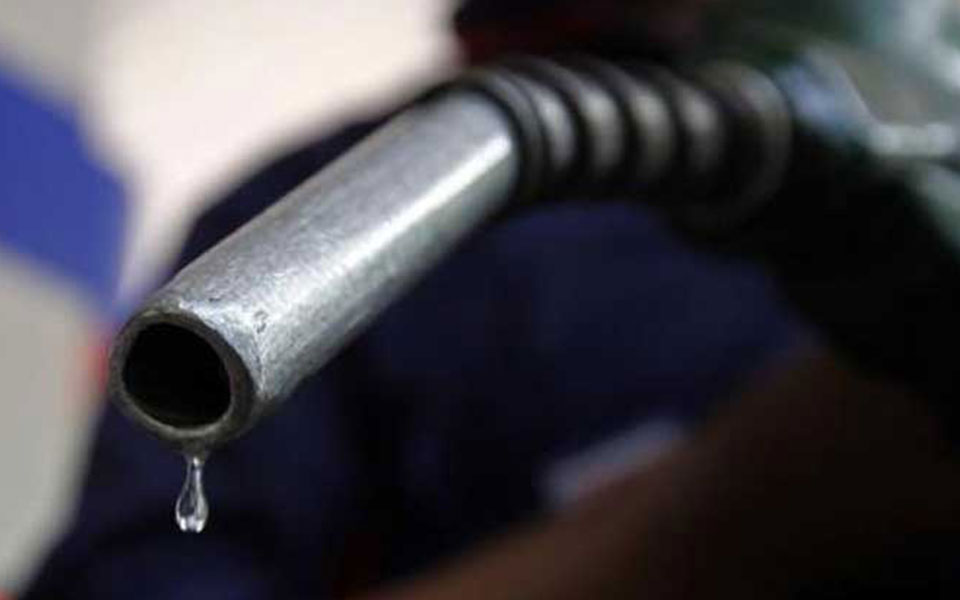
Patna, June 1: After the Rashtriya Janata Dal wrested the Jokihat Assembly seat from the ruling JD-U in Bihar, a senior Janata Dal-United leader blamed rising prices of petrol and diesel for the drubbing.
A day after Shahnawaz Alam won the seat by over 41,000 votes, JD-U General Secretary K.C. Tyagi on Friday said: "Rising price of petrol and diesel mainly angered people that led to our defeat in Jokihat and NDA elsewhere" in the bypolls held on May 28.
Tyagi said the Bharatiya Janata Party-led Centre should take measures to control and check the price hike which is "directly impacting rural economy and common man".
He said the BJP "should go for more coordination and meetings with its allies before taking any decision". The JD-U is an ally of the BJP-led NDA at the Centre, besides operating an alliance in the state.
Another BJP ally Lok Janata Party also said that rising prices of petrol and diesel is bad sign and main cause behind growing anger among people.
LJP state president Pasupati Kumar Paras, who is also a minister in the Nitish Kumar cabinet, said the BJP should take spiralling price hike seriously.
Two months ago that RJD had defeated JD-U in bypolls to Jehanabad assembly seat and the Araria Lok Sabha seat.
Let the Truth be known. If you read VB and like VB, please be a VB Supporter and Help us deliver the Truth to one and all.
Rickelton's ton in vain as SRH beat MI by 6 wickets
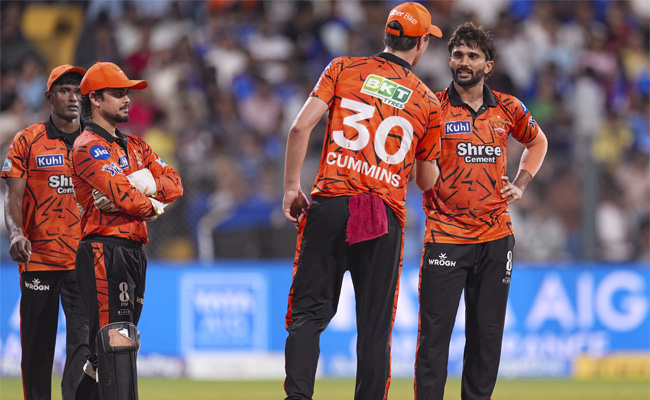
Mumbai (PTI): Ryan Rickelton's whirlwind unbeaten ton was overshadowed by Heinrich Klaasen's unbeaten 65 as Sunrisers Hyderabad defeated Mumbai Indians by six wickets in an IPL match here on Wednesday.
Chasing an imposing 244-run target, Travis Head (76 off 30) and Abhishek Sharma (45 off 24) shared 129 runs for the opening wicket to set the platform for SRH.
Klaasen (65 not out off 30 balls) then displayed his all-round hitting abilities to guide SRH home with the help of Nitish Kumar Reddy (21) and Salil Arora (30 not out off 10) in 18.4 overs.
Earlier, Rickelton's knock powered MI to 243 for five.
MI rode on a 93-run stand between Rickelton (123 not out off 55 balls) and Will Jacks (46 off 22) in 7.1 overs for the opening stand to power the side.
MI skipper Hardik Pandya scored a valuable 31 off 15 balls before being dismissed.
Praful Hinge (2/54), Eshan Malinga (1/29), Sakib Hasan (1/39) and Nitish Kumar Reddy (1/31) were the wicket-takers for SRH.
Brief Scores:
Mumbai Indian: 243 for 5 in 20 overs (Ryan Rickelton 123 not out; Praful Hinge 2/54).
Sunrisers Hyderabad: 249 for 4 in 18.4 overs (Travis Head 76, Heinrich Klaasen 65 not out; AM Ghazanfar 2/51).