Jio Studios has withdrawn its trademark application for 'Operation Sindoor': Reliance Industries
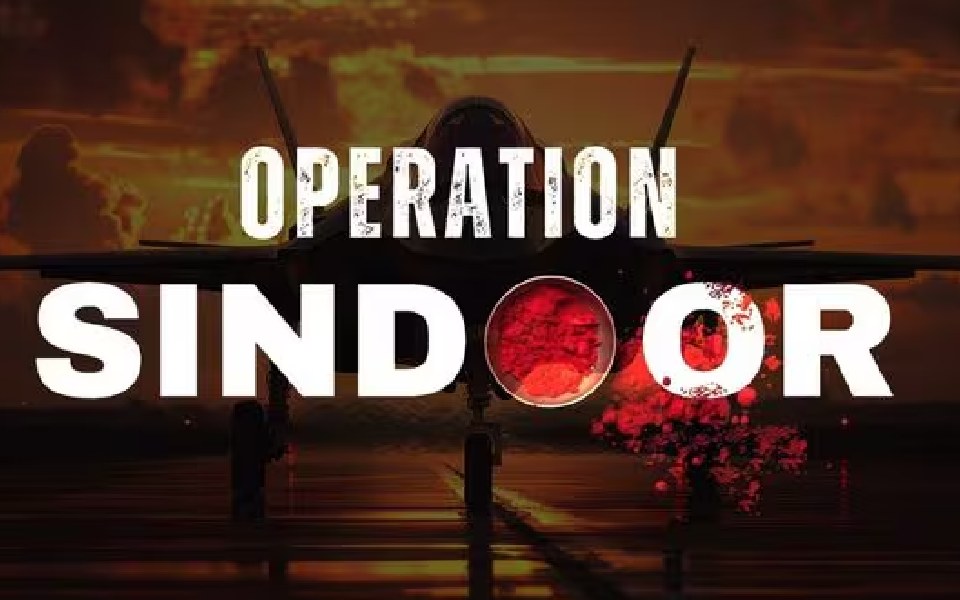
Mumbai: Reliance Industries has clarified that it has no intention of trademarking the term "Operation Sindoor", describing it as an evocative symbol of Indian bravery that belongs to the national consciousness. The company issued a statement on Friday, stating that its media arm, Jio Studios, had filed a trademark application inadvertently and without proper authorisation.
The statement read, "Jio Studios, a unit of Reliance Industries, has withdrawn its trademark application, which was filed inadvertently by a junior person without authorisation." It added that the company and all its stakeholders take immense pride in Operation Sindoor, which was launched by the Indian Armed Forces in response to a Pakistan-sponsored terrorist attack in Pahalgam. "Operation Sindoor is the proud achievement of our brave Armed Forces in India's uncompromising fight against the evil of terrorism," the company stated.
The clarification came after reports emerged that Reliance Industries, along with three other individuals, had submitted trademark applications for the term 'Operation Sindoor' under Class 41 of the Nice Classification. According to a report by Bar and Bench, the applications were filed between 10:42 am and 6:27 pm on May 7 by Reliance Industries, Mumbai resident Mukesh Chetram Agrawal, retired Group Captain Kamal Singh Oberh of the Indian Air Force, and Delhi-based lawyer Alok Kothari. All four had marked the term as “proposed to be used,” suggesting possible commercial use in the future.
Class 41 of the Nice Classification covers a wide range of services, including education and training, film and media production, live performances, digital content and publishing, and cultural or sporting events. It is a category commonly used by OTT platforms, broadcasters, production houses, and event organisers—leading to speculation that 'Operation Sindoor' might be used as a title for a film, documentary, or series.
The incident also sheds light on the lack of legal protection for the names of military operations in India. Currently, the Ministry of Defence does not register or treat such names as intellectual property, and they are not automatically safeguarded. This means that private individuals or companies can file trademark claims over such names unless specific legal steps are taken to prevent it.
Let the Truth be known. If you read VB and like VB, please be a VB Supporter and Help us deliver the Truth to one and all.
EAM Jaishankar meets Jamaican PM, gifts over 10 BHISHM Cubes
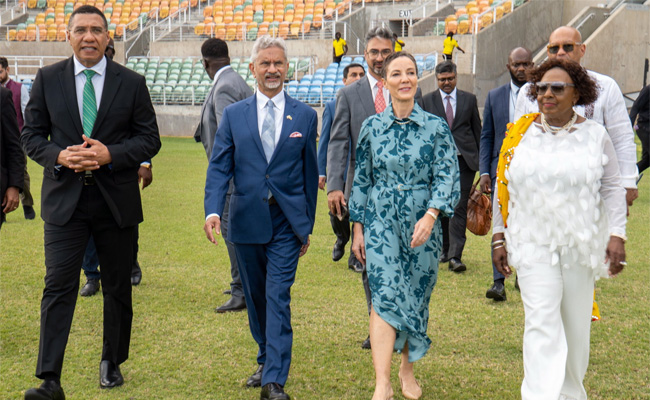
Kingston (PTI): External Affairs Minister S Jaishankar on Monday met Jamaican Prime Minister Andrew Holness and discussed ways to further deepen "political, economic and people-to-people cooperation."
Jaishankar also conveyed greetings from Prime Minister Narendra Modi to Holness.
"Pleased to call on Prime Minister @AndrewHolnessJM in Kingston. Conveyed the greetings of PM @narendramodi," Jaishankar posted on X.
"Discussed deepening our political, economic and people-to-people cooperation. Value his commitment towards further strengthening India-Jamaica relations," the post further read.
Also, the external affairs minister handed over 10 BHISHM (Bharat Health Initiative for Sahyog Hita & Maitri) Cubes as a gift to Jamaica.
"Formally handed over 10 BHISHM Cubes as a gift from India to Jamaica, in the presence of PM @AndrewHolnessJM, Health Minister @christufton and FM @kaminajsmith," Jaishankar posted on X.
"The BHISHM Cube mobile hospital system, designed for rapid deployment, will help Jamaica during disasters and emergencies. The gift of these cubes is a statement of friendship, a commitment to disaster preparedness, and an outcome of innovation," the post said.
Jaishankar arrived in Kingston on Saturday evening, marking the first leg of his nine-day tour of Jamaica, Suriname, and Trinidad and Tobago, aimed at further strengthening India's strategic and cultural ties with the Caribbean nations.
Earlier in the day, he interacted with the Indian diaspora and discussed India's ongoing transformation in infrastructure, human development and technology-driven governance and entrepreneurship with them.
He also highlighted the cricket bond between both countries as India gifted a scoreboard to Jamaica.
A scoreboard was dedicated at Sabina Park in Kingston. It is the home of the Jamaica cricket team and is the only Test cricket ground in the Caribbean island nation.
The minister expressed hope that the new scoreboard would witness many memorable innings, including those symbolising the enduring friendship between the two countries.
Cricket has long been a strong cultural bridge between India and Jamaica, which is part of the West Indies cricket team.
Jamaican players, including Chris Gayle, Courtney Walsh and Michael Holding, have played a major role in shaping the legacy of West Indies cricket in the international arena, contributing to its dominance in earlier decades and its continued global appeal.