J&J rejects report by Rajasthan govt on presence of formaldehyde in baby shampoo
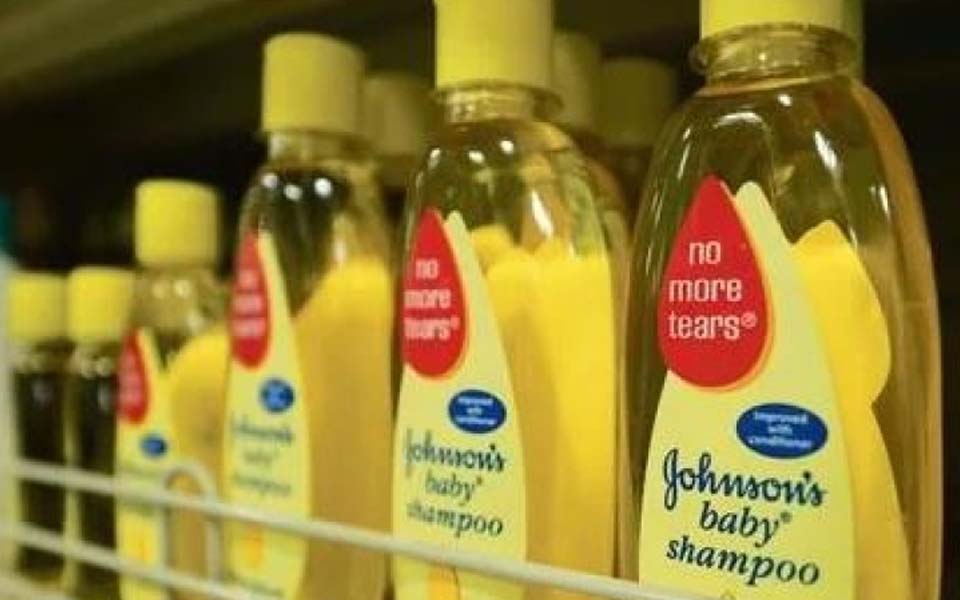
New Delhi: Johnson & Johnson has strongly rejected findings of a Rajasthan government laboratory showing presence of "harmful" chemicals in the US-based company's baby shampoo, a popular product in India.
Based on the report of the Drug Testing Laboratory in Jaipur, the National Commission for Protection of Child Rights (NCPCR) has written to the chief secretaries of all states and Union Territories asking them to stop sale of Johnson & Johnson's (J&J) baby shampoo and remove it from the stocks.
The NCPCR said the test report found presence of formaldehyde in J&J's baby shampoo.
The company, in a statement, said it has not received any direction to stop the sale of its shampoo and that it was not accepting the interim results of the laboratory tests which were based on "unknown and unspecified" methods.
India is a major market for J&J globally, and its share in the country's Rs 4,000-crore baby care market is nearly three-fourths.
"We will await the results and conclusions of the re-testing process at the Central Drugs Laboratory. We are not aware of any directions from NCPCR. It must be noted that any such directions, under the law, can only be issued under certain prescribed conditions," the company said.
J&J said it is in full compliance with current Indian regulatory requirements and standards for manufacturing and testing of all its products.
"We have confirmed to the Indian authorities that we do not add Formaldehyde as an ingredient in our shampoo nor does Johnson's baby shampoo contain any ingredient that can release formaldehyde over time. Our products are safe to use and conform to all applicable standard under the D&C (Drugs and Cosmetics) Act and D&C rules," it said.
"We unequivocally maintain that our products are safe, and our assurance process is amongst the most rigorous in the world, meeting or exceeding the safety standards in every country where our products are sold," the company added.
Officials said NCPCR has powers to recommend action, but it was for the state governments and union territories to take a call on implementation of the recommendation by the apex child rights body.
The NCPCR had sought sample test reports of J&J's baby shampoo and talcum powder from authorities of five states -- Andhra Pradesh (south), Jharkhand (east), Rajasthan (west), Madhya Pradesh (central) and Assam (North East) -- after reports of presence of asbestos and carcinogenic substance in them emerged.
The order by he NCPCR around a week back was issued after test reports of the baby shampoo came from Rajasthan. However, it is yet to receive the test reports from the other four states.
The NCPCR has asked the Drug Control Officer of Rajasthan to send the test report of the talcum powder at the earliest, officials at the child rights body said.
In December last year, India's drug regulator ordered laboratory testing of J&J's baby powder following international media reports it may contain cancer-causing asbestos. Months later, test reports showed that the talcum powder did not contain asbestos.
Let the Truth be known. If you read VB and like VB, please be a VB Supporter and Help us deliver the Truth to one and all.
Karnataka govt revokes suspension of DGP Ramachandra Rao, reinstates him

Bengaluru (PTI): The Karnataka government on Wednesday revoked the suspension order of DGP K Ramachandra Rao and reinstated him into service with immediate effect.
According to the official order, the 1993-batch IPS officer has been posted, with immediate effect and until further orders, as Director General of Police (Police Manual).
"The post of Director General of Police (Police Manual) is declared equivalent in status and responsibilities to the cadre post of Director General of Police, Criminal Investigation Department, Special Units and Economic Offences, Bengaluru, under Rule 12 of the IPS (Pay) Rules, 2016, as included in Schedule II of the said rules," the government order stated.
Rao, who was then serving as Director General of Police (Civil Rights Enforcement), was placed under suspension with immediate effect on January 19, citing conduct unbecoming of a government servant and causing embarrassment to the state administration.
News channels had beamed videos purportedly showing Rao in a compromising position with women. The videos had also gone viral on social media.
Rao is the stepfather of Kannada actress Harshavardhini Ranya, alias Ranya Rao, who is accused of orchestrating the illegal import of gold worth over Rs 12.56 crore from Dubai to India along with two others--businessman Tarun Raju and jewellery dealer Sahil Jain.
Ranya was apprehended at Bengaluru's Kempegowda International Airport on March 3, 2025, with 14.8 kilograms of gold allegedly smuggled from Dubai.