Mumbai, April 26: This year's newly-published SSC textbooks in Maharashtra have depicted a large portion of the border state Jammu and Kashmir out of the country, besides carrying a faulty picture of the national tricolour, Leader of Opposition Radhakrishna Vikhe-Patil said here on Thursday.
In a letter to Chief Minister Devendra Fadnavis, he demanded a probe and immediate arrest of those found guilty of this grave faux pas in the Class 10 Geography textbook.
Vikhe-Patil pointed out that these serious errors have come up in the textbooks recently published by the Maharashtra State Bureau of Textbook Production & Curriculum Research for the academic year starting 2018.
"In chapter 3, page 24, a map of India is published but it is very erroneous as a large part of Jammu & Kashmir is not shown within the borders of the country," he said in the letter.
Similarly, in chapter 2, page 9, the national flag has been published in which the colour of the Ashoka Chakra is wrong.
He said the textbook had been kept for review in a seminar in Pune sometime ago when former school Principal K.U. Sonawane and others raised serious objections, both oral and written, to make the necessary corrections.
"However, the required changes were not made and the textbooks carry the wrong images of India and the national tricolour, besides many other mistakes which have crept into the book," Vikhe-Patil said.
Seeking complaints against the persons concerned and their immediate arrest, he demanded that after consulting experts, all the mistakes must be corrected and a revised version should be made available for the students from the next academic year.
Let the Truth be known. If you read VB and like VB, please be a VB Supporter and Help us deliver the Truth to one and all.
Surjewala slams Pratap Simha’s ‘vile’ remarks on CM Siddaramaiah, demands apology from BJP
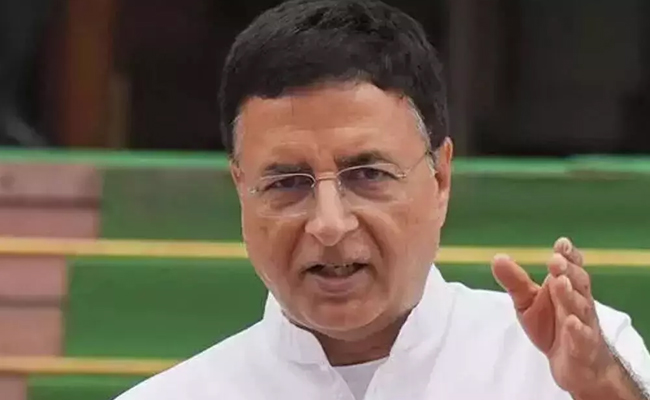
Bengaluru (PTI): Congress general secretary and Karnataka in-charge Randeep Singh Surjewala on Saturday launched a sharp attack on the BJP over alleged disparaging remarks made by former Mysuru-Kodagu MP Pratap Simha against Chief Minister Siddaramaiah during an assembly bypoll campaign in Bagalkote.
Simha made the remarks while campaigning for BJP candidate Veerabhadrayya Charantimath, triggering a political row ahead of the by-elections scheduled for April 9.
Congress has fielded Umesh Meti, son of former MLA late M Y Meti, whose death necessitated the bye-election.
"Pratap Simha's vile remarks about Chief Minister Siddaramaiah in Bagalkot have exposed the BJP's despicable politics once again," Surjewala said in a social media post.
Alleging a larger political design, he added, "It is increasingly evident that Pratap Simha’s outburst is driven by desperation," and accused the BJP of using such remarks to target backward classes, Scheduled Castes, and minorities.
The Rajya Sabha member further claimed that the incident reflects a pattern within the party. "This is not one man's madness—it is the BJP’s political culture," he said, adding that the remarks were aimed at "denigrating leaders from marginalised communities".
Referring to past incidents, Surjewala said, "CM Siddaramaiah and his deputy D K Shivakumar have received death threats in the past, including one from BJP leaders who warned that their bodies would be stuffed into a refrigerator."
The Congress leader also criticised the BJP’s bypoll campaign strategy, alleging "internal contradictions".
He pointed to the party’s use of expelled MLA Basanagouda Patil Yatnal in campaigning despite earlier disciplinary action against him, accusing the BJP of resorting to "abuses and indignities" against opposition leaders.
Surjewala demanded immediate action from the BJP leadership, including Prime Minister Narendra Modi, BJP national president Nitin Nabin, state president B Y Vijayendra, and Leader of Opposition R Ashoka.
He said they must tender a public apology to Kannadigas, particularly to OBCs, SCs, and minorities, over the remarks, and urged the party to expel Simha if it does not repudiate his statements.
Surjewala also called for legal action, demanding that an FIR be registered against Simha and that strict measures be taken.
Warning of "political consequences", he said the electorate in the bypoll-bound constituencies would respond decisively if the BJP failed to apologise, asserting that voters would "teach the BJP a befitting lesson" in the elections.
There has been no immediate reaction from the saffron party yet.