J&K unlikely to see normalcy: Owaisi
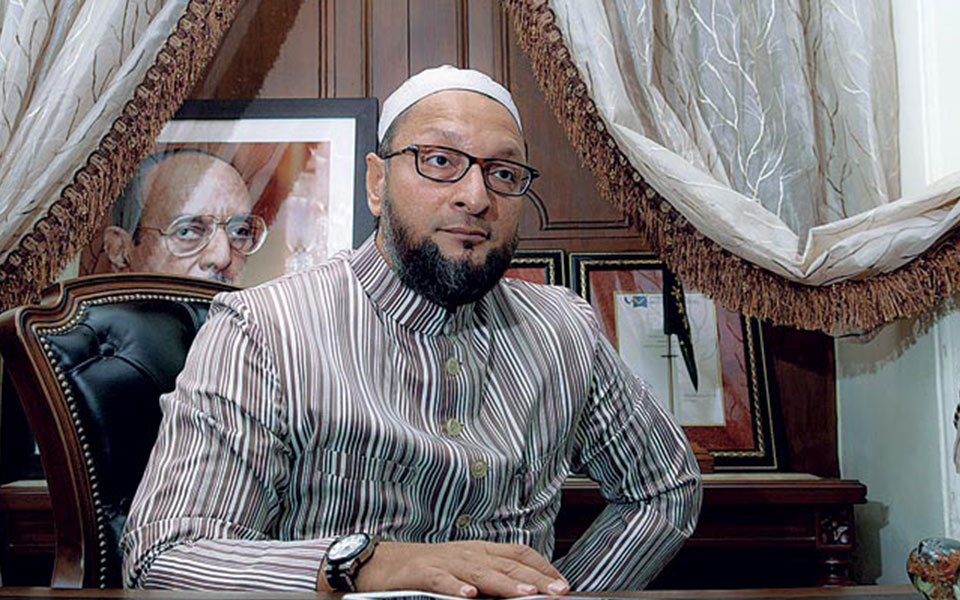
Hyderabad, June 19: The BJP's decision to pull out of the PDP-led Jammu and Kashmir government and the expected imposition of Governor's rule won't bring normalcy in the state, AIMIM chief Asaduddin Owaisi said on Tuesday.
"There will not be normalcy after Governor's rule is imposed... There will be further repression. The BJP's actual agenda is to scrap Article 370. No Kashmiri will approve of it," Owaisi told reporters here.
He said he had no sympathies for Chief Minister Mehbooba Mufti, who resigned after the BJP's announcement, and he saw no political future for her and the Peoples Democratic Party in the Kashmir Valley.
Owaisi alleged that the BJP took the decision to pull out after it realized that it is losing ground in Jammu. Arguing that the BJP could not run away from the responsibility as it was sharing power and had a Deputy Chief Minister and ministers, he said BJP was more responsible than PDP for the situation in the state as it failed to deliver, failed to provide governance, stop terror attacks on Army camps and check cross-border terrorism.
He also said that the BJP, as a partner in the government, made no serious attempt for a dialogue and no step was taken to fulfil the promises made in the agenda of the alliance.
Owaisi said BJP's main aim was to repeal Article 370. "The assassination of Shujaat Bukhari (Editor of Rising Kashmir newspaper) was a monumental tragedy and unfortunately it is being used and exploited to fulfil a policy which was started two years ago," he said.
Recalling that both BJP and PDP had termed formation of the coalition government a meeting of North and South Poles, he said: "The people of the country want to know what happened to the so-called meeting..."
Claiming that the ceasefire (of Ramadan) had resulted in the beginning of political activity on the ground, Owaisi said the BJP owes an explanation to the nation why it announced a ceasefire in a hurry and why it did not extend it.
Let the Truth be known. If you read VB and like VB, please be a VB Supporter and Help us deliver the Truth to one and all.
'Godman' Kharat held in 8th sexual exploitation case; court denies police remand, sends him to jail
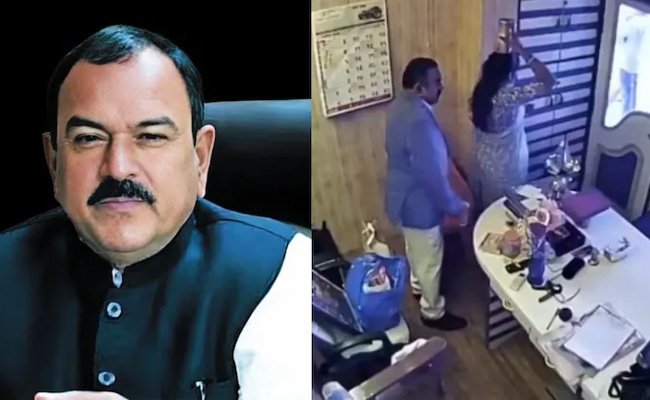
Nashik (PTI): Police took custody of self-proclaimed godman-cum-astrologer Ashok Kharat in an eighth case related to sexual exploitation of women and produced him before a Nashik district court which sent him to jail till May 12 after rejecting the plea for his police remand on Thursday.
On April 29, the Special Investigation Team (SIT) of the Nashik police in north Maharashtra filed a request application in the court demanding Kharat's custody in the eighth case.
After the court granted them the necessary permission, the SIT took custody of Kharat, who was in jail in connection with the seventh case of sexual exploitation registered against him.
The 'godman', named in a dozen FIRs related to rape and financial fraud, was produced before Chief Judicial Magistrate B N Ichpurani in the eighth case through video conferencing due to security reasons.
The eighth case related to Kharat allegedly sexually exploiting a woman who had approached him in search of solutions to her family problems, according to police.
During the hearing, the prosecution demanded police custody of the accused in the latest case.
However, the defence strongly opposed the demand and argued that the SIT was giving same reasons for police custody every time and there was no strong reason for accepting their plea.
The court accepted the argument put forth by the defence and remanded Kharat to judicial custody till May 12 in the eighth case.
The SIT will produce Kharat in the court on Friday again and seek his police custody in the ninth case. As the self-styled godman has been granted judicial custody in the eighth case, he will be sent to Nashik Road Central Jail and the SIT will take his custody from there.
Meanwhile, Kharat's judicial custody in the fourth case ended on Thursday. On April 18, the accused was remanded to judicial custody till April 30 in the fourth case of sexual exploitation of women.
In a related development, the SIT conducted a search at Kharat's office in the 'Canada Corner' area of Nashik city on Wednesday. A 'panchnama' (record of search and seizure proceedings) was conducted and the office was locked and sealed again.
Kharat, a well-heeled man with political connections, was arrested for the first time on March 18 after a woman alleged he had repeatedly raped her for three years.
He is accused of sexually exploiting several women by claiming to have divine powers and knowledge of black magic, and also committing large-scale financial fraud.
The SIT is conducting a probe into 12 cases of sexual exploitation and financial fraud registered against the astrologer in Nashik and Ahilyanagar districts.