Journalist Siddique Kappan to remain in jail
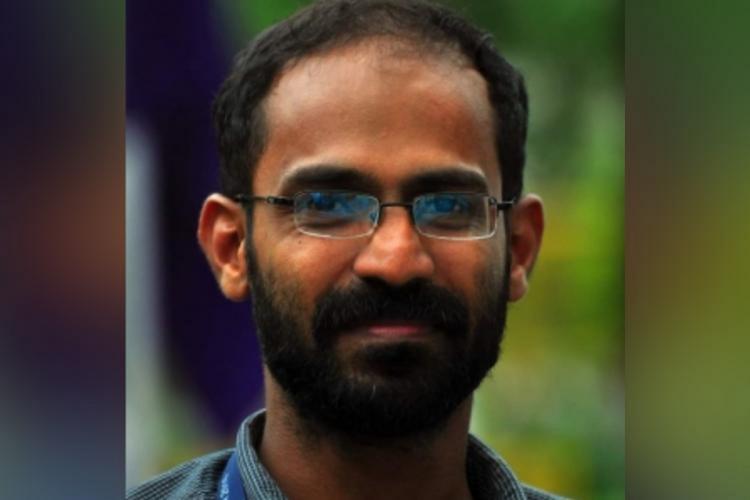
Lucknow(PTI): Kerala-based journalist Siddique Kappan, who was recently granted bail by the Supreme Court, will continue to remain in a jail here as a case being probed by the Enforcement Directorate against him is still pending, officials of the prison department said.
A court here on Monday issued the release order of Kappan, who was lodged in jail after his arrest in October 2020 while he was on his way to Hathras in Uttar Pradesh, where a Dalit woman had died after allegedly being raped.
"Kappan will continue to remain in jail as a case being probed by the Enforcement Directorate is still pending," DG Jail PRO Santosh Verma told PTI.
While ordering his release, Additional Sessions Judge (ASJ) Anurodh Mishra had directed Kappan to furnish two sureties of Rs 1 lakh each and a personal bond of the same amount.
The judge also sought an undertaking from the journalist that he would not breach the conditions imposed on him by the apex court.
Kappan along with three others -- Athikur Rehman, Alam and Masood -- was arrested by the police in Mathura for allegedly having links with the Popular Front of India and being a part of conspiracy to instigate violence.
He was booked under various sections of the Indian Penal Code (IPC), the Unlawful Activities (Prevention) Act and the Information Technology (IT) Act.
The Supreme Court on Friday had granted bail to Kappan.
The court had also taken note of the submissions of the Uttar Pradesh government and laid down several conditions for bail, including that he will have to remain in Delhi for the next six weeks after release from the prison and report to Nizamuddin police station in the national capital on Monday every week.
Opposition parties and journalist bodies had welcomed the Supreme Court order granting bail to Kappan.
They claimed Kappan was made a soft target by the Uttar Pradesh government and hoped he will also be granted bail in another case filed against him under the Prevention of Money Laundering Act.
The Dalit woman had died at a Delhi hospital a fortnight after she was allegedly gang-raped on September 14, 2020. She was cremated in the middle of the night in her village.
Let the Truth be known. If you read VB and like VB, please be a VB Supporter and Help us deliver the Truth to one and all.
Chhattisgarh govt enforces austerity measures, restricts foreign travel and cuts convoy vehicles

Raipur (PTI): The Chhattisgarh government on Saturday rolled out a set of austerity measures, including restricted use of convoy vehicles for the chief minister, ministers and heads of state-run bodies, besides curbs on foreign travel at government expense.
The state has decided to implement the cost-saving steps with immediate effect to ensure efficient management of financial resources and discipline in public spending, said a directive issued by Finance Secretary Rohit Yadav.
The move follows Prime Minister Narendra Modi’s appeal for austerity amid the ongoing conflict in West Asia.
The order said that only essential vehicles should be used in the convoys of the CM, ministers and office-bearers of corporations, boards and commissions, while ensuring restrained use of other government resources.
It also directed departments to take steps for a phased conversion of all official vehicles into electric vehicles in order to promote the use of EVs.
As part of fuel-saving measures, expenditure on petrol and diesel for government vehicles should be kept to a minimum, the directive said.
Vehicle pooling arrangements should also be implemented for officials of departments travelling to the same destination, it added.
The order further stated that foreign travel of government employees at state expenses will be completely prohibited except under extremely unavoidable circumstances. In such cases, prior approval of the CM will be mandatory.
To reduce administrative expenditure, departments have been instructed to hold physical meetings preferably only once a month and encourage virtual and online meetings. Regular departmental review meetings should compulsorily be conducted through video conferencing, it said.
The government also stressed the need for energy conservation in its offices, directing that all electrical equipment, including lights, fans, air-conditioners and computers, must be switched off after office hours.
The directive will remain effective till September 30 this year.
Amid the war involving the US, Israel and Iran, Modi has suggested reducing petrol and diesel consumption, using metro rail services in cities, carpooling, increased use of EVs, utilising railway services for parcel movement and working from home to conserve foreign exchange.