Journalist Vaishna Roy faces online trolling over remarks on ‘operation sindoor’
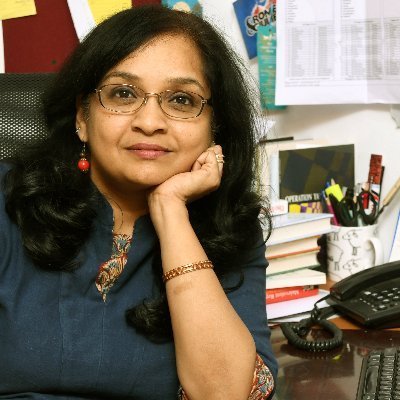
New Delhi: Vaishna Roy, the editor of Frontline magazine under The Hindu group, is facing severe trolling on social media after she wrote on the naming of India’s recent counter-terror strike as “Operation Sindoor.”
Earlier this morning, under “Operation Sindoor,” Indian forces reportedly carried out strikes on nine terror camps—four inside Pakistan and five in Pakistan-occupied Jammu and Kashmir (PoJK). According to reports, over 80 terrorists were killed in response to the recent Pahalgam terror attack in which 26 tourists were killed by Pakistan-backed militants.
The name “Operation Sindoor” refers to the traditional vermilion mark worn by Hindu women as a symbol of marriage. Roy, in a post on X, wrote: “On principle, I object strongly to the label Operation Sindoor. It reeks of patriarchy, ownership of women, ‘honour’ killings, chastity, sacralising the institution of marriage, and similar Hindutva obsessions.”
Following this post, Roy was heavily trolled by several right-wing accounts online. In support of her, journalist Neha Dixit posted, “Agree with @vaishnaroy and in complete solidarity. Shame on the trolls.”
Another user, @SanjuktaChoudh5, wrote, “I stand with @vaishnaroy. She is perfectly right in what she has written. I too echo here.”
Senior journalist Paranjoy Guha Thakurta also came out in support, saying, “The editor of ‘Frontline’ Vaishna Roy is being viciously trolled by shameless Right Wing trolls for her Tweet – please spread it far and wide.”
Amid the controversy and trolling, Vaishna Roy has reportedly locked her X account.
Let the Truth be known. If you read VB and like VB, please be a VB Supporter and Help us deliver the Truth to one and all.
EAM Jaishankar meets Jamaican PM, gifts over 10 BHISHM Cubes
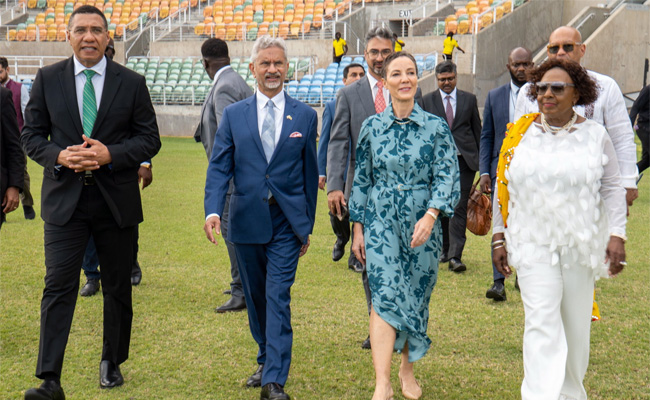
Kingston (PTI): External Affairs Minister S Jaishankar on Monday met Jamaican Prime Minister Andrew Holness and discussed ways to further deepen "political, economic and people-to-people cooperation."
Jaishankar also conveyed greetings from Prime Minister Narendra Modi to Holness.
"Pleased to call on Prime Minister @AndrewHolnessJM in Kingston. Conveyed the greetings of PM @narendramodi," Jaishankar posted on X.
"Discussed deepening our political, economic and people-to-people cooperation. Value his commitment towards further strengthening India-Jamaica relations," the post further read.
Also, the external affairs minister handed over 10 BHISHM (Bharat Health Initiative for Sahyog Hita & Maitri) Cubes as a gift to Jamaica.
"Formally handed over 10 BHISHM Cubes as a gift from India to Jamaica, in the presence of PM @AndrewHolnessJM, Health Minister @christufton and FM @kaminajsmith," Jaishankar posted on X.
"The BHISHM Cube mobile hospital system, designed for rapid deployment, will help Jamaica during disasters and emergencies. The gift of these cubes is a statement of friendship, a commitment to disaster preparedness, and an outcome of innovation," the post said.
Jaishankar arrived in Kingston on Saturday evening, marking the first leg of his nine-day tour of Jamaica, Suriname, and Trinidad and Tobago, aimed at further strengthening India's strategic and cultural ties with the Caribbean nations.
Earlier in the day, he interacted with the Indian diaspora and discussed India's ongoing transformation in infrastructure, human development and technology-driven governance and entrepreneurship with them.
He also highlighted the cricket bond between both countries as India gifted a scoreboard to Jamaica.
A scoreboard was dedicated at Sabina Park in Kingston. It is the home of the Jamaica cricket team and is the only Test cricket ground in the Caribbean island nation.
The minister expressed hope that the new scoreboard would witness many memorable innings, including those symbolising the enduring friendship between the two countries.
Cricket has long been a strong cultural bridge between India and Jamaica, which is part of the West Indies cricket team.
Jamaican players, including Chris Gayle, Courtney Walsh and Michael Holding, have played a major role in shaping the legacy of West Indies cricket in the international arena, contributing to its dominance in earlier decades and its continued global appeal.