
Justice can never be instant, loses its character when it becomes revenge: CJI
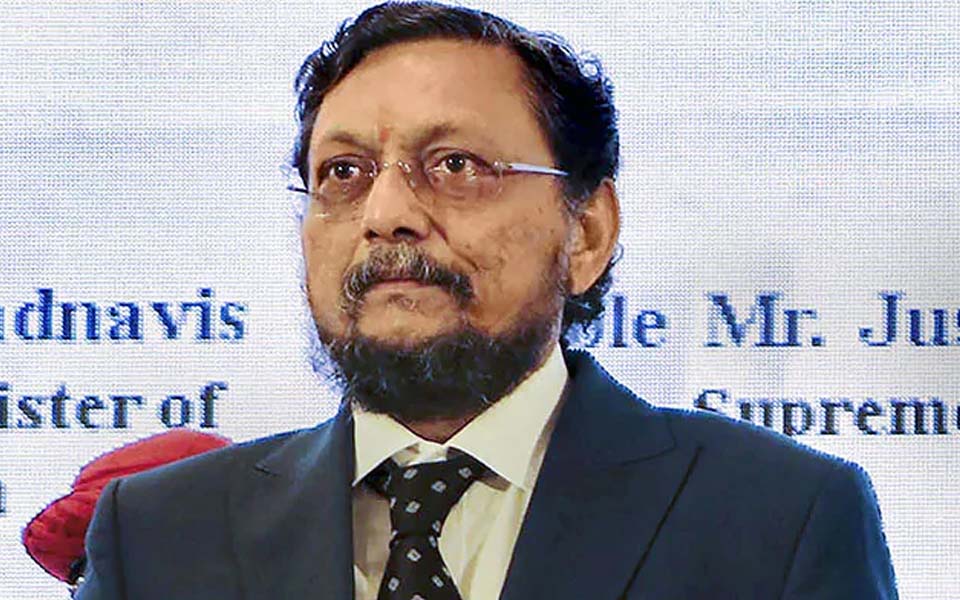
Jodhpur, Dec 7: In the backdrop of the Hyderabad rape-murder incident and gunning down of the four accused in an alleged encounter, Chief Justice of India S A Bobde on Saturday said justice can never be instant and loses its character when it becomes revenge.
At the same time, he admitted that the recent events in the country have sparked off an old debate with new vigour, where there is no doubt that the criminal justice system must reconsider its position and attitude towards the time it takes to dispose of a case.
"But I don't think justice can ever be or ought to be instant, and justice must never ever take the form of revenge. I believe justice loses its character of justice if it becomes revenge," the CJI said during the inauguration of a new building of the Rajasthan High Court here.
The CJI's remarks came a day after the police claimed that all the four accused in the rape and murder of a young veterinarian in Hyderabad were shot dead in "retaliatory" firing by the cops when two of the accused opened fire at them after snatching their weapons and tried to escape from the site where they had been taken for a reconstruction of events as part of the investigation.
Addressing the event here, Law Minister Ravi Shankar Prasad urged the CJI and other senior judges to ensure that there is a mechanism to monitor quick disposal of rape cases, saying that the women of the country are under pain and distress and crying for justice.
"I would urge the CJI and other senior judge that now there must be a mechanism to monitor the disposal of these cases so that India's stature as a proud country governed by rule of law must be restored at the earliest," Prasad said, and assured government funding for it.
The Hyderabad incident had sparked demands of swift punishment to rape convicts. The news of the 'encounter' killing led to celebrations in some quarters and concern in others.
The four accused were arrested on November 29 for allegedly raping and killing the 25-year-old veterinary doctor by smothering her and later burning her body, an incident that led to widespread outrage and brought back memories of the December 16, 2012 Nirbhaya case.
"The women of the country are under pain and distress. They are crying for justice," Prasad said.
The minister said there are 704 fast-track courts for heinous offences and others and the government is in the process of setting up 1,123 dedicated courts for POCSO and rape offences.
"In the law relating to women violence, we have already laid down capital punishment and other severe punishment including completion of trial in two months time," he added.
The Chief Justice of India, who spoke after the minister, stressed that as an institution, the judiciary must remain committed to making justice accessible to people by strengthening the existing avenues and evolving newer means to achieve an affordable, quick and satisfactory settlement of disputes.
"At the same time, we must be aware of the changes and perception about the judiciary," Justice Bobde said said.
He said there is a need in the judiciary to invoke self-correcting measures but whether or not they should be publicised is a matter of debate.
"We have to devise methods for not only speeding up litigation but all together preventing it. There are laws which provide for pre-litigation mediation," he said, adding that there was a need to consider compulsory pre-litigation mediation.
Surprisingly, no courses were available for conferring a degree or diploma in mediation, he said.
He also said the press conference held by four senior most judges of the apex court last year was just a self-corrective measure.
In an unprecedented move, Justices J Chelameswar, Ranjan Gogoi, M B Lokur and Kurien Joseph-- had on January 12, 2018, held a press conference, saying the situation in the top court was "not in order" and many "less than desirable" things had taken place.
Ranjan Gogoi later in the year had succeeded the then chief justice of India Dipak Misra.
"I believe the institution (judiciary) must correct itself and indeed it did during the time when the much-criticised press conference was held. It was nothing more than a self-corrective measure and I do not wish to justify it," Justice Bobde said.
The CJI further said, "All judges were eminent and Justice (Ranjan) Gogoi in particular showed great competence and led the judiciary from the front."
Let the Truth be known. If you read VB and like VB, please be a VB Supporter and Help us deliver the Truth to one and all.
Iran ready for peace, also ready for war: Iran envoy as US port blockade kicks in
_vb_54.jpeg)
New Delhi (PTI): Iran is open to holding another round of peace talks with the US if it refrains from "unlawful demands" and accepts Tehran's conditions, Iranian envoy Mohammad Fathali said Monday, as the US blockade of Iranian ports takes effect, further escalating the tensions.
The US and Iran failed to reach a peace deal at their historic 21-hour talks in Pakistan that ended early Sunday without a breakthrough, with both sides attempting to hold each other responsible for the stalemate.
Fathali also responded to the US military blockade on shipping traffic entering and leaving Iranian ports saying Washington knows the capabilities of Iran and that Tehran is fully prepared for "all options".
"If you want progress in any diplomatic process, (both) sides should be ready for negotiations. And they should avoid unlawful demands," Fathali told a media briefing at the Iranian embassy.
"Our high-ranking officials said we are ready for peace, we are ready for negotiations. But you should know that Iran is also ready for war," he said.
"They wanted to finish the war in three or four days, but the duration, the scope and the geography of the war are under our control. You can see this situation after the 42-day war," he said.
The Iranian ambassador was responding to questions on whether Iran was ready for a new round of talks as the negotiations between the two sides in Islamabad ended without producing any outcome.
The Iranian side had unveiled some "key points" during the negotiations held in Islamabad, including the nuclear issue, war reparations and relief from sanctions, Fathali said.
Hours after the Iran-US talks ended without any outcome, President Donald Trump said the US military will begin a blockade to stop ships from entering or leaving the Strait of Hormuz and stop all traffic entering and leaving Iranian ports starting 10 am ET (7:30 pm Indian time) on Monday.
The Strait of Hormuz is a critical shipping route that handles roughly 20 per cent of global oil and LNG (Liquefied Natural Gas).
When Fathali was asked about the US blockade of Iranian ports, he said the American side is "very well aware of our capacity and capabilities".
"Our high-ranking officials have said they are ready for all options. You can see how in our response and reaction," he said.
The ambassador also asserted that the Strait of Hormuz is part of Iran's "territorial waters".
Iran will soon announce a mechanism for using the waterway, he said.
"Iran announced that the Strait of Hormuz is part of the territorial waters of Iran and Oman, and we said that in the near future, we will announce the mechanism for the passage through this strait," Fathali said.
Meanwhile, External Affairs Ministry spokesperson Randhir Jaiswal said at a separate media briefing that India is closely following developments in West Asia, including those related to the Strait of Hormuz.
"As we have continuously advocated earlier, de-escalation, dialogue and diplomacy are essential to bring an early end to the conflict. We expect that unimpeded freedom of navigation and global flow of commerce would prevail in the Strait of Hormuz," Jaiswal said.
To a question on whether Indian ships will have to pay a toll for passage through the strait, Fathali did not give a direct reply but said Iran has good relations with India and referred to Prime Minister Narendra Modi's phone conversations with Iranian President Masoud Pezeshkian on two occasions since the start of the war in West Asia on February 28.
"I believe Iran and India have common interests in the region. I also believe Iran and India have a common fate in the region," he said.
The envoy inaugurated an exhibition of drawings made by the children of a school in the Iranian city of Minab that was hit in a missile strike when the war started on February 28. More than 160 people, mostly schoolgirls, were killed in the strike.
Fathali said the military strikes by Israel and the US have killed 3,753 people, including 887 women and 221 children under the age of 18 since start of the war on February 28.
The attacks also injured more than 30,000, including 4,989 women and 1,979 children, Fathali said, alleging Israel and the US have targeted hospitals, residential settlements, recreational facilities, religious sites, bridges, railway networks and petroleum infrastructure.
_vb_07.jpeg)
_vb_34.jpeg)
_vb_87.jpeg)