Justice Chandrachud’s remarks may justify curative plea against Ayodhya verdict: Prof. Mohan Gopal
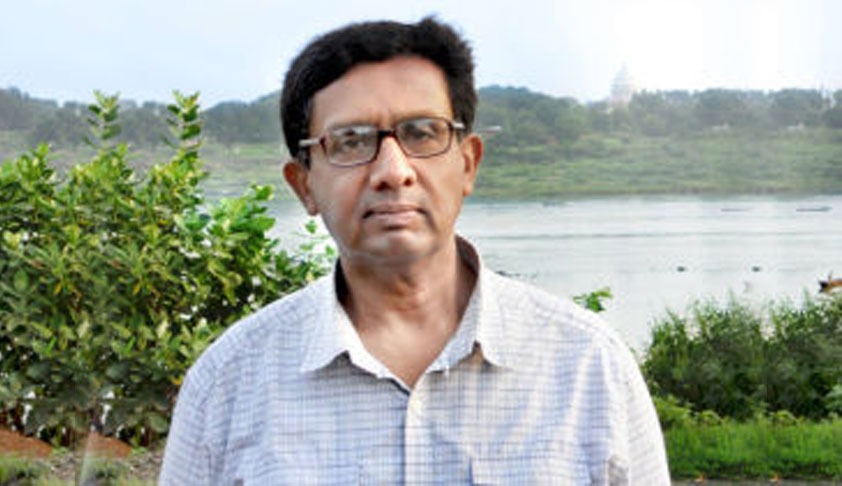
New Delhi: Legal scholar Professor Mohan Gopal has said that former Chief Justice of India DY Chandrachud’s recent comments on the Babri Masjid dispute may provide sufficient grounds to seek a curative petition against the Supreme Court’s 2019 Ayodhya judgment.
Speaking at the CH Mohammed Koya National Seminar at the University of Calicut, Prof. Gopal observed that Justice Chandrachud’s remark describing the Babri Masjid’s construction as a “fundamental act of desecration” contradicted the 2019 verdict. The judgment, delivered by a five-judge Bench led by then CJI Ranjan Gogoi, had noted that there was no evidence to prove the mosque was built after demolishing a temple. Justice Chandrachud was widely believed to have authored that ruling.
Prof. Gopal argued that such inconsistency undermines confidence in the judiciary. “The ultimate responsibility of a court is to deliver judgments that inspire trust. Justice must not only be done but also be seen to be done, especially by those who lose the case,” he said, adding that the verdict stood “vitiated” in light of the former CJI’s subsequent remarks.
Calling the judgment “contrived” and “unreasoned,” Prof. Gopal also criticised the unsigned addendum as “pure theocracy.” He stressed that judges must be transparent about their ideological leanings, recalling how Justice Chinnappa Reddy openly acknowledged his Marxist beliefs.
“If Justice Chandrachud had strong beliefs about the Ayodhya issue, then he should have recused himself,” Prof. Gopal remarked. He questioned whether the judge, “a good friend and a remarkable jurist,” had shown sufficient judicial integrity by not disclosing his position during the case.
Prof. Gopal suggested that a curative petition could serve as both a legal remedy and a tool for public education. “Let us work on a curative petition and demand that the whole matter be reheard. This is the kind of reaction through which we can mould public opinion and hopefully even approach the Court to get a rehearing,” he said.
The 2019 Ayodhya verdict granted the disputed site to Hindu parties for the construction of a Ram temple while allocating an alternate plot to the Sunni Waqf Board.
Let the Truth be known. If you read VB and like VB, please be a VB Supporter and Help us deliver the Truth to one and all.
Delhi schools suspend outdoor activities, plan early steps to shield students from heat
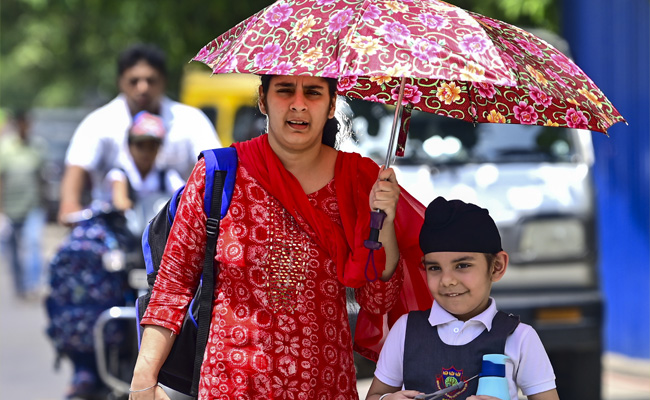
New Delhi (PTI): To shield students from heat-related ailments amid soaring temperatures and harsh afternoon sun, schools across Delhi have begun taking precautionary measures by suspending outdoor activities, shifting assemblies indoors, with some even considering early closure for junior classes.
From indoor games and hydration breaks to ORS consumption and modified dispersal timings, schools are tightening measures as the city braces for prolonged heatwave conditions.
Sudha Acharya, principal at ITL Public School in Dwarka, said all outdoor activities, including morning assembly and games, have been shifted to the school's multipurpose hall.
“We have issued an advisory to all parents to take precautionary measures before sending their children to school. We are also planning to close the school from classes 1 to 8 from May 14 onward if the weather conditions worsen," she said.
Mallika Preman, principal at Tagore International School in East of Kailash, said students have been advised to remain indoors during peak afternoon hours and keep themselves hydrated.
“We have suspended all outdoor activities, and students now play indoor games like carrom and chess. We have also modified the dispersal system so that students are not brought out until their parents arrive at their designated collection areas,” Preman said.
“This reduces their exposure to heat in the afternoon. Students have also been advised to wear caps or use umbrellas during dispersal,” she added.
Ritu Sharma, principal at Sovereign Public School in Rohini, said that teachers have been asked to closely monitor students for signs of heat exhaustion.
“Our priority is to ensure that children remain safe and comfortable during school hours. We are encouraging them to carry water bottles, avoid direct sun exposure and immediately report any discomfort. We have also arranged shaded rest areas and indoor engagement activities to reduce heat exposure,” she said.
The Directorate of Education (DoE) has launched a ‘Beat the Heat’ initiative for government, government-aided and private unaided recognised schools in Delhi in view of the heatwave conditions forecast by the India Meteorological Department (IMD).
The initiative follows the Heat Wave Action Plan issued by the Delhi Disaster Management Authority (DDMA) and aims to protect students from heat-related illnesses while promoting hydration, environmental awareness and care for animals and birds.
Under the initiative, schools have been directed to ring a 'hydration bell' daily in the penultimate period, during which every student will consume oral rehydration solution (ORS). Teachers will also briefly explain the importance of staying hydrated.
Schools have also been encouraged to create 'cool corners' with earthen water pots, promote a ‘one child-one plant’ green mission and appoint student volunteers as 'Jal Mitras' to place and refill water bowls for birds and stray animals, the advisory said.
According to the DoE, the other measures include ensuring safe drinking water stations, spreading awareness on heat stroke prevention, training teachers to identify symptoms of heat stress, and prominently displaying emergency helpline numbers across campuses.
The heads of schools have been asked to submit an action taken report on the implementation of the measures to their respective district offices by April 28, it said.