Kalyan Singh set to lose immunity as Governor, may face trial in Babri case
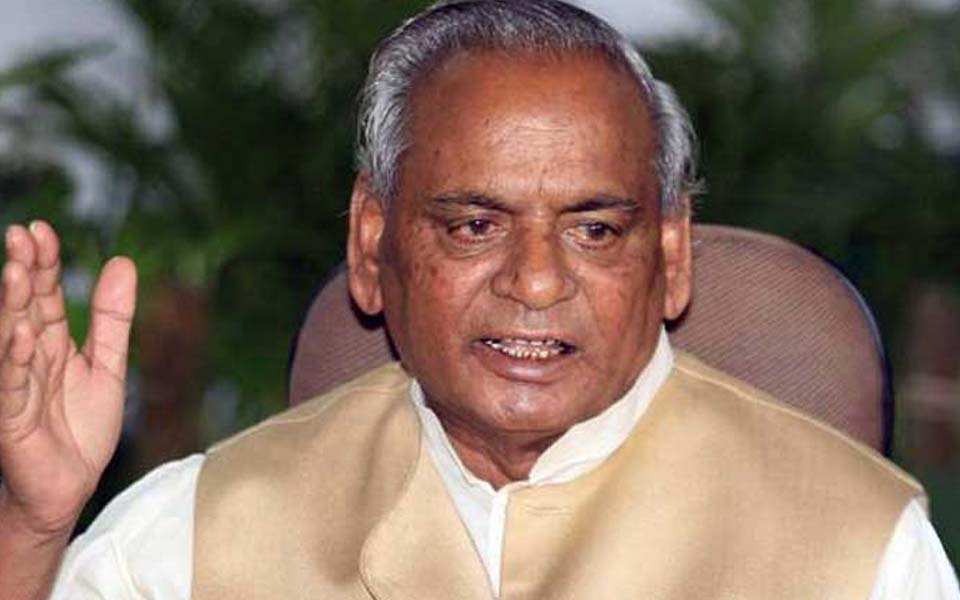
New Delhi, Sep 1: Outgoing Rajasthan Governor Kalyan Singh may have to face trial for criminal conspiracy in the Babri Masjid demolition case as the immunity he has been enjoying for holding the constitutional post will go away at the end of his tenure, sources said.
President Ram Nath Kovind on Sunday appointed former Union minister Kalraj Mishra as the new Governor of Rajasthan to succeed Singh.
On April 19, 2017, the Supreme Court had ordered revival of criminal conspiracy charges against senior BJP leaders L K Advani, Murli Manohar Joshi and Uma Bharati.
It had also clarified that Singh, who was the chief minister of Uttar Pradesh when the Babri Masjid was demolished in 1992, could not be brought in as an accused to face trial in view of the constitutional immunity granted to Governors under Article 361 of the Constitution.
However, the apex court told the CBI to call Singh as an accused as soon as he ceases to be the Governor.
Article 361 of the Constitution confers immunity to the President and Governors from criminal and civil cases during their term of office.
It says no court can issue summons to the President or a Governor in any case.
"As Singh's tenure as Governor comes to an end, he may have to face the trial unless the government appoints him in another constitutional post," a source privy to the development said.
Singh was appointed as the Rajasthan Governor on September 3, 2014 for a five-year tenure.
According to the CBI case against Singh, he, as the chief minister of Uttar Pradesh, had given assurance before the National Integration Council that he would not allow demolition of the disputed structure and the Supreme Court had permitted for only symbolic 'kar sewa' to be performed at the disputed site.
"Singh had also said that he will fully ensure the protection of the structure and it will not be felled down, but he allegedly acted in opposition to his assurances," said an order of the special judge, Lucknow in 1997 subsequent to a CBI charge sheet against him in 1993.
The CBI had also alleged that Singh, as the chief minister, did not issue the order of the use of the central force.
"From this it seems that prima facie he was a necessary participant in the criminal conspiracy," the special court had ruled in 1997.
Singh had resigned as the chief minister of Uttar Pradesh after the demolition of Babri Masjid on December 6, 1992.
Let the Truth be known. If you read VB and like VB, please be a VB Supporter and Help us deliver the Truth to one and all.
Security forces destroy 23 illegal bunkers, seize 18 IEDs in Manipur
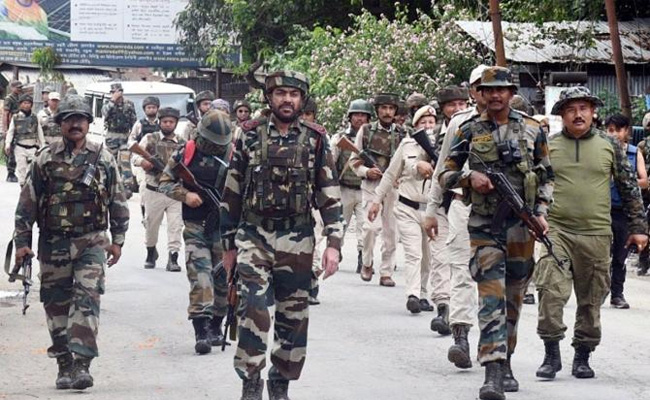
Imphal (PTI): Security forces have destroyed 23 bunkers illegally constructed in Manipur's Ukhrul and seized 18 IEDs in Tengnoupal district in separate operations, a police statement said on Saturday.
The bunkers were destroyed on Thursday in the hill villages of Mongkot Chepu, Shongphel, Mullam, Sirarakhong and Ringue in Litan police station area, it said.
A 12-bore pump action gun, 17 cartridges of different calibres and 111 empty cases of fired bullets were also seized.
At least seven people have been shot dead in different firing incidents and more than 30 houses have been torched since violence broke out between Tangkhul Naga and Kuki communities in Ukhrul district in February this year.
Meanwhile, in a separate operation on Wednesday, security forces seized a cache of arms and explosives in T Bongmol village in Moreh police station area in Tengnoupal district.
Two single-barrel rifles, four 9mm pistols with magazines and 18 improvised explosive devices (IEDs) were seized. The explosives were destroyed on the spot, it added.