Kamal Haasan asks PM Modi to explain 'need for new Parliament building when half of India is hungry'
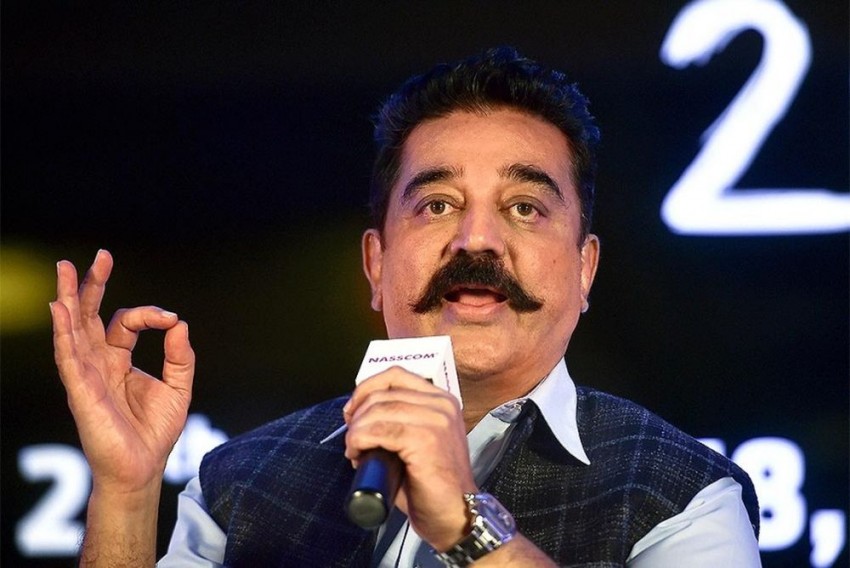
Chennai, Dec 13: MNM chief Kamal Haasan on Sunday demanded that Prime Minister Narendra Modi spell out the rationale behind constructing a new Parliament building for about Rs 1,000 crore "when half of India is hungry due to coronavirus pandemic triggered loss of livelihoods".
Seeking to liken the proposed construction of the new edifice to the centuries old Great Wall of China, he claimed that 'thousands of people perished' during its construction, but the dragon nation rulers said the wall was to 'guard' the people.
"To protect whom is a new Parliament building being constructed at a cost of Rs 1,000 crore when half of India is hungry due to the coronavirus pandemic triggered loss of livelihoods,' the Makkal Needhi Maiam leader asked in a tweet.
'Answer honourable elected Prime Minister,' he said hours before kick starting the first phase of his campaign for the Assembly polls from Madurai in southern Tamil Nadu.
Assembly elections are due during April-May 2021 in TamilNadu.
Prime Minister Narendra Modi laid the foundation stone for a new Parliament building on December 10. He also performed the ground-breaking ceremony for the structure, which is expected to be completed by 2022.
Speaking to reporters before leaving for the temple town, Haasan alleged that the authorities had at the last minute not granted permission for MNM to campaign within urban areas, though they had got the nod to go ahead in 'many places'.
Asked about the focus of his party's campaign, he said would be ushering in a complete transformation in Tamil Nadu.
"There is no doubt about degeneration in the state...
people know that well and there is no point lamenting..MNM will talk about what needs to be done now," he said,apparently targeting the two Dravidian parties, AIADMK and DMK, who have in turn ruled the state since 1967.
Let the Truth be known. If you read VB and like VB, please be a VB Supporter and Help us deliver the Truth to one and all.
Austrian police detain suspect in case of rat poison found in baby food jars on supermarket shelves
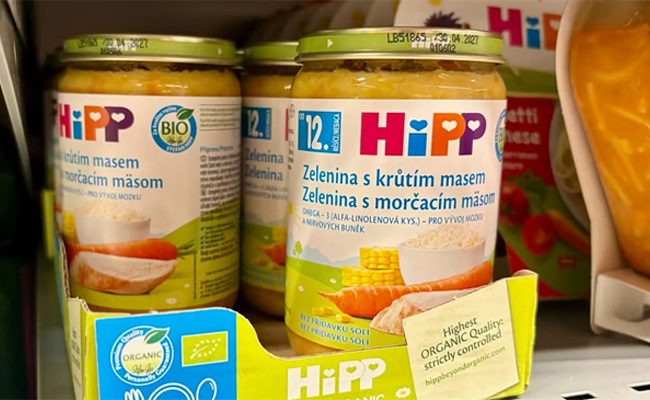
Vienna (AP): Police in eastern Austria say a 39-year-old suspect has been arrested after rat poison turned up in some HiPP baby food jars on supermarket shelves in central Europe.
HiPP, which recalled some of its baby food jars in Austria, Slovakia and the Czech Republic after the case came to light last month, said in a statement Saturday it was “greatly relieved” by the arrest, and would provide further updates as verified details come in.
The Burgenland State Criminal Police Office, under the direction of prosecutors, said a probe was launched after poison turned up in a baby food jar purchased at a supermarket in the city of Eisenstadt on April 18.
It said the suspect was being questioned, and that no further details would be immediately provided. The Burgenland public prosecutor's office has announced an investigation into suspected “intentional endangerment of the public.”
The Austrian Press Agency reported that an expert report on the toxicity of the poison was pending. A total of five tampered baby food jars were seized before they could be consumed, APA reported.
Authorities said previously they believe the tampering occurred in 190-gram (6.7-ounce) jars of baby food made with carrots and potatoes for 5-month-olds that were sold from SPAR supermarkets in Austria.
HiPP responded by recalling all of its baby food jars sold at SPAR supermarkets — which include SPAR, EUROSPAR, INTERSPAR and Maximarkt stores — in Austria as a precaution. Vendors in Slovakia and the Czech Republic also removed all of the brand's baby jars from sale.
The company said the recall was not due to any product or quality defect on its part, and said the jars left its facility in “perfect condition.”
Police said a customer at the time of the discovery had reported that a jar appeared to have been tampered with, but no one had consumed the baby food.