Kamal Nath Is Chief Minister Of Madhya Pradesh, Announces Congress
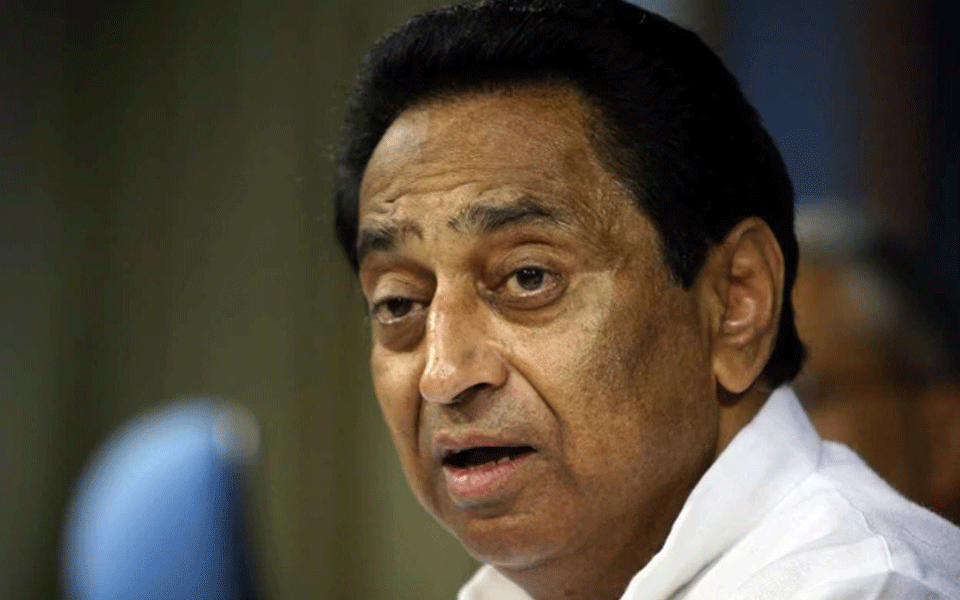
New Delhi, Dec 13: After two days of uncertainty over the choice of chief minister in Madhya Pradesh, the Congress party after rounds of deliberations has chosen Kamal Nath as the new chief minister of the state. According to a tweet by news agency ANI, there will be no deputy chief minister in Madhya Pradesh.
Congress president Rahul Gandhi finalised Nath's name after repeated meetings at is residence in Delhi with him and the other front runner Jyotiraditya Scindia. Discussions were also held with former Congress president Sonia Gandhi and with party's observer AK Antony, who had taken inputs from the newly elected members.
Nath, a former union minister known for his organisational skills, faced a tough challenge from the 47-year old Scindia who is a former junior minister and a member of parliament from Guna.
News of his probable selection also drew angry responses from the Akali Dal which alleged he had a role in the 1985 anti-Sikh riots.
Nath is a nine-time Lok Sabha MP for Chhindwara who has a handled several portfolios like environment, road transport, urban development and parliamentary affairs during different stints as union minister since 1991.
After a see-saw battle on Tuesday, Congress emerged the single largest party in Madhya Pradesh with 114 seats, two short of a simple majority. The BJP, which had ruled the state for 15 years, got 109 seats.
Mayawati and Samajwadi Party chief Akhilesh Yadav announced their parties' support to the Congress in Madhya Pradesh, where BSP has got two and SP one seat. Congress also claimed support of the four independents, all party rebels, who have emerged victorious.
Courtesy: economictimes
Let the Truth be known. If you read VB and like VB, please be a VB Supporter and Help us deliver the Truth to one and all.
Health Minister Dinesh Gundu Rao criticizes Centre for steep hike in commercial LPG price
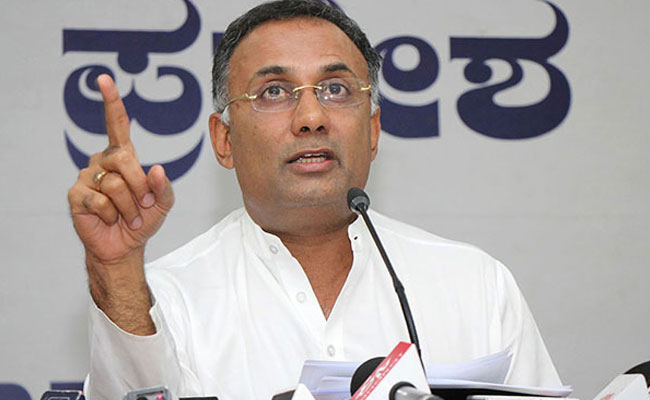
Bengaluru: Karnataka Health Minister Dinesh Gundu Rao has slammed the BJP government in the Centre for the hike in the price of commercial LPG, saying the sudden rise of the fuel rate by Rs 993 a cylinder has hit the common man hard.
Critically commenting that this was expected of the Centre after elections to five states, Rao posted in Kannada on his ‘X’ account on Saturday that the people have been shown only the trailer and, the real struggle is yet to begin.
“Since there is no election in any state, there will certainly be major hikes in the rates of petrol, diesel and domestic LPG in barely a few days,” he has predicted.
The minister has further tweeted, “The rate of commercial LPG has gone up to Rs 3,152 per cylinder, which will hit the hotel industry greatly. Ironically, the direct impact of the hike will be on customers of hotel.”
He pointed out that, earlier, the price used to be hiked by approximately Rs 50 and Rs 100 a cylinder. “This time, the rate has been shot up by Rs 993. What do we call this except daylight robbery? Can this be the ‘Acche Din’ that the BJP has been promising?” Rao asked mockingly.
He also questioned the cause for BJP members’ silence for the rate hike, reminding that the party always ‘threw a tantrum’ when a non-BJP government does so even at a minor level. “Does this reflect their fear of ‘Vishwaguru’ Modi? Is it the party’s sheer disregard for the welfare of the people?” he has questioned.
ಊಹಿಸಿದಂತೆಯೇ ಪಂಚರಾಜ್ಯ ಚುನಾವಣೆ ಬಳಿಕ ಕೇಂದ್ರ ಸರ್ಕಾರ ಬೆಲೆಯೇರಿಕೆಯ ಛಾಟಿ ಬೀಸಲು ಪ್ರಾರಂಭಿಸಿದೆ. ಕಮರ್ಷಿಯಲ್ ಸಿಲಿಂಡರ್ ಬೆಲೆಯನ್ನು ಏಕಾಏಕಿ ₹993 ಏರಿಸುವ ಮೂಲಕ ಮರ್ಮಘಾತ ನೀಡಿದೆ. ಚುನಾವಣೆ ಮುಗಿದ ಕೂಡಲೇ ಬೆಲೆಯೇರಿಕೆ ನಿರೀಕ್ಷಿತವಾಗಿತ್ತು. ಆದರೆ ಒಂದೇ ಭಾರಿ ₹993 ಹೆಚ್ಚಳ ಮಾಡಿರುವುದು ಅನಿರೀಕ್ಷಿತದ ಜೊತೆಗೆ ಆಘಾತ ತಂದಿದೆ.…
— Dinesh Gundu Rao/ದಿನೇಶ್ ಗುಂಡೂರಾವ್ (@dineshgrao) May 2, 2026