Kamal Nath resigns as CLP leader in MP, Govind Singh replaces him
New Delhi, Apr 28: Senior Congress leader Kamal Nath resigned as the Congress Legislature Party (CLP) leader in Madhya Pradesh on Thursday, with Govind Singh succeeding him in the post.
Nath's resignation was accepted by party president Sonia Gandhi keeping in view the party's 'one person-one post' policy.
The senior Congress leader will, however, continue to be the president of the Pradesh Congress Committee in Madhya Pradesh. Nath has been a former chief minister of Madhya Pradesh and a former union minister.
"The Congress president has accepted your resignation from the post of Leader, Congress Legislature Party (CLP), Madhya Pradesh with immediate effect. The party wholeheartedly appreciates your contribution as the CLP leader, Madhya Pradesh," a communication from AICC general secretary K C Venugopal said.
"The Congress president has also approved the proposal to appoint Dr Govind Singh as the leader of Congress Legislature Party, Madhya Pradesh," the statement further said.
Singh is the MLA from Lahar in Bhind district of the state.
Assembly elections in Madhya Pradesh are slated for 2023.
The Congress has initiated changes in many state units.
It revamped its Haryana unit on Wednesday by appointing Udai Bhan, a loyalist of former chief minister Bhupinder Singh Hooda, as state unit president, besides four working presidents.
Prior to that, the party restructured its Himachal Pradesh unit by appointing its Mandi Lok Sabha MP Pratibha Virbhadra Singh, wife of former chief minister Virbhadra Singh, as the new president, along with four working presidents.
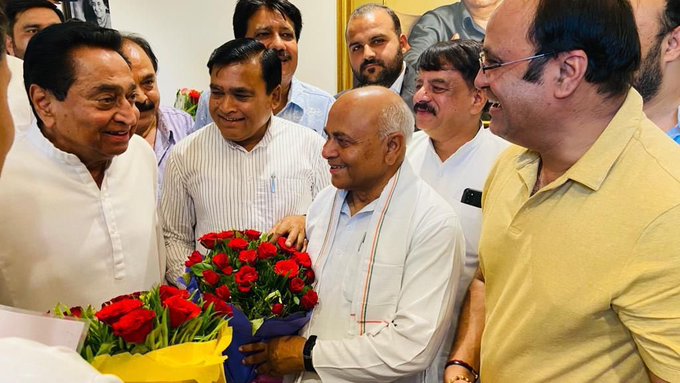
मध्यप्रदेश विधानसभा में नवनियुक्त नेता प्रतिपक्ष श्री गोविंद सिंह ने आज भोपाल स्थित निवास पर आकर सौजन्य मुलाक़ात की।
— Kamal Nath (@OfficeOfKNath) April 28, 2022
उन्हें बधाई देकर उम्मीद जतायी कि वो सफलतापूर्वक इस नई जवाबदारी का निर्वहन कर , पार्टी को और मज़बूती प्रदान करेंगे। pic.twitter.com/zFYuhy3ODX
Let the Truth be known. If you read VB and like VB, please be a VB Supporter and Help us deliver the Truth to one and all.
Congress using hijab issue to pacify minority anger, alleges Karnataka LoP R Ashoka
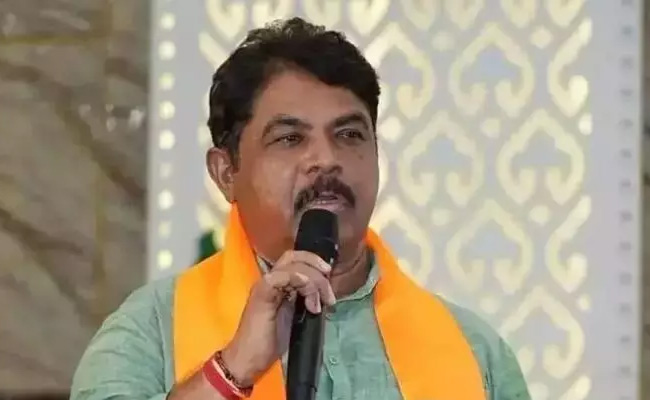
Bengaluru: Leader of Opposition in the Assembly R. Ashoka has accused the Congress government of using the hijab issue to placate what he described as discontent among minority voters after the Davanagere by-election.
In a post on X on Wednesday, Ashoka alleged that the state government, instead of addressing issues such as price rise, corruption, farmers’ distress and law and order, was attempting to retain its minority vote base by reviving the hijab issue.
Referring to the 2022 dress code introduced by the BJP government, which prohibited hijab in schools and colleges, Ashoka said the Karnataka High Court had upheld the policy and emphasised the importance of discipline in educational institutions.
He questioned the Congress government’s move to revisit the issue and asked whether setting aside the court-backed policy to benefit one community could be described as secularism.
Ashoka further alleged that while the government was willing to permit hijab, it continued to prohibit saffron shawls.
He accused the government of dividing students on religious lines rather than treating schools and colleges as spaces of equality.
Drawing a comparison with Mamata Banerjee’s government in West Bengal, Ashoka claimed that excessive appeasement politics had harmed the state and warned that the Congress in Karnataka could face a similar political response.
He said voters in Karnataka would teach the Congress a lesson for what he termed “vote-bank politics” and for compromising constitutional and judicial principles.