Kanwariyas allegedly vandalize and overturn police vehicle in Ghaziabad, UP
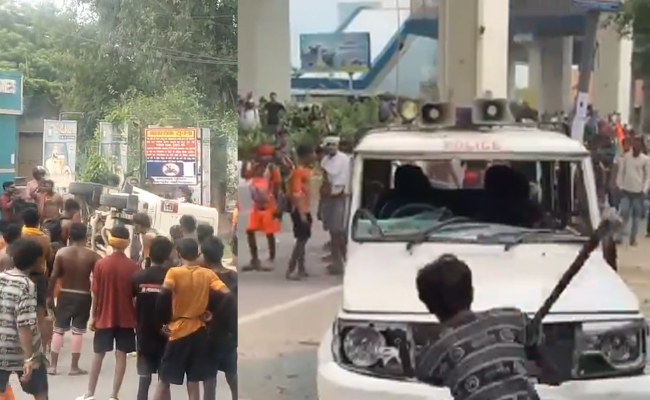
Ghaziabad: A group of Kanwariyas allegedly vandalized and overturned a police vehicle in Ghaziabad. A video that has now gone viral on social media shows the enraged Kanwariyas overturning a car with ‘Police’ clearly written on the front of the car.
As per sources, Ghaziabad Police has reacted to the incident and has informed that the incident occurred when a private vehicle, operating under the vigilance department of the power corporation, accidentally hit a Kanwariya. Although the Kanwar remained intact, the Kanwariyas were infuriated and proceeded to vandalize the vehicle before overturning it, the police informed.
The driver of the vehicle has been taken into police custody as per sources.
The vandalism in Ghaziabad comes nearly a week after a similar incident in Muzaffarnagar on July 21. A group of pilgrims returning from Haridwar vandalized a car on the national highway to Delhi after it brushed past one of them. The pilgrims claimed that the Ganga water they were carrying had become impure after the vehicle touched them.
A few days earlier, another group of Kanwar pilgrims ransacked a dhaba in Muzaffarnagar after allegedly finding slices of onion in their meal. During the sawaan month, devotees abstain from eating non-vegetarian food or dishes containing onion and garlic.
In response to these incidents, several roads in Noida and Ghaziabad have been closed to vehicles for the next week due to the Kanwar Yatra. The restrictions will remain in place until the evening of August 5.
In Noida, two lanes exiting Delhi at the Kalindi Kunj border have been closed to traffic on a stretch between the Okhla Barrage and the Bird Sanctuary to facilitate the movement of pilgrims. In Ghaziabad, private cars and other light goods vehicles heading to Meerut are being diverted from the Delhi-Meerut Expressway (DME) through NH-9 and Hapur. Heavy vehicles have been barred from the DME since July 22.
गाजियाबाद पुलिस के अनुसार-
— Sachin Gupta (@SachinGuptaUP) July 29, 2024
''ये प्राइवेट गाड़ी पॉवर कॉरपोरेशन के विजिलेंस विभाग में कार्यरत थी। एक कांवड़िए को इसकी साइड लगी, लेकिन कांवड़ खंडित नहीं हुई। इससे कांवड़िए आक्रोशित हुए और तोड़फोड़ करके उसको पलट दिया। गाड़ी ड्राइवर पुलिस कस्टडी में है'' https://t.co/VS7nAYMObE pic.twitter.com/vzE01aNgl9
Kanwariyas overturned a police vehicle after vandalising in Ghaziabad, UP.pic.twitter.com/dTwbUQnPJn
— Mohammed Zubair (@zoo_bear) July 29, 2024
Let the Truth be known. If you read VB and like VB, please be a VB Supporter and Help us deliver the Truth to one and all.
Centre launches national childhood diabetes screening, treatment framework
New Delhi (PTI): The Union Health Ministry on Sunday released a guidance document providing a framework for screening, diagnosis, treatment and long-term management of childhood diabetes.
According to the ministry, the document, for the first time, establishes a structured and standardised national framework, positioning India among a select group of countries that have integrated childhood diabetes care into the public health system.
The "Guidance Document on Diabetes Mellitus in Children" was released at the National Summit on Best Practices in Public Healthcare Service Delivery, concluded on May 1-2.
According to a statement by the ministry, the framework aims to ensure universal screening of all children from birth to 18 years through community and school-based platforms for early identification of diabetes.
Suspected cases will undergo immediate blood glucose testing and be referred to district-level health facilities for confirmatory diagnosis and treatment, it said.
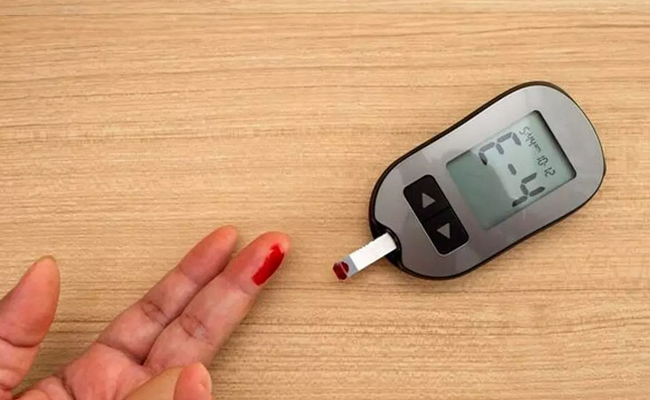
A key feature of the initiative is the provision of a comprehensive free-of-cost care package at public health facilities, including screening, diagnostic services, lifelong insulin therapy, glucometers, test strips and regular follow-up care.
The initiative seeks to reduce the financial burden on families and ensure uninterrupted treatment for children diagnosed with diabetes.
The document also lays down an integrated continuum of care linking community-level screening with district hospital-based management and advanced care at medical colleges to ensure seamless follow-up and treatment.
To strengthen early detection, the guidance promotes the "4Ts" awareness framework -- Toilet, Thirsty, Tired and Thinner -- to help parents, teachers and caregivers recognise early warning signs of type 1 Diabetes.
Besides clinical protocols, the document focuses on family and caregiver empowerment through structured training on insulin administration, blood glucose monitoring, emergency response and daily disease management.
The statement stated the initiative is expected to reduce mortality through early detection, prevent complications and improve the quality of life of affected children while strengthening the public health system's capacity to manage non-communicable diseases among children.