Kargil war veteran case: Three FIRs lodged against retired cop
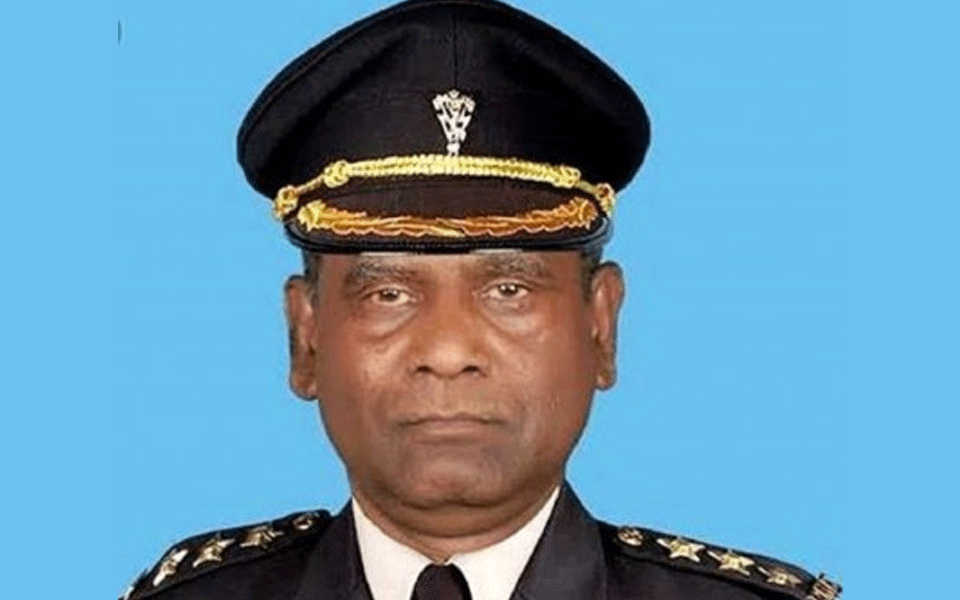
Rangia (Assam): Three separate FIRs have been lodged against a retired policeman, who had verified the documents and recorded the statement of Mohammad Sanaullah, a former Army officer, declared a "foreigner" and lodged in a detention centre in Assam, officials said on Monday.
The complaints were filed against retired sub-inspector Chandramal Das of the Assam Border Police at the Boko police station by three persons, whose names appeared as witnesses in Sanaullah's statement, they said.
Mohammad Kuran Ali, Suwahan Ali and Ajmal Ali alleged in the FIRs that Das, who was investigating Sanaullah's case, did not call them for giving any statement or sign on any document as witnesses, Officer in-charge of the Boko police station Jogen Barman told PTI.
The three also claimed that they came to know that they were made witnesses to Sanaullah's statement from the social media, he said. The police had registered three cases against Das under various sections of the Indian Penal Code (IPC), Barman said.
Sanaullah, who had won a president's medal, was declared a "foreigner" by the Foreigners Tribunal, Kamrup, following a case registered in 2008 after his name was listed as a "D" (doubtful) voter.
After the verdict of the tribunal, Sanaullah, a resident of Kolohikash village in Kamrup district, was lodged in a detention camp in Goalpara.
The three persons, in their complaints, also said Sanaullah was a genuine Indian citizen and was being "harassed by the Assam Border Police, which has conspired to declare him a doubtful voter".
Sanaullah's lawyer Aman Wadud said when the Foreigners Tribunal heard the case, the retired Army personnel was deployed in Manipur and had not given any statement in court.
The Kargil war veteran's family members have decided to file a case in the Gauhati High Court against the Assam Border Police and Das for allegedly conspiring to declare Sanaullah a "foreigner".
Let the Truth be known. If you read VB and like VB, please be a VB Supporter and Help us deliver the Truth to one and all.
West Bengal board declares class 10 exam results, 86.83 pc students pass
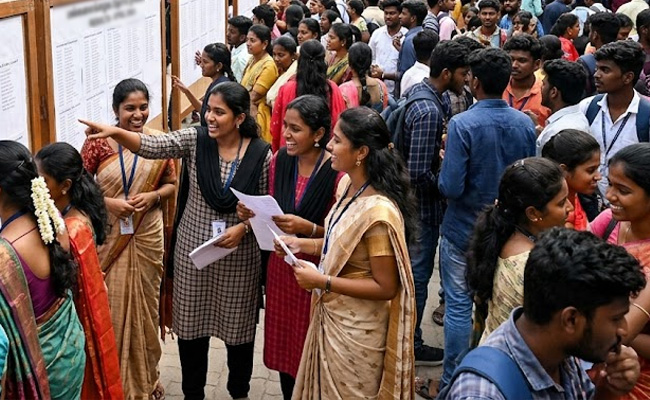
Kolkata (PTI): The West Bengal board's class 10 results were declared on Friday, with 86.83 per cent of the total 9.71 lakh candidates passing the examination, an official said.
In last year's Madhyamik Pariksha, 86.56 per cent of the 9.84 lakh students were declared successful, West Bengal Board of Secondary Education president Ramanuj Ganguly said.
This year's examination was held from February 2 to February 12 at over 2,600 centres across the state, he said.
Abhirup Bhadra of Sarada Vidyamandir in Uttar Dinajpur district bagged the first rank, securing 698 of 700 marks. Priyotosh Mukhopadhyay of Sarojinidevi Saraswati Sishu Mandir in Birbhum was declared second with 696 marks. The third rank was shared by three students.
A total of 131 students secured the top 10 ranks, of whom 28 were girls.
Kalimpong recorded the highest percentage at 95.01, followed by Purba Medinipur at 94.02 and Kolkata at 92.31.