Karnataka Budget: No hike in taxes, Rs 1,000 crore for Mekedatu project
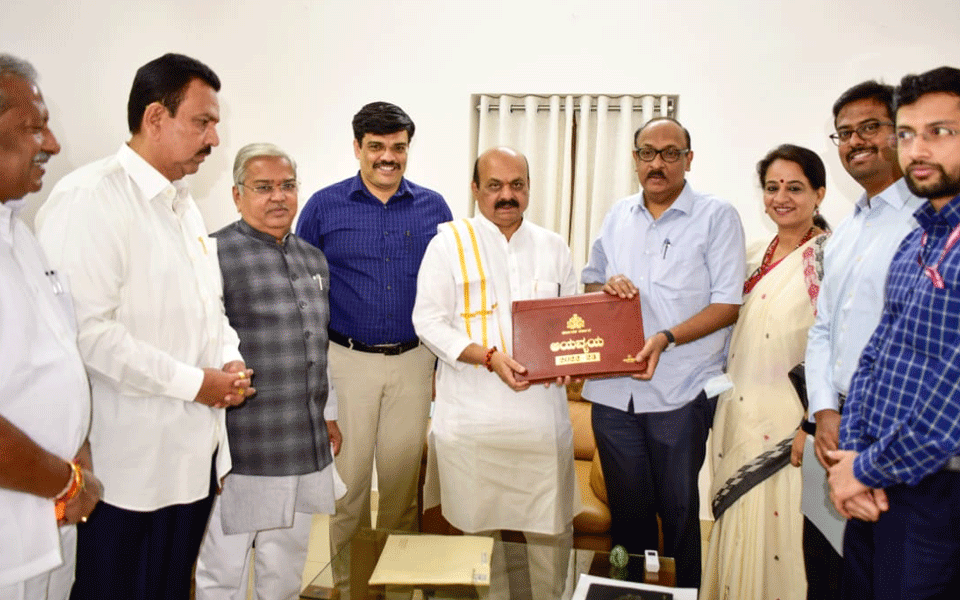
Bengaluru(PTI): Karnataka Chief Minister Basavaraj Bommai has proposed no increase in taxes in the Budget 2022-23 presented by him in the state Legislative Assembly on Friday.
In his maiden budget, the Chief Minister who also holds the Finance portfolio has expressed his government's commitment for the implementation of the Mekedatu project across river Cauvery, to which neighbouring Tamil Nadu is opposed to, and has provided Rs 1,000 crore for it this year.
With just a year left for the Assembly polls in the state, this is most likely to be the last full-fledged budget ahead of the elections.
"The economy in 2021-21 is on the road to recovery. In these circumstances, I am not willing to put extra burden of additional taxes on the common man," Bommai said.
Presenting the budget in the legislative assembly, he said, tax collection targets will be achieved by ensuring all the tax departments to perform better.
The Chief Minister also said that he is not increasing the petrol and diesel rates.
"Realising the difficulties caused by the second and third wave of COVID-19 pandemic in 2021-22, sales tax on petrol and diesel was reduced in November 2021. Because of which the petrol and diesel rates had come down by Rs 7 per litre," he noted.
Compared to other south Indian states the rates of petrol and diesel are less in Karnataka, he said, adding that "I am not intending to increase the rates in 2022-23."
Stating that the Mekedatu Balancing Reservoir and Bengaluru Drinking Water Project will be implemented by getting required clearances from the appropriate authority of central government, Bommai said, for implementation of the project, a grant of Rs 1,000 crore will be provided in the current year.
Pointing out that his government has given more importance for preservation of cattle resources and has implemented the Karnataka Prevention of Slaughter and Preservation of Cattle Act, the Chief Minister said, for the effective implementation of the act, the number of 'Goshalas' will be increased from the present 31 to 100 and Rs 50 crore will be provided for the purpose.
Also for the first time in the state, the government will launch 'Punyakoti Dattu Yojane' to encourage public and private institutions to adopt cows in the Goshalas by paying Rs 11,000 annually.
To encourage the use of farm machinery and to reduce fuel expenditure for the first time in the state, diesel subsidy at Rs 250 per acre subject to maximum for 5 acres will be given through DBT under a new scheme "Raitha Shakti" for which Rs 500 crore has been provided in the budget.
An amount of Rs 500 crore has been provided in the budget for the development of infrastructure in the government schools of the state , and priority will be given for selected aspirational taluks under this grant.
The budget also proposes to establish 438 "Namma Clinics" in major cities of the state, also they will be established in all wards of Bengaluru. In these clinics, the services of detection of non-communicable diseases and referral for higher treatment to specialists will be provided.
To enable establishment of enterprises, entrepreneurship training will be provided in the prestigious IIM Bengaluru to 300 women graduates of SC/ST.
Let the Truth be known. If you read VB and like VB, please be a VB Supporter and Help us deliver the Truth to one and all.
Congress using hijab issue to pacify minority anger, alleges Karnataka LoP R Ashoka
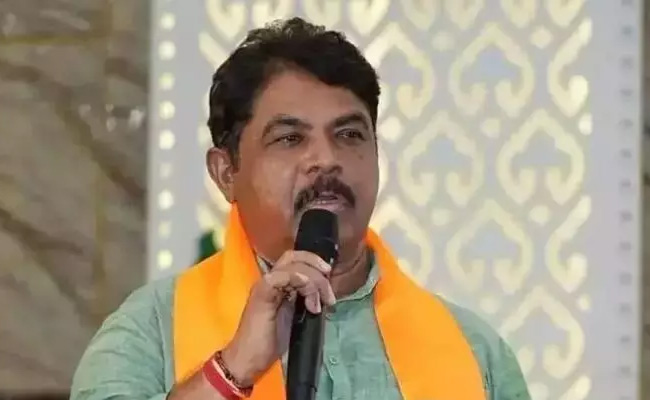
Bengaluru: Leader of Opposition in the Assembly R. Ashoka has accused the Congress government of using the hijab issue to placate what he described as discontent among minority voters after the Davanagere by-election.
In a post on X on Wednesday, Ashoka alleged that the state government, instead of addressing issues such as price rise, corruption, farmers’ distress and law and order, was attempting to retain its minority vote base by reviving the hijab issue.
Referring to the 2022 dress code introduced by the BJP government, which prohibited hijab in schools and colleges, Ashoka said the Karnataka High Court had upheld the policy and emphasised the importance of discipline in educational institutions.
He questioned the Congress government’s move to revisit the issue and asked whether setting aside the court-backed policy to benefit one community could be described as secularism.
Ashoka further alleged that while the government was willing to permit hijab, it continued to prohibit saffron shawls.
He accused the government of dividing students on religious lines rather than treating schools and colleges as spaces of equality.
Drawing a comparison with Mamata Banerjee’s government in West Bengal, Ashoka claimed that excessive appeasement politics had harmed the state and warned that the Congress in Karnataka could face a similar political response.
He said voters in Karnataka would teach the Congress a lesson for what he termed “vote-bank politics” and for compromising constitutional and judicial principles.