Karnataka has just 8.9% women in police force, far behind Bihar, Andhra Pradesh, Tamil Nadu: Study
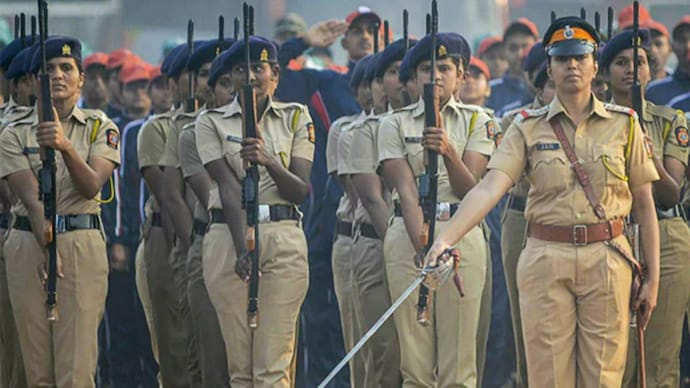
Bengaluru: Karnataka has only 8.91% women in its police force, significantly lower than the national average of 12.73%, and is trailing far behind states like Bihar (23.66%), Andhra Pradesh, and Tamil Nadu, according to a study by the National Law School of India University (NLSIU), Bengaluru.
The findings, reported by The Hindu on Saturday, reveal a stark gender gap in the state’s policing system, despite a 25% reservation for women in the force. The NLSIU project study, which surveyed 202 police stations across eight districts, found that nearly two-thirds of these stations had no woman officers in key investigative ranks such as Sub-Inspector (SI), Assistant Sub-Inspector (ASI), or Police Inspector (PI). Only three stations — two in Mysuru and one in Davangere — had a woman PI, two of which were designated women’s police stations. Additionally, 130 of the 202 stations had no woman SI at all.
Karnataka’s journey toward gender representation has been marked by uneven progress. In 2007, women constituted 5.44% of the police force. This figure rose modestly to over 6% by 2016, but dipped again to 5% in 2017 — the same year the Comptroller and Auditor General (CAG) flagged the gender shortfall. In response, the state introduced a 20% quota for women, later increased to 25% in 2020. Despite this, the representation has barely crossed 8% as of 2021, and stands at just 8.91% in 2023.
According to the Karnataka Administrative Reforms Commission (KARC), at the current pace of recruitment and promotion, it will take over 25 years for the state to meet its own target, added The Hindu.
In contrast, states such as Bihar, Andhra Pradesh, and Tamil Nadu have demonstrated consistent progress, with women's representation in their police forces now exceeding 20%. Karnataka, however, has continued to fall short of the national average since 2012, widening the gap each year.
The study also highlighted that women police personnel, despite contributing significantly to routine police duties, are often excluded from core responsibilities such as investigations, including those involving sexual assault. Instead, they are used for token appearances, such as accompanying survivors or being present during statements.
Devyani Srivastava, Senior Manager (Research) and project lead at NLSIU, mentioned that achieving gender parity is not merely a constitutional requirement, but also an operational imperative. “A police institution with diverse skill sets and lived experiences is better equipped to respond to safety challenges of today. While increasing the share of policewomen is a crucial first step, ensuring gender-responsive policies, facilities, training and infrastructure, at all levels, must go hand in hand for meaningful outcomes,” The Hindu quoted her as saying.
Let the Truth be known. If you read VB and like VB, please be a VB Supporter and Help us deliver the Truth to one and all.
Voting underway for local body elections in Gujarat
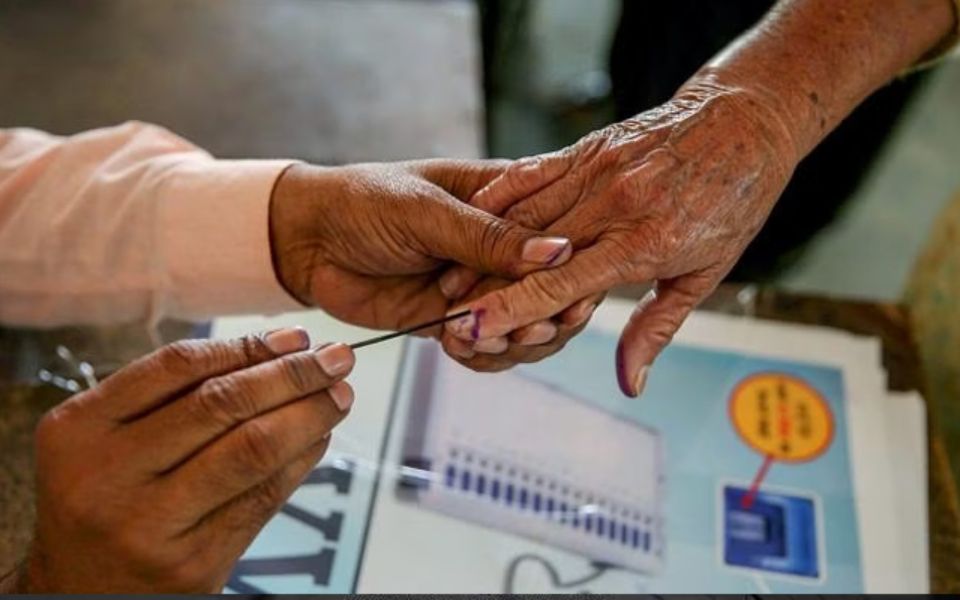
Ahmedabad (PTI): Voting got underway on Sunday morning for elections to several local bodies in Gujarat, including 15 municipal corporations and 84 municipalities.
Polling began at 7 am and will continue till 6 pm, as per the schedule announced by the State Election Commission.
The elections are being held for 15 municipal corporations, including Ahmedabad, Surat, Vadodara and Rajkot, 84 municipalities, 34 district panchayats and 260 taluka panchayats, making it one of the largest electoral exercises in the state.
A total of 9,992 candidates are in the fray, with more than 4.18 crore voters eligible to exercise their franchise.
A three-tier security is in place, aided by CCTV surveillance and deployment of special squads in sensitive areas, police officials said.
The polls are being conducted under revised norms for Other Backward Classes (OBC) reservations, and required extensive delimitation and restructuring of wards in several districts.
The ruling BJP, Opposition Congress and the Aam Aadmi Party (AAP) have emerged as the key players, while All India Majlis-e-Ittehadul Muslimeen (AIMIM) is also contesting in several places.
Among notable candidates are former Gujarat-cadre IPS officer M L Ninama, ex-radio jockey Abha Desai, and former AAP MLA Bhupendra Bhayani.
Ninama is contesting from the Odh seat in Shamlaji taluka for the Arvalli district panchayat elections, while the BJP has nominated Bhayani from the Bhesan seat of the Junagadh district panchayat.
Desai, popularly known as RJ Abha, is contesting as a Congress candidate from ward number 10 of the Rajkot Municipal Corporation.
Elections are also being held for the first time in nine newly-created municipal corporations, including Navsari, Gandhidham, Morbi, Vapi, Anand, Nadiad, Mehsana, Porbandar and Surendranagar.
Counting of votes will take place on April 28.
Chief Minister Bhupendra Patel campaigned extensively for the BJP.
The AAP had taken the lead over other parties in launching the campaign, with its national convenor, Arvind Kejriwal, and Punjab Chief Minister Bhagwant Mann addressing several rallies across Gujarat.
In a first for AAP, the Kejriwal-led party is contesting around 5,000 seats in local polls.
Other contestants include the Nationalist Congress Party (NCP) and Independents.
AIMIM chief Asaduddin Owaisi campaigned in the final phase, addressing public meetings in Ahmedabad and Bhuj.
In March 2021, the BJP scored a landslide win in the local polls in Gujarat, winning 6,236 out of 8,470 seats across various municipalities and establishing a wide gap with rival Congress.
The BJP had then dominated all six municipal corporations, besides 81 municipalities, 32 district panchayats, and 231 taluka panchayats.