Karnataka opens Mekedatu division after SC rejects TN plea against project
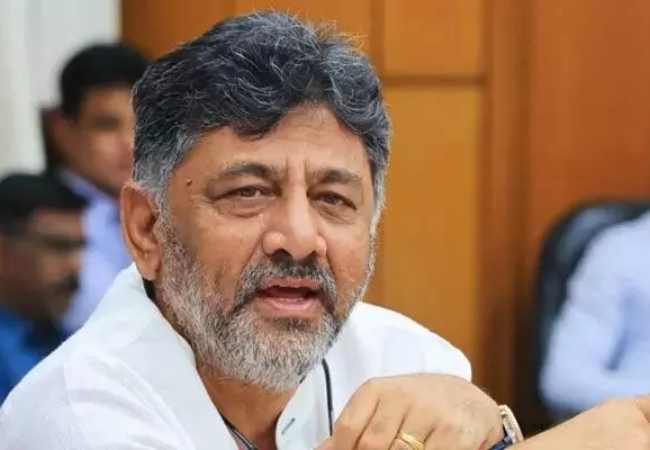
Bengaluru (PTI): Karnataka Deputy Chief Minister D K Shivakumar on Friday said he has opened a dedicated Mekedatu Balancing Reservoir Division under the Water Resources Department and directed officials to begin work on the project, a day after the Supreme Court rejected Tamil Nadu’s plea against it.
Tamil Nadu has been opposing the Mekedatu project, fearing it will cut into its Cauvery water share.
Shivakumar, who also handles the Water Resources portfolio, said he met farmers to address concerns over land loss.
“Today I opened a new division on Mekedatu in the Water Resource Department, inaugurated its office, and decided to identify government land to exchange for the forest or revenue land that will go (submerged),” the Deputy Chief Minister said.
He was speaking at the launch of his Kannada book ‘Neerina Hejje’ (Footprints of water) here where Chief Minister Siddaramaiah, his cabinet colleagues and senior government officers and advocates were present.
Shivakumar noted that the Detailed Project Report (DPR) prepared earlier would be revised.
“These measures have been initiated. I am saying this to demonstrate our will power,” he asserted.
Referring to his meeting with the farmers, the Deputy CM said some feared losing their land if the project is implemented.
“I told them whether they need crop or a dam. Some of them tried to politicise it. I told them not to come here for politics. I asked them to step into in my shoes and say what their decision would be. They all agreed,” Shivakumar said.
Following the apex court order on Mekedatu, the MPs from Karnataka now have the responsibility to secure environmental and other clearances at the earliest.
Targeting Finance Minister Nirmala Sitharaman, he accused her of not releasing funds for the Tungabhadra project despite announcing Rs 5,300 crore for it in the Union Budget.
“The announcement was made when the ‘double engine’ government was in power in the state but till now not a penny has been released for Tungabhadra project,” he claimed.
Shivakumar flayed the BJP MPs for not raising the issue in Parliament.
“None of our MPs also spoke on this in the Parliament. Why these MPs should continue in their post? Learn from Tamil Nadu and Andhra Pradesh where the MPs set aside their political differences and come together for the interest of their state,” Shivakumar said.
The Deputy CM also said Karnataka was working to resolve water disputes over Tungabhadra, Krishna and Mahadayi with the neighbouring states.
He charged Andhra Pradesh Chief Minister N Chandrababu Naidu with not cooperating to resolve issues related to Krishna and Tungabhadra.
“I have called Andhra Pradesh Chief Minister N Chandrababu Naidu five times and told him that 28 TMC water is going waste, we have to build Navale dam (on Tungabhadra river). He has given some suggestion but he is not ready for meeting. Because they (people of Andhra Pradesh) are getting water, he (Naidu) is not cooperating.
The Mekedatu balancing reservoir project proposes a dam across the Cauvery near the deep gorge of Mekedatu—where the Arkavathi meets the Cauvery on the Ramanagara-Chamarajanagar border. It aims to use 4.75 TMC ft of water to supply drinking water to Bengaluru and nearby areas, while generating about 400 MW of power.
According to officials in the Water Resources Department, the reservoir will act as a buffer, ensuring Tamil Nadu receives its share of Cauvery water without affecting the Krishnaraja Sagar (KRS) dam levels.
The cost of the project is estimated to be between Rs 9,000 crore and Rs 14,000 crore, officials said.
Speaking on the occasion, Karnataka Chief Minister Siddaramaiah said there was no reason to oppose the Mekedatu project and alleged that the objections were raised only for politics.
Let the Truth be known. If you read VB and like VB, please be a VB Supporter and Help us deliver the Truth to one and all.
Sujit Nair raises concerns over speculation of DMK-AIADMK understanding to block TVK
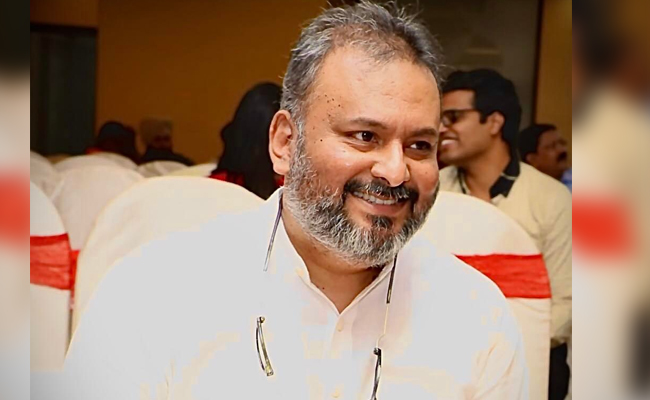
Chennai: Journalist and political commentator Sujit Nair has expressed concern over speculation that the Dravida Munnetra Kazhagam and the All India Anna Dravida Munnetra Kazhagam could explore a post-poll understanding to prevent Vijay-led Tamilaga Vettri Kazhagam from forming the government in Tamil Nadu.
In a social media post, Sujit Nair said the election verdict in Tamil Nadu reflected a clear public demand for political change and argued that the mandate should be respected irrespective of political preferences.
Referring to reports and political discussions surrounding a possible understanding between the DMK and AIADMK, he said he hoped such developments remained only speculative conversations and did not turn into reality.
Nair stated that if such an alliance were to take shape, it would raise serious questions about ideological politics in the country. He said TVK had emerged through a democratic electoral process and that the legitimacy to govern in a parliamentary democracy comes from the people’s verdict.
According to him, attempts to prevent an electoral winner from forming the government through unexpected political arrangements may be constitutionally valid, but many people could view them as politically opportunistic.
He further said that such a move could particularly affect the political image of the DMK, which has historically projected itself around ideology, social justice and opposition politics. Nair said that in ideological terms, the DMK appeared closer to TVK than to the AIADMK, and joining hands with its long-time political rival only to remain in power could weaken its broader political narrative.
He added that the same questions would apply to the AIADMK as well, as the party had spent decades positioning itself against the DMK and such an arrangement could create discomfort among its cadre and supporters.
Drawing a comparison with Maharashtra politics in 2019, Nair said he had expressed similar views when the Shiv Sena formed an alliance with the Indian National Congress and the Nationalist Congress Party after the Assembly elections.
He said post-poll alliances between long-standing political rivals often create a public perception that ideology and electoral mandates become secondary when political power equations come into play.
Nair also said such developments increase public cynicism towards politics and reinforce the belief among voters that ideology is often sidelined after elections.
He maintained that the Tamil Nadu verdict was emphatic and said respecting both the spirit and substance of the mandate was important for the credibility of democratic politics.