Kashmiris won't face problems to fill Haj form online: Government
Chennai, Oct 5: Union Minister Mukhtar Abbas Naqvi on Saturday said the BJP-led government was focusing on development of all sections of society without any discrimination, but unfortunately some people were trying to "destroy" the harmonious atmosphere.
However, these people were not getting any support and being 'isolated', he said, without elaborating.
The Union Minister of Minority Affairs said the Centre was committed to the safety, security and prosperity of every section of society.
"Unfortunately, some people are trying to destroy or disturb our harmonious atmosphere and these people are trying to do all sort of things," he told reporters on the sidelines of an event here.
To a query whether any special law will be enacted against those who try to disturb communal harmony, he said, "there is sufficient law to deal with these criminals.."
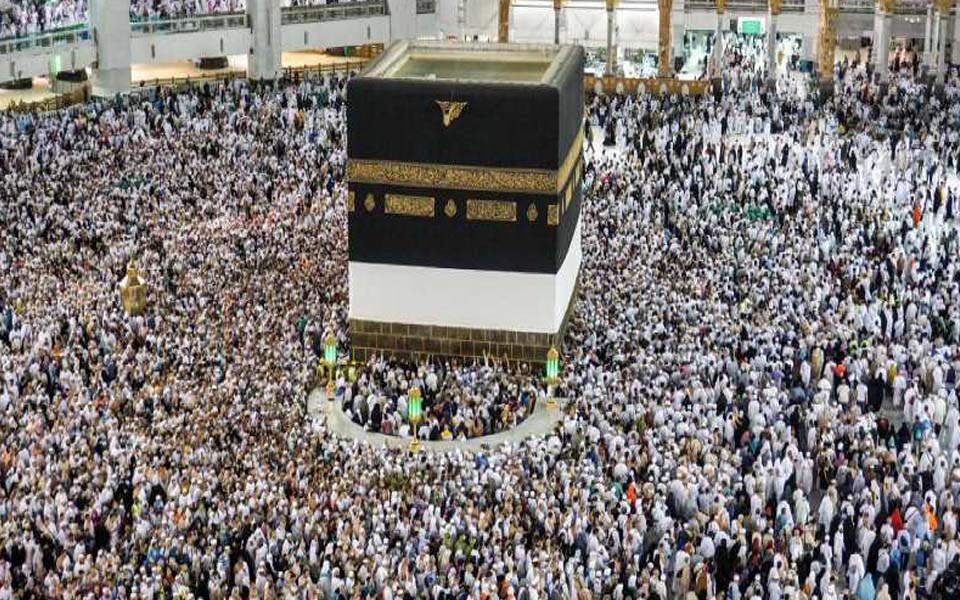
Asked whether people in Kashmir would be able to apply online for Hajj pilgrimage as internet services were yet to be restored, Naqvi said, "... there is no problem for the Kashmiri people who want to fill their applications."
On the coming Parliament session, Naqvi said "This time also we are expecting (it to be productive)."
Referring to the resolution moved in the House, in August, to abolish Article 370, which granted special status to Jammu and Kashmir, he said the previous session was productive.
Earlier at the Grahak Mela-Customer Outreach Initiative by Indian Overseas Bank, Naqvi disbursed sanctioned loans to various beneficiaries.
Noting that the BJP-led government at the Centre took "historic and bold" economic reforms, he said people-friendly policies of the government have made the country a safe investment hub.
"The step to cut corporate tax is historic.. The decision will help India become a USD 5 trillion economy in five years," he claimed.
The government's initiatives like implementation of Goods and Service Tax, demonetisation, banking and tax reforms have ensured a strong and stable economy, he said.
"Our government is giving priority to expenditure on infrastructure. Our government will spend Rs 100 lakh crore on infrastructure development in next five years," he added.
Let the Truth be known. If you read VB and like VB, please be a VB Supporter and Help us deliver the Truth to one and all.
Man arrested with Rs 2.54-crore heroin in Mumbai

Mumbai (PTI): Police have arrested a man and seized over 500 grams of heroin worth Rs 2.54 crore in the illicit market from him in Mumbai, officials said on Friday.
The police's Anti-Narcotics Cell (ANC) made the drug seizure in Santacruz in the western suburbs. The operation was conducted by the Kandivali unit of the ANC on Thursday as part of a special crackdown against drug trafficking in the area, they said.
Acting on specific inputs, an ANC team conducted a raid in Santacruz (East) and intercepted a man. During a search, the team recovered 508 grams of high-grade heroin from his possession, an official said.
The seized contraband, a highly addictive, opioid drug derived from morphine, is estimated to be worth Rs 2.54 crore in the international market, he informed.
Following the seizure, a case was registered against the man under relevant sections of the Narcotic Drugs and Psychotropic Substances (NDPS) Act, 1985, and he was formally placed under arrest in the early hours of Friday.
The police are currently investigating the source of the drug and trying to identify the intended recipients of the consignment, he said.