Kathua rape-and-murder case verdict tomorrow
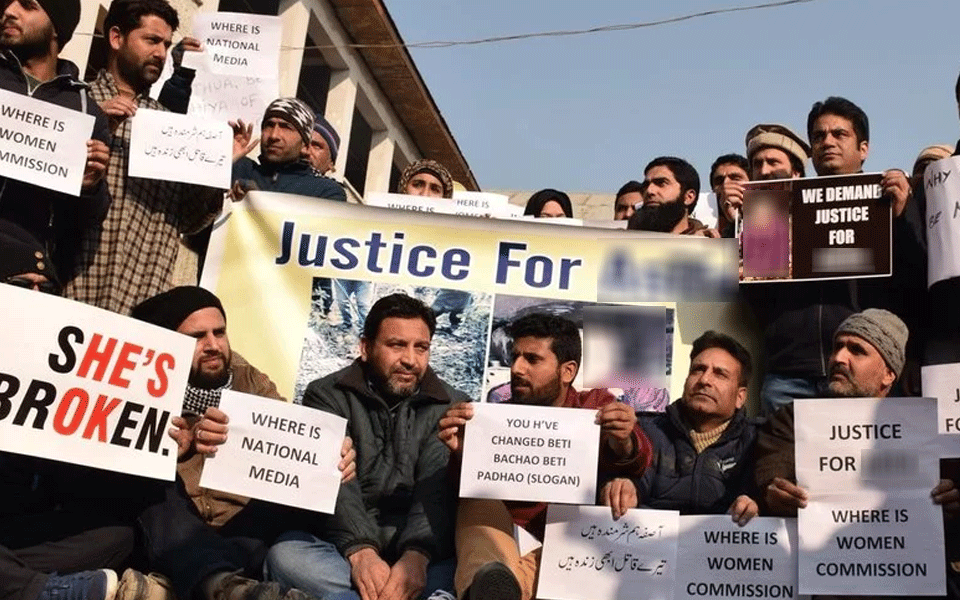
Pathankot (Punjab), Jun 9: The verdict in the case of rape and murder of an eight-year-old nomadic girl in Kathua in Jammu and Kashmir will be delivered by a special court here on Monday.
The in-camera trial in the case that shook the nation ended on June 3, when district and sessions judge Tejwinder Singh had announced that the verdict was likely to be delivered on June 10.
Elaborate security arrangements have been made in and around the court and in Kathua in view of the pronouncement of the judgement, officials said Sunday.
The situation will be monitored closely, they said.
According to the 15-page charge sheet, the eight-year-old girl, who was kidnapped on January 10 last year, was allegedly raped in captivity in a small village temple in Kathua district after having been kept sedated for four days before she was bludgeoned to death.
The day-to-day trial commenced in the first week of June last year at the district and sessions court in Pathankot in neighbouring state of Punjab, about 100 km from Jammu and 30 km from Kathua, after the Supreme Court ordered that the case be shifted out of Jammu and Kashmir.
The apex court order came after lawyers in Kathua prevented Crime Branch officials from filing a charge sheet in the sensational case, which shocked the nation.
The prosecution team in the case comprised J K Chopra, S S Basra and Harminder Singh.
The Crime Branch arrested village head Sanji Ram, his son Vishal, juvenile nephew and his friend Anand Dutta, and two special police officers Deepak Khajuria and Surender Verma. Head constable Tilak Raj and sub-inspector Anand Dutta, who allegedly took Rs 4 lakh from Sanji Ram and destroyed crucial evidence, were also arrested.
Charges of rape and murder were framed by the district and sessions judge against seven out of the eight accused. The trial against the juvenile is yet to begin as his petition on determining his age is to be heard by the Jammu and Kashmir High Court.
The court framed charges under the Ranbir Penal Code(RPC), including Sections 120-B (criminal conspiracy), 302 (murder) and 376-D (gang-rape), according to the prosecution.
The accused, if convicted, face minimum life imprisonment and maximum death penalty.
The court also framed charges of destruction of evidence and causing hurt by poisoning under Section 328 of the RPC. The two policemen - Raj and Datta - were also charged under Section 161 (public servant taking illegal gratification) of the RPC.
All the accused, barring the juvenile, were shifted to Gurdaspur jail following an intervention by the Supreme Court which also restricted appearance of the defence lawyers and limited it to one or maximum of two per accused.
The charge sheet said the girl had gone missing while grazing horses. Investigators said the accused juvenile had abducted the girl under the pretext of helping her find her horses.
The abduction, rape and killing of the child was part of a carefully planned strategy to remove the minority nomadic community from the area, it said.
The case had become a bone of contention between the then ruling alliance partners PDP and the BJP after two ministers of the saffron party, Chowdhury Lal Singh and Chander Prakash Ganga, participated in a rally organised by the Hindu Ekta Manch in support of the accused arrested by the state crime branch.
Let the Truth be known. If you read VB and like VB, please be a VB Supporter and Help us deliver the Truth to one and all.
CJI's advice to aspirant: Join the bar, become a lawyer, don't hanker for judicial services post
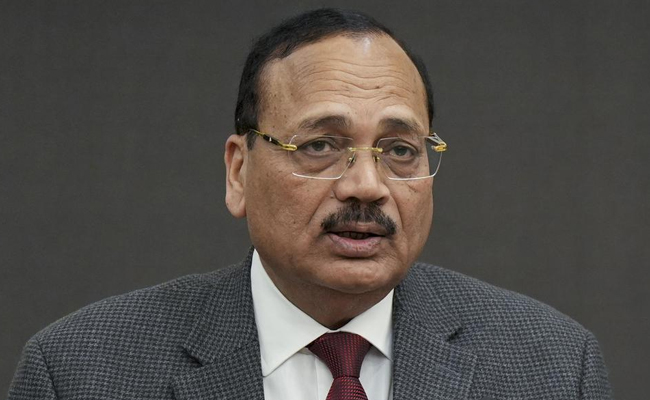
New Delhi (PTI): She came to the Supreme Court seeking a re-evaluation of her paper in the examination for joining judicial services as a magistrate. What she got instead was a rejection — and a candid confession by the Chief Justice that he too had wanted to join the judicial services in his youth but was advised by a senior judge to become a lawyer instead.
A bench comprising Chief Justice Surya Kant and Justice Joymalya Bagchi on Friday dismissed a plea filed by Prerna Gupta, the judicial services aspirant.
As Gupta pressed her case, the CJI intervened and said, "Let me share my personal story and I hope you will go happily as we cannot allow your petition."
He recounted his time as a final-year law student in 1984 when he wanted to become a judicial officer. As per requirement, he cleared the written test and was set to appear for an interview.
Judicial services is one of the two routes to become a judge after initially joining as a magistrate in lower court and thereafter rising through the ranks to become judge in a high court and possibly the Supreme Court.
The other route is to join the Bar, which means becoming a lawyer, and after building a reputation be picked from the Bar to become a judge at a senior level.
By the time the CJI's exam results came out, he had started practising at the Punjab and Haryana High Court when he was called for the interview.
The senior-most judge on the interview panel happened to be a judge before whom he had recently argued two significant matters.
"One of the matters was Sunita Rani vs Baldev Raj, where he had allowed my appeal in a matrimonial case and set aside the decree of divorce granted by the District Judge on the ground of schizophrenia," he noted.
Before the interview could take place, the judge called the young Surya Kant to his chamber and asked, 'Do you want to become a judicial officer?'
"I said 'yes.' He immediately said, 'Get out from (my) the chamber.'"
The courtroom fell silent as the CJI Justice described his initial heartbreak.
“I came out trembling. All my dreams were shattered. I thought he had snubbed me and that my career was over,” the CJI said.
However, the story took another turn the following day and the judge summoned him again, this time offering a piece of advice that would change the trajectory of his life.
“He said, ‘If you want to become (a judge), you are welcome. But my advice is, don’t become a judicial officer. The Bar is waiting for you,’” Justice Surya Kant recalled.
The CJI said he decided to skip his interview and didn't even tell his parents at first, fearing their disappointment, and instead chose to dedicate himself to his practice as an advocate.
“Now tell me did I make a bad right or bad decision,” the CJI asked and the litigant lawyer left the court with a smile on her face despite her case being dismissed.
Encouraging the petitioner to look toward the future rather than dwelling on the re-evaluation of a single paper, Justice Surya Kant said, "The Bar has much to offer."