Kejriwal announces free Wi-Fi scheme, claims AAP fulfilled all its 2015 election promises
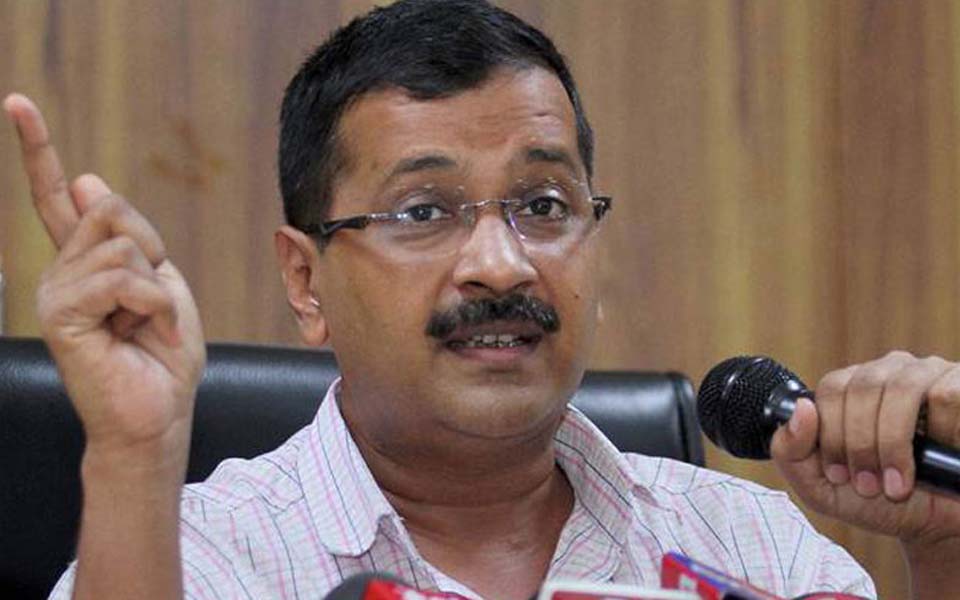
New Delhi, Dec 4: Delhi Chief Minister Arvind Kejriwal on Wednesday announced that Delhiites will get free 15 GB data per month through a hotspot network across the city, asserting that the AAP has fulfilled all its poll promises.
The work on setting up 11,000 hotspots across the city is in progress. On December 16, 100 hotspots will be inaugurated launching the Delhi government's free Wi-Fi scheme, he said.
An app will be launched through which users can upload their KYC (know your customer) details. An OTP will be received to activate the Wi-Fi connection.
"With this free 15 GB internet data usage being provided to people, we (AAP) have fulfilled all promises made in our manifesto for the 2015 Assembly polls," Kejriwal said.
Terming minimum data usage as a basic need of the people, the chief minister said free Wi-Fi connections will help students and benefit health and education sectors.
The first 100 hotspots will be set up at Kashmere Gate Metro station and ISBT, ITO bus stand, Mandi House bus stand, Delhi Secretariat, Indraprastha Metro station, and Adarsh Nagar (18), Badali (19), Moti Nagar (10), Seemapuri (16) and Shahdara (18) Assembly constituencies.
Of the 11,000 hotspots, 4,000 will be set up at bus stops. The rest 7,000 will be installed in markets, residential colonies and other places with each constituency getting 100.
The project cost is around Rs 100 crore, said the Chief Minister.
After the inauguration of the first batch of 100 hotspots on December 16, 500 hotspots will be set up every week and in the next six months, all 11,000 hotspots will be in place, he said.
The Wi-Fi scheme is based on a rent model and the government will pay monthly rental for each hotspot to a company handling the project.
After the network is ready, each hotspot will provide internet services within a 100-metre radius, he added.
"Each individual will be allowed usage of up to 15 GB per month or 1.5 GB per day. The speed will be on average 100 mbps to 150 mbps with maximum 200 mbps in some areas," Kejriwal said.
Each hotspot will be available for simultaneous usage by 150-200 persons. The entire network will handle around 22 lakh users at a time, the chief minister said.
The switch over from one hotspot to other will be automatic.
The project was announced by the AAP after coming to power in 2015 but it got delayed due to various reasons, he added.
Let the Truth be known. If you read VB and like VB, please be a VB Supporter and Help us deliver the Truth to one and all.
'Ab kya hoga, ye rab jane...': Tharoor takes dig at failed US-Iran talks in Pakistan
 (3)_vb_24.jpeg)
New Delhi (PTI): Senior Congress leader Shashi Tharoor on Monday took a swipe at the "failed" US-Iran peace talks in Pakistan with an Urdu couplet, saying only god knows now what will happen.
"Ab kya hoga, ye rab jane; Na woh mane, na ye mane (only god knows what will happen now as both sides did not agree)," Tharoor said on X, tagging a post-talks video clip of US Vice President J D Vance, who led the American delegation at the negotiations in Islamabad.
The United States and Iran failed to reach a peace deal at their historic 21-hour talks in Pakistan, leaving the fate of a tenuous two-week ceasefire in doubt, with both sides attempting to hold each other responsible for the collapse of the negotiations.
अब क्या होगा, ये रब जाने
— Shashi Tharoor (@ShashiTharoor) April 13, 2026
ना वो माने, ना ये माने https://t.co/DYrXpa7C8h
Vance said the Iranian side did not accept Washington's terms for ending the war even as the US presented its "final and best offer".
Hours after the talks collapsed, US President Donald Trump said on social media that the negotiations with Tehran failed as "Iran is unwilling to give up its nuclear ambitions".
Trump said the US Navy will actively interdict any vessel in international waters found to have paid tolls to Iran for transiting through the Strait of Hormuz, a critical shipping route that handles roughly 20 per cent of global oil and LNG (Liquefied Natural Gas).
Iranian Parliament Speaker Mohammad Bagher Ghalibaf, the head of the Iranian negotiation team, said it is for the US to decide whether it can "earn our trust or not".
The Iranian foreign ministry, without elaborating, said the US side resorted to "excessive" and "illegal demands".
The failure to reach an agreement has dimmed the prospect of reopening the Strait of Hormuz to stabilise the global energy marke