Kerala assembly repeals law entrusting PSC with Waqf board appointments
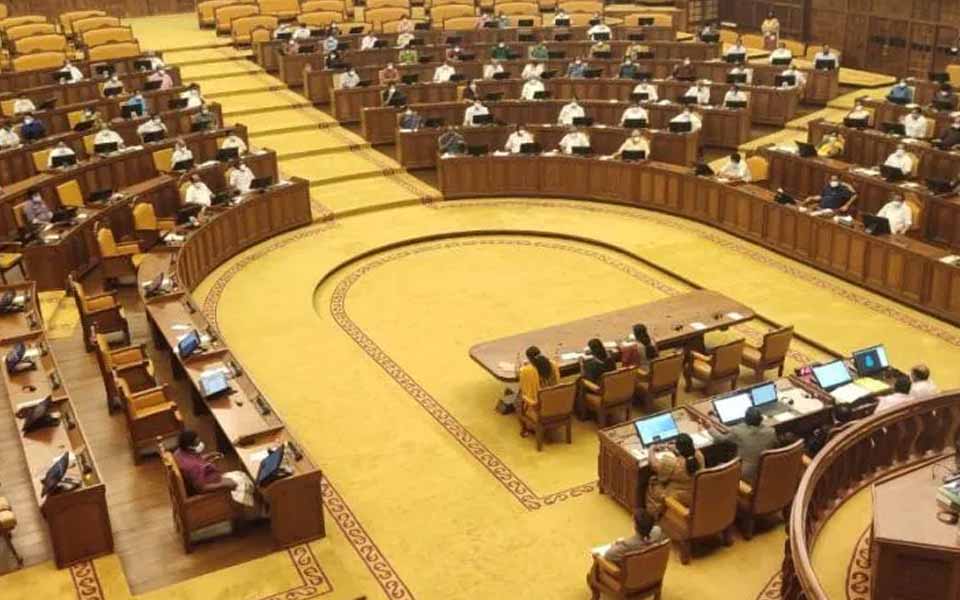
Thiruvananthapuram, Sep 1: The Kerala Assembly on Thursday unanimously passed a bill that repeals a law, which entrusted the appointments made to the State Waqf Board, to the Public Service Commission (PSC).
The State Cabinet meeting, chaired by Chief Minister Pinarayi Vijayan, had approved a draft Bill on Wednesday to withdraw the Bill passed by the Assembly last year seeking to hand over recruitment to the Waqf Board to the PSC.
After the minister made a single-line presentation, Speaker M B Rajesh put the bill for voting and the House passed it unanimously.
There was no discussion with the Congress-led UDF opposition also supporting it as the roll back of the decision was their long-pending demand.
Leader of opposition V D Satheesan termed the government's decision to repeal the bill that left the Waqf appointments to the PSC as "victory of the opposition." The Indian Union Muslim League (IUML), a UDF ally, strongly demanded its withdrawal and the other parties in the opposition front including the Congress extended full support to them, he said.
"It is the victory of the struggle waged by the UDF inside and outside the Assembly," he added.
Handing over Waqf board appointments to PSC would cause similar issues if the Devaswom Board appointments were to be entrusted to the recruitment agency, he pointed out.
That is why the UDF had demanded a special system for Waqf appointments, the leader added.
Last month, the Left government announced that it would not go ahead with its earlier decision to entrust the appointments made to the State Waqf Board to the PSC and said a "new system" would be introduced for the recruitment of deserving job aspirants.
Announcing the decision in the Assembly, the CM had said considering the concerns raised by the Muslim outfits in this regard, his government decided to amend the existing law to bring in the new system for the Waqf Board recruitments.
In November last year, the Vijayan government entrusted the PSC with the task of making appointments to the State Waqf Board, deviating from the years-long practice in the past.
Earlier, the Waqf Board used to make appointments to all the posts under the Waqf Act, 1995.
As the issue led to a controversy, the Chief Minister, in December 2021, held talks with leaders of Samastha Kerala Jamiyyathul Ulama.
Let the Truth be known. If you read VB and like VB, please be a VB Supporter and Help us deliver the Truth to one and all.
Trump says EU has until July 4 to approve last year's trade deal or it will face higher tariffs
Washington (AP): President Donald Trump has said in a social media post that goods from the European Union would face higher tariff rates if the 27-member bloc fails to approve last year's trade framework by July 4.
The announcement on Thursday appeared to be a deadline extension after the president said last Friday that EU autos would face a higher 25 per cent tariff starting this week. Trump made the updated announcement after what he described as a "great call" with European Commission President Ursula von der Leyen.
Still, the US president was displeased that the European Parliament had yet to finalize the trade arrangement reached last year, which was further complicated in February by the US Supreme Court ruling that Trump lacked the legal authority to declare an economic emergency to impose the initial tariffs used to pressure the EU into talks.
"A promise was made that the EU would deliver their side of the Deal and, as per Agreement, cut their Tariffs to ZERO!" Trump posted. "I agreed to give her until our Country's 250th Birthday or, unfortunately, their Tariffs would immediately jump to much higher levels."
It was unclear from the post whether Trump was implying that the tariff rates would jump on all EU goods or the increase would only apply to autos.
His latest statement indicates he might be backing away from his earlier threat on EU autos by giving the European Parliament several more weeks to approve the agreement.
Under the original terms of the framework, the US would charge a 15 per cent tax on most goods imported from the EU.
But since the Supreme Court ruling, the administration has levied a 10 per cent tariff while investigating trade imbalances and national security issues, aiming to put in new tariffs to make up for lost revenues.