Kerala Assembly passes resolution seeking recall of Lakshadweep administrator
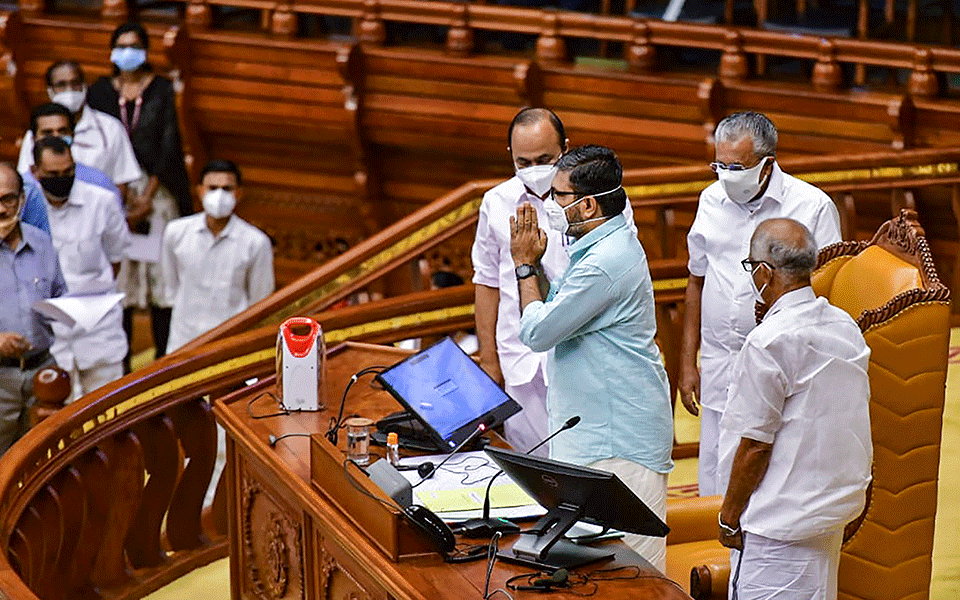
Thiruvananthapuram(PTI): Expressing solidarity with the people of Lakshadweep, the Kerala Legislative Assembly on Monday unanimously passed a resolution demanding the recall of island administrator Praful Khoda Patel and requesting the immediate intervention of the Centre to protect the lives and livelihood of the islanders.
With this, Kerala has become the first state in the country to come up with a resolution to support the people of the union territory over the recent developments.
An archipelago located in the Arabian Sea, Lakshadweep is witnessing protests by local people for some days over the recent actions and administrative reforms being implemented by Patel.
Chief Minister Pinarayi Vijayan moved the government resolution, the first such motion in the 15th state Assembly, reminiscing the historic and cultural bond between Kerala and Lakshadweep and criticising the Centre for allegedly trying to destroy the natural democracy there.
Stating that the future of Lakshadweep is a matter of concern, he said any attempt to undermine its unique culture and indigenous lifestyle is unacceptable.
Anyone who upholds Constitutional values should register a strong disagreement against the actions of the administrator of Lakshadweep, the Chief Minister urged.
Setting aside their political differences, members of the ruling CPI(M)-led Left Democratic Front and the Congress- headed United Democratic Front unanimously backed the resolution, except some amendments suggested by the latter.
The hard-hitting resolution allegedthat attempts were being made to impose "saffronagendas" and "corporate interests" by destroying the unique way of life of Lakshadweep people.
The implementation of the agenda, rolled out in the name of reforms, began with the painting of coconut trees with saffron colour and it has now grown to the level of destroying the traditional habitat, life and natural relationships of the island dwellers, it alleged.
Steps have been taken to bring in the Goonda Act in the island where the crime rate is exceptionally low, it said.
Pointing out that the authorities also aimed at destroying their traditional livelihood of fishing, the resolution said tents, where the fishermen's boats and nets are kept, have been rampantly destroyed.
Through the attempt to exclude beef, which is part of the natural diet of the people of the territory, the Sangh Parivar agenda of banning cow slaughter was being implemented through the backdoor, it alleged.
Thus, the administrator has taken the lead in annihilating the indigenous life and culture of the people of a territory inch by inch, the brief resolution further charged.
Criticising the Centre's act of giving the administrator special powers to intervene into the affairs of various government departments, Vijayan said it amounted to undermining the island's natural democracy by deploying officials of their choice.
"The recent developments in Lakshadweep should be seen as a laboratory of the Sangh Parivar agenda. They are attempting to change the culture, language, lifestyle and food habits of people of the country in tune with their ideology," the Chief Minister alleged.
Strong resistance should be raised against this bid to enslave people of a territory to "corporate interests and Hindutva politics", he said.
Stating that the central government has the responsibility to ensure that the unique features of the union territory and the native people are well-preserved, the Left veteran said the administrator, who posed a challenge to this, should be stripped of his responsibilities.
Opposition Congress leader V D Satheesan backed the resolution and said the agenda, being implemented by Patel under the garb of reforms, should be thrown in the Arabian Sea.
The Congress and Indian Union Muslim League (IUML) urged the government to directly criticise the BJP-NDA government at the Centre in the resolution.
Let the Truth be known. If you read VB and like VB, please be a VB Supporter and Help us deliver the Truth to one and all.
Sujit Nair raises concerns over speculation of DMK-AIADMK understanding to block TVK
Chennai: Journalist and political commentator Sujit Nair has expressed concern over speculation that the Dravida Munnetra Kazhagam and the All India Anna Dravida Munnetra Kazhagam could explore a post-poll understanding to prevent Vijay-led Tamilaga Vettri Kazhagam from forming the government in Tamil Nadu.
In a social media post, Sujit Nair said the election verdict in Tamil Nadu reflected a clear public demand for political change and argued that the mandate should be respected irrespective of political preferences.
Referring to reports and political discussions surrounding a possible understanding between the DMK and AIADMK, he said he hoped such developments remained only speculative conversations and did not turn into reality.
Nair stated that if such an alliance were to take shape, it would raise serious questions about ideological politics in the country. He said TVK had emerged through a democratic electoral process and that the legitimacy to govern in a parliamentary democracy comes from the people’s verdict.
According to him, attempts to prevent an electoral winner from forming the government through unexpected political arrangements may be constitutionally valid, but many people could view them as politically opportunistic.
He further said that such a move could particularly affect the political image of the DMK, which has historically projected itself around ideology, social justice and opposition politics. Nair said that in ideological terms, the DMK appeared closer to TVK than to the AIADMK, and joining hands with its long-time political rival only to remain in power could weaken its broader political narrative.
He added that the same questions would apply to the AIADMK as well, as the party had spent decades positioning itself against the DMK and such an arrangement could create discomfort among its cadre and supporters.
Drawing a comparison with Maharashtra politics in 2019, Nair said he had expressed similar views when the Shiv Sena formed an alliance with the Indian National Congress and the Nationalist Congress Party after the Assembly elections.
He said post-poll alliances between long-standing political rivals often create a public perception that ideology and electoral mandates become secondary when political power equations come into play.
Nair also said such developments increase public cynicism towards politics and reinforce the belief among voters that ideology is often sidelined after elections.
He maintained that the Tamil Nadu verdict was emphatic and said respecting both the spirit and substance of the mandate was important for the credibility of democratic politics.