Kerala girl of 5th class writes to CJI, lauds SC for saving lives in fight with COVID
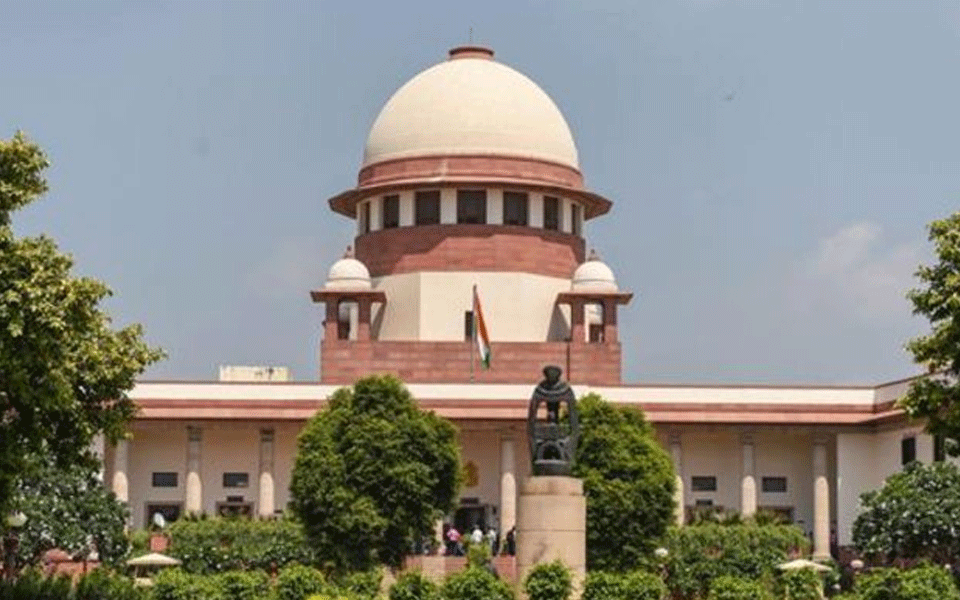
New Delhi: Amid debate whether the Centre's decision to provide free COVID-19 vaccine to all above 18 years was triggered by the Supreme Court's recent remarks on the jab policy, a class Vth student of Kerala, Lidwina Joseph, has written to Chief Justice N V Ramana lauding the top court for its effective intervention and saving lives in the fight against pandemic.
Joseph, a student of Kendriya Vidyalaya at Thrissur, also enclosed in her letter a drawing depicting discharge of duties by the apex court where a judge is seen hammering down coronavirus and has the tricolour, lion capital and smiling portrait of father of the nation.
I was much worried about the deaths in Delhi and other parts of the country due to Corona. From the newspaper I understood that your honourable court has intervened effectively at the sufferings and death of ordinary people in the fight against Covid-19.
I am happy and feel proud that your honourable court has moved orders for supply of oxygen and saved many lives. I understood your honourable court has initiated effective steps in bringing down Covid-19 and the death rate in our country especially in Delhi. I thank you, your Honour for this. Now I feel very proud and happy.., Joseph wrote to CJI Ramana towards the end of May when Delhiites were facing tough times due to the deadly second corona wave.
The lucky girl got Chief Justice of India's response and best wishes as well for her beautiful letter and heart-warming illustration of a judge at work in her drawing accompanying the letter.
I have received your beautiful letter along with a heart-warming illustration of the Judge at work. I am really impressed with the way you kept track of happenings in the country and the concern that you have displayed for the well-being of people in the wake of the pandemic.
I am sure you will grow-up into an alert, informed and responsible citizen who will contribute immensely towards nation building, the CJI wrote back wishing the best and all round success to the little girl.
Prime Minister Narendra Modi announced on Monday that the central government will provide free coronavirus vaccine to states for inoculation of all above the age of 18 from June 21 and this led to an intense debate in the media as to who and what triggered the decision.
As per news reports, while Kerala Chief Minister Pinarayi Vijayan thanked the Centre for the decision, the Delhi government credited the Supreme Court for the decision announced by the Prime Minister in his address to the nation.
Some reports also said the Centre had initiated the decision making process and the ground work before the apex court's remarks.
Few days before the Prime Minister announced free COVID inoculation for those above 18 years of age from June 21, the Supreme Court, in its May 31 order which was uploaded two day after the hearing, had asked the Centre to review its vaccination policy saying it was prima facie arbitrary and irrational for allowing states and private hospitals to charge people of 18-44 age group for the jabs.
Let the Truth be known. If you read VB and like VB, please be a VB Supporter and Help us deliver the Truth to one and all.
Sujit Nair raises concerns over speculation of DMK-AIADMK understanding to block TVK
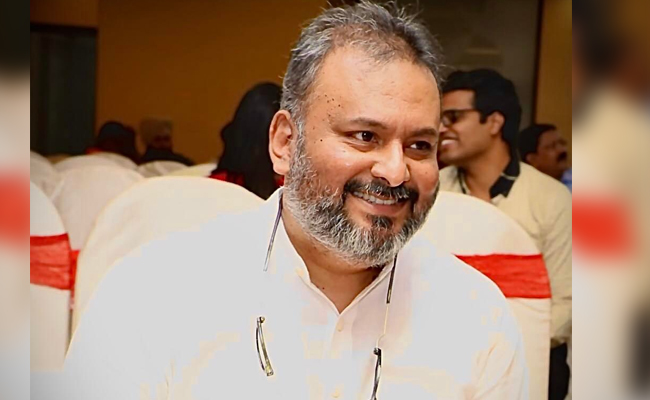
Chennai: Journalist and political commentator Sujit Nair has expressed concern over speculation that the Dravida Munnetra Kazhagam and the All India Anna Dravida Munnetra Kazhagam could explore a post-poll understanding to prevent Vijay-led Tamilaga Vettri Kazhagam from forming the government in Tamil Nadu.
In a social media post, Sujit Nair said the election verdict in Tamil Nadu reflected a clear public demand for political change and argued that the mandate should be respected irrespective of political preferences.
Referring to reports and political discussions surrounding a possible understanding between the DMK and AIADMK, he said he hoped such developments remained only speculative conversations and did not turn into reality.
Nair stated that if such an alliance were to take shape, it would raise serious questions about ideological politics in the country. He said TVK had emerged through a democratic electoral process and that the legitimacy to govern in a parliamentary democracy comes from the people’s verdict.
According to him, attempts to prevent an electoral winner from forming the government through unexpected political arrangements may be constitutionally valid, but many people could view them as politically opportunistic.
He further said that such a move could particularly affect the political image of the DMK, which has historically projected itself around ideology, social justice and opposition politics. Nair said that in ideological terms, the DMK appeared closer to TVK than to the AIADMK, and joining hands with its long-time political rival only to remain in power could weaken its broader political narrative.
He added that the same questions would apply to the AIADMK as well, as the party had spent decades positioning itself against the DMK and such an arrangement could create discomfort among its cadre and supporters.
Drawing a comparison with Maharashtra politics in 2019, Nair said he had expressed similar views when the Shiv Sena formed an alliance with the Indian National Congress and the Nationalist Congress Party after the Assembly elections.
He said post-poll alliances between long-standing political rivals often create a public perception that ideology and electoral mandates become secondary when political power equations come into play.
Nair also said such developments increase public cynicism towards politics and reinforce the belief among voters that ideology is often sidelined after elections.
He maintained that the Tamil Nadu verdict was emphatic and said respecting both the spirit and substance of the mandate was important for the credibility of democratic politics.