Kerala government economic adviser Gita Gopinath appointed IMF director of research

United Nations, Oct 1 : Eminent academic and economic adviser to the Kerala government, Gita Gopinath, was appointed on Monday as Director of the International Monetary Fund's Research Department.
Announcing the appointment, IMF Managing Director Christine Lagarde called her "one of the world's outstanding economists with impeccable academic credentials, a proven track record of intellectual leadership and extensive international experience".
"All this makes her exceptionally well-placed to lead our Research Department at this important juncture. I am delighted to name such a talented figure as our Chief Economist," she said in a statement.
The director of the IMF's Research Department oversees the World Economic Outlook Report that is considered a major survey of the global economy as well as several other reports and research projects that determine the financial and economic statuses of countries.
She succeeds Maurice Obstfeld, who announced in July that he would retire at the end of this year.
Gopinath, who received her MA degree from the Delhi School of Economics, is the John Zwaanstra Professor of International Studies and Economics at Harvard University.
She is concurrently the economic adviser to the Chief Minister of Kerala and, according to her bio at Harvard, she was appointed in 2016 to the honorary position with the rank of principal secretary.
She has also served as a member of the Eminent Persons Advisory Group on G-20 Matters for India's Ministry of Finance.
She received her Ph.D in economics from Princeton University in 2001 for her work on international macroeconomics and trade and was an assistant professor at University of Chicago before moving to Harvard in 2005.
Her bachelor's degree was from Lady Sri Ram College in New Delhi.
She received the Bhagwati Prize for the best paper published in the Journal of International Economics in 2003 and 2004.
In 2014, she was named one of the top 25 economists under 45 by the IMF and she was a World Economic Forum Young Global Leader in 2011.
Gopinath is also the co-editor of the American Economic Review and Handbook of International Economics, co-director of the International Finance and Macroeconomics Programme at the National Bureau of Economic Research and a member of the Economic Advisory Panel of the Federal Reserve Bank of New York.
She has authored some 40 research articles on exchange rates, trade and investment, international financial crises, monetary policy, debt and emerging market crises, according to the IMF.
Let the Truth be known. If you read VB and like VB, please be a VB Supporter and Help us deliver the Truth to one and all.
Will vacate one of two assembly seats won in 10 days: BJP''s Suvendu
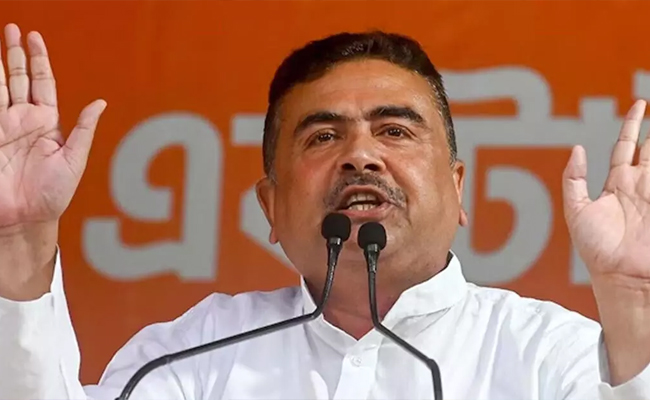
Kolkata (PTI): BJP leader Suvendu Adhikari, who defeated West Bengal Chief Minister Mamata Banerjee in Bhabanipur and secured Nandigram for three times in a row in the recent assembly polls, said on Wednesday that he would vacate one of the two constituencies within 10 days.
Adhikari also asserted that the party's central leadership would decide which constituency he would retain.
"I will vacate one seat within 10 days. The party will decide which one I retain. I will not forget my responsibility towards the people of Bhabanipur and Nandigram," he said.
Adhikari on Monday defeated Banerjee in Bhabanipur by over 15,000 votes, puncturing what was long seen as her safest political refuge and delivering a decisive psychological blow to the TMC, amid a sweeping BJP surge across West Bengal.
Addressing party workers and supporters in Nandigram in Purba Medinipur district, the BJP leader appealed to them not to take out victory processions immediately and instead maintain peace.
"Do not take out victory rallies now. Maintain peace and discipline. Celebrate after May 9, after taking permission," he told party workers.
State BJP president Samik Bhattacharya on Wednesday announced that the oath-taking ceremony of the new government will be held on May 9 at Brigade Parade Ground.
Referring to alleged attacks on BJP workers during the TMC regime, Adhikari said he would not forget the “atrocities" faced by them and assured them of taking appropriate action against perpetrators through legal processes.
"I was part of the 2011 ‘poribartan’ (change), and now I am part of the real change. I offer my gratitude to the people of Nandigram," Adhikari said.
He was referring to the TMC's victory in 2011 when the Mamata Banerjee party dismantled the 34-year Left Front regime in the state.
Adhikari offered prayers at a Hanuman statue in Nandigram and remembered the BJP workers, who had died in political violence.
"We will work in such a way that the BJP government in Bengal stays for 100 years," he said, expressing hope that the BJP’s vote share in the state would rise from the current 46 per cent to 60 per cent in future elections.
The BJP leader also assured residents of Nandigram of improved drinking water supply and better hospital and education infrastructure.