
Kerala govt confirms Nipah virus, 86 under observation
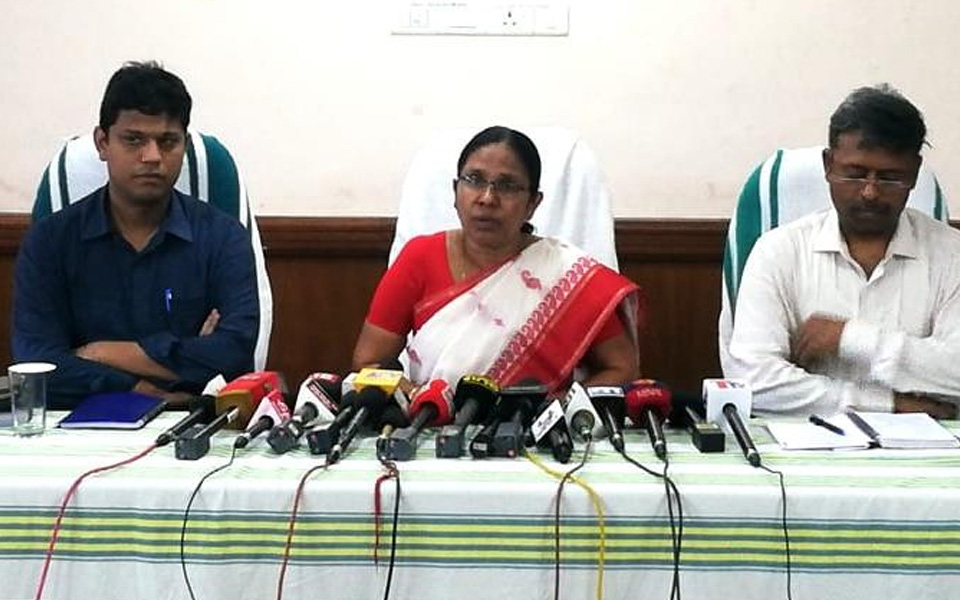
The results of blood samples of the student, which were tested at the National Institute of Virology (NIV) in Pune, have confirmed Nipah, she said. The result came this morning, she added.
Earlier, blood samples examined at two virology institutes--Manipal Institute of Virology and Kerala Institute of Virology and Infectious Diseases--had indicated Nipah.
Shailaja said the condition of the student, who is being treated at a private hospital here, is stable and he was not put under any support system like ventilator.
"Good care is being given to the patient. The patient sometimes become restless due to fever...We expect a good result," she said.
The minister further said a list of 86 people who have interacted with the student has been prepared and they were under medical observation.
Out of the 86, two are suffering from fever and one has been shifted to the isolation ward set up at the Kalamassery Medical College Hospital here, she added.
Two nurses, who had initially attended to the patient, complained of sore throat and fever and they are also under observation of the health department.
The Minister urged people not to panic and take precautionary measures to prevent the spread of the disease.
"We have confidence that we can face it. We have faced it in Kozhikode last year and contained it," she said trying to instil confidence among people.
Appealing to social media users not to spread panic among the public, she said stringent action would be taken against those indulging in such acts.
Union Health Minister Harsh Vardhan has given an assurance that an anti-NiV drug developed in Australia would be provided to the state to deal with the disease, she noted.
Fruit bats of the Pteropodidae family are the natural host of the Nipah virus.
Nipah virus can be transmitted to humans from animals (such as bats or pigs), or contaminated foods and can also be transmitted directly from human-to-human.
Medical experts from Kozhikode have already reached Kochi and there were enough medicines and medical equipment to deal with the situation, she said.
A control room has been opened in Ernakulam district headquarters.
Health authorities in Thrissur had said the student, who was suffering from fever, had sought medical assistance at two private hospitals in that city when he had come to Kochi for a training programme recently as part of his course.
The infected student from Ernakulam district is studying in Thodupuzha in Idukki district.
Officials said the family and neighbours of the young man were also under observation.
On May 19, 2018, Nipah virus disease (NiV) outbreak was reported from Kozhikode in Malappuram district
As per state government figures, the Nipah virus had claimed 17 lives -- 14 in Kozhikode and three in neighbouring Malappuram in May last year
According to the WHO, Nipah virus is a newly emerging disease that can be transmitted from its reservoir (natural wildlife host), the flying foxes (fruit bats), to both animals and humans.
It takes its name from Sungai Nipah, a village in Malaysia where it was first identified.
Symptoms range from asymptomatic infection, acute respiratory infection (mild, severe), and fatal encephalitis. Infected people initially develop influenza-like symptoms of fever, headache, myalgia, vomiting and sore throat.
This can be followed by dizziness, drowsiness, altered consciousness, and neurological signs that indicate acute encephalitis.
Some people can also experience atypical pneumonia and severe respiratory problems, including acute respiratory distress. Encephalitis and seizures occur in severe cases, progressing to coma within 24 to 48 hours.
Let the Truth be known. If you read VB and like VB, please be a VB Supporter and Help us deliver the Truth to one and all.
Two arrested for allegedly sexually assaulting woman at knifepoint in Kochi

Kochi (PTI): Two persons have been arrested after a three-member gang allegedly sexually assaulted a woman at knifepoint near Ernakulam Junction Railway station, officials said on Friday.
The arrested accused were identified as Danish (26), a native of Varkala in Thiruvananthapuram district, and Rahul (39), a native of Paravoor in Kollam district.
Police officials said they were searching for the prime accused, Sanjay, a native of Aroor in Alappuzha district.
According to police, the incident occurred on the night of May 5 when the victim was chatting with her friend near a closed hotel near Ernakulam Junction Railway station.
Officials said the accused approached them, attacked the victim’s friend and then allegedly threatened the woman with a knife before sexually assaulting her.
Police said the accused also allegedly disrobed the victim during the attack.
However, the woman managed to escape from the spot and approached a nearby shop for help.
Police were informed immediately and shifted the victim to the police station.
Officials said the accused were heavily drunk at the time of the incident and went into hiding soon after the attack.
Police registered a case on May 6 under charges including rape, disrobing a woman, criminal intimidation and robbery.
The two accused were later arrested in the city, while efforts are continuing to trace Sanjay, police said.
The accused were produced before a court and remanded to judicial custody.


Kochi: A 23-year-old college student here has been confirmed to be infected with the Nipah virus while 86 others are under medical observation, Kerala Health Minister K K Shailaja Tuesday said.