Kerala govt moves apex court against HC order quashing Rs 20 crore Nava Kerala programme
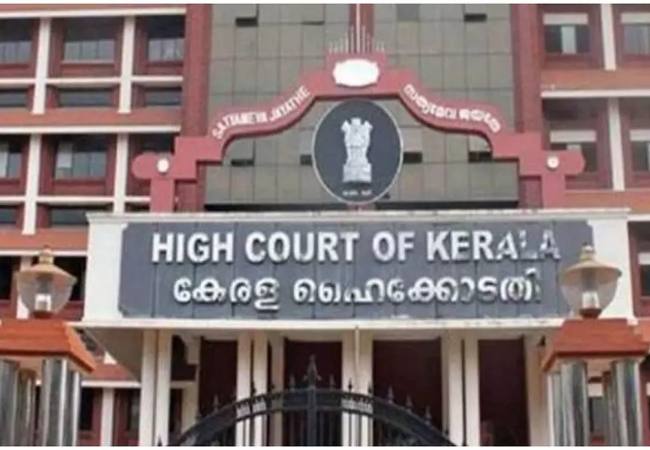
New Delhi (PTI): Kerala government on Wednesday moved the Supreme Court challenging a Kerala High Court order that set aside its decision to allocate Rs 20 crore for the Nava Kerala Citizen Response Programme.
The move came a day after the high court described the decision as a "colourable exercise of executive power" that violated the Rules of Business, delivering a setback to the ruling CPI(M).
In its appeal, the state government submitted that while exercising its Public Interest Litigation (PIL) jurisdiction, the high court has set aside a policy programme approved by the Council of Ministers of the State and further set aside consequential financial sanction and budgetary proceedings.
It said the court erred in failing to appreciate the constitutional scheme under Articles 202 to 205 of the Constitution.
Kerala government stated that the high court granted reliefs in the PIL that were not even sought, thereby transgressing the settled limits of PIL jurisdiction.
"It is submitted that the high court interfered with the government's power to implement governance and development outreach programmes and seriously prejudiced the ability of the state to take policy decisions involving public expenditure and thus disturbed the constitutional balance between the executive and judiciary," the plea said.
A high court bench comprising Chief Justice Soumen Sen and Justice Syam Kumar V M on Tuesday held that the expenditure incurred for implementing the programme is in violation of the rules of business.
The court's order came on two pleas, one of them by Kerala Students Union (KSU) state president Aloshious Xavier, seeking to quash the order launching the programme and restrain the government from "misusing public funds for personal and political gain of the ruling party or front".
The opposition Congress has criticised the Kerala government over the matter, also known as the Nava Kerala Survey initiative, alleging that it was an attempt to channel government funds to the ruling CPI(M) and its youth wing, the DYFI, for election campaigning.
The party claimed that the survey was being conducted to further the CPI(M)'s electoral prospects.
Let the Truth be known. If you read VB and like VB, please be a VB Supporter and Help us deliver the Truth to one and all.
Karnataka School Edu Dept prohibits children from being made to dance to obscene songs
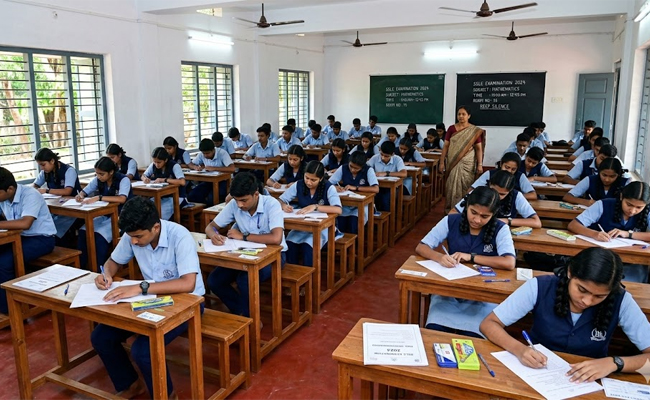
Bengaluru (PTI): The Karnataka School Education Department has issued a circular strictly prohibiting children from being made to dance to obscene songs in educational and cultural programmes.
It stated that such dances would negatively impact students' mental health and moral values. It will create indiscipline and harm the sanctity of education.
"All the Deputy Directors (Administration) of the state's School Education Department have been asked to take strict measures to prevent children or students from dancing to obscene songs in all government, aided and unaided schools in the state," the office of the commissioner of the School Education Department said in a recent circular.
"If it is found that children are being made to dance to obscene songs, appropriate action will be taken against the headmaster or management of such school," it added.
The department also listed certain measures in this regard, which include: strictly prohibiting children from being made to dance to obscene songs during educational and cultural programmes; selecting songs that are inspiring, positive, instilling national pride in children and reflecting the greatness, dignity, values, culture, and morality of the state.
Stating that the school headmaster and management are responsible for selecting songs and dances for cultural programmes, it said, they should also ensure that students wear decent clothes in dance or cultural programmes.