Kerala govt opposes Antony Raju plea in HC to suspend conviction

Kochi (Kerala) (PTI): The state government on Thursday filed a statement in the Kerala High Court opposing the plea of former state Transport Minister Antony Raju to suspend his conviction in an evidence-tampering case, saying that granting the relief "would undermine the integrity of the electoral process."
The government said he was seeking the relief only to contest the upcoming assembly polls.
Raju, a leader of the Janadhipathya Kerala Congress—a constituent of the CPI(M)-led LDF in Kerala—moved the High Court after the Thiruvananthapuram District and Sessions Court declined to suspend his conviction.
Opposing his plea, the state government said Raju "has failed to demonstrate any grave injustice or irreparable damage that would occur if the conviction is allowed to operate."
It noted that his tenure as a legislator was almost over when he was convicted and sentenced to three years' imprisonment, and that the assembly polls were "already at the doorstep."
"Furthermore, the petitioner (Raju) committed these crimes in his capacity as an advocate, long before becoming a representative of the people, which aggravates the nature of the misconduct. Granting a stay would undermine the integrity of the electoral process," the government said in its statement.
It further added that Raju's intention or desire to contest in the upcoming election "cannot be treated as an exceptional circumstance warranting suspension of conviction."
"Contesting an election is only a political choice, and the disqualification arising from a conviction is a statutory consequence under Section 8 of the Representation of the People Act, 1951, which cannot be circumvented by invoking the discretionary jurisdiction of this court. Hence, the petition for suspension of conviction deserves to be dismissed," the government said.
Raju was sentenced to three years' simple imprisonment by the Judicial First Class Magistrate-I Court, Nedumangad, in a case related to tampering with evidence while appearing as a lawyer for an Australian national arrested in a drug case in 1990.
Following his conviction, the Kerala Legislative Assembly Secretariat issued a notification confirming his disqualification.
In his plea to the High Court, Raju said the application for suspension of conviction was filed because, as a sitting member of the Kerala Legislative Assembly, he stood disqualified from holding office solely due to the conviction.
According to him, unlike a sentence of imprisonment, the disqualification under Section 8(3) of the Representation of the People Act is self-operating and instantaneous, leaving no scope for restitution unless the conviction itself is suspended.
"The petitioner's right to contest the upcoming general election to the state legislative assembly is put in peril due to the conviction imposed on him via the judgment impugned in the criminal appeal, which is indefensible both on facts and law," the petition said.
He also contended that the conviction and sentence passed by the magistrate court were against the law, facts, and evidence, and alleged that the court had committed grave errors in the appreciation of evidence.
"The sentence passed by the court below is excessive and has not taken into consideration the delay of 35 years. The sentence was passed only to disqualify the petitioner under the Representation of the People Act," the petition said.
The High Court is likely to hear the matter on March 6.
Let the Truth be known. If you read VB and like VB, please be a VB Supporter and Help us deliver the Truth to one and all.
Delhi schools suspend outdoor activities, plan early steps to shield students from heat
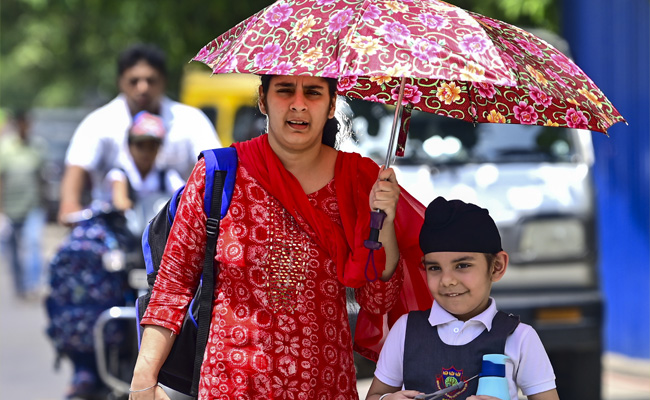
New Delhi (PTI): To shield students from heat-related ailments amid soaring temperatures and harsh afternoon sun, schools across Delhi have begun taking precautionary measures by suspending outdoor activities, shifting assemblies indoors, with some even considering early closure for junior classes.
From indoor games and hydration breaks to ORS consumption and modified dispersal timings, schools are tightening measures as the city braces for prolonged heatwave conditions.
Sudha Acharya, principal at ITL Public School in Dwarka, said all outdoor activities, including morning assembly and games, have been shifted to the school's multipurpose hall.
“We have issued an advisory to all parents to take precautionary measures before sending their children to school. We are also planning to close the school from classes 1 to 8 from May 14 onward if the weather conditions worsen," she said.
Mallika Preman, principal at Tagore International School in East of Kailash, said students have been advised to remain indoors during peak afternoon hours and keep themselves hydrated.
“We have suspended all outdoor activities, and students now play indoor games like carrom and chess. We have also modified the dispersal system so that students are not brought out until their parents arrive at their designated collection areas,” Preman said.
“This reduces their exposure to heat in the afternoon. Students have also been advised to wear caps or use umbrellas during dispersal,” she added.
Ritu Sharma, principal at Sovereign Public School in Rohini, said that teachers have been asked to closely monitor students for signs of heat exhaustion.
“Our priority is to ensure that children remain safe and comfortable during school hours. We are encouraging them to carry water bottles, avoid direct sun exposure and immediately report any discomfort. We have also arranged shaded rest areas and indoor engagement activities to reduce heat exposure,” she said.
The Directorate of Education (DoE) has launched a ‘Beat the Heat’ initiative for government, government-aided and private unaided recognised schools in Delhi in view of the heatwave conditions forecast by the India Meteorological Department (IMD).
The initiative follows the Heat Wave Action Plan issued by the Delhi Disaster Management Authority (DDMA) and aims to protect students from heat-related illnesses while promoting hydration, environmental awareness and care for animals and birds.
Under the initiative, schools have been directed to ring a 'hydration bell' daily in the penultimate period, during which every student will consume oral rehydration solution (ORS). Teachers will also briefly explain the importance of staying hydrated.
Schools have also been encouraged to create 'cool corners' with earthen water pots, promote a ‘one child-one plant’ green mission and appoint student volunteers as 'Jal Mitras' to place and refill water bowls for birds and stray animals, the advisory said.
According to the DoE, the other measures include ensuring safe drinking water stations, spreading awareness on heat stroke prevention, training teachers to identify symptoms of heat stress, and prominently displaying emergency helpline numbers across campuses.
The heads of schools have been asked to submit an action taken report on the implementation of the measures to their respective district offices by April 28, it said.