Kerala govt working to identify area, source of first Nipah case
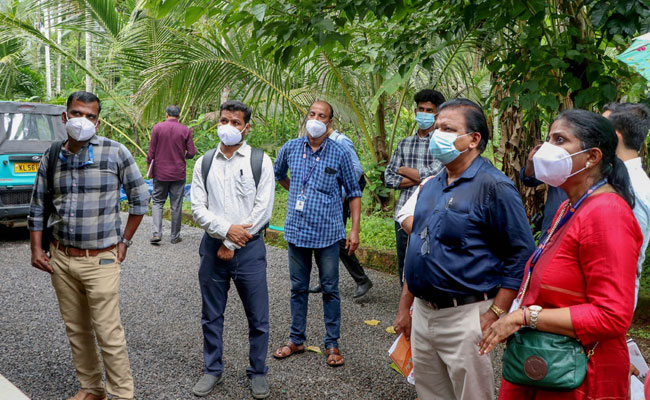
Kozhikode (Kerala) (PTI): After identifying the man who was the patient zero or index case of the Nipah virus outbreak in Kerala, the state government on Saturday began looking for the source and place from where he got infected by seeking details of his mobile tower locations.
Kerala Health Minister Veena George said while the state government was trying to determine where and how the man got infected, the central team was collecting bat samples to ascertain the viral load.
She also claimed that the state's efforts to combat the virus outbreak were appreciated by the central team.
The government was also focusing on completing contact tracing in respect of the sixth person who was confirmed, on Friday, to have been infected by the virus, the minister told reporters here.
She also said that there were no new positive cases and in a relief for the state, 94 samples -- of persons from the high-risk contact list -- have come back negative for the virus.
Meanwhile, 21 people at the Kozhikode medical college and two kids at the Institute of Maternal and Child Health (IMCH) were in isolation, George said.
Everyone, including a nine-year-old boy on a ventilator, who is under treatment for the virus or is in isolation are stable, she added.
The minister said that all those infected are part of the first wave of the infection which has manifested in two clusters -- one being the two family members of the man who was the index case and the second being the persons who came into contact with him at the hospital he went for treatment.
The man who has been identified as the index case died on August 30 and it was only much later it was found that he was infected with Nipah.
His nine-year-old son and brother-in-law are still undergoing treatment along with two others, one of them a health worker, with whom he came into contact at a hospital.
The second fatality due to Nipah occurred on September 11 and the victim had come into contact with the man who was the index case at the same hospital as the others, George said.
Regarding the monoclonal antibody, the only viable therapeutic against the virus, the minister said that according to the Centre it was 50-60 per cent stable and it has asked the state government to explore the possibility of getting a new version of the antibody.
"Presently, according to the doctors, the patients under treatment do not require it," she said.
However, the state requested the Centre's support for expediting the process required for importing the monoclonal antibody and the same was assured.
She also said that a meeting of the core committee was held earlier in the day to chalk out the further course of action.
State Tourism Minister P A Mohamed Riyas, who was present with George at the press briefing, said the control room, call centres and volunteers were doing an excellent job of instilling confidence in the public and creating awareness among them about the virus.
Kozhikode city mayor Beena Philip, meanwhile, said all the wards where the man, who was the index case, went have been declared as containment zones.
"He has moved around a lot. Therefore, the contact list is expected to get bigger," she said.
Kozhikode District Collector A Geetha said that arrangements have been made for online classes in educational institutions for the coming week and instructed students not to engage in holiday-related celebrations.
The Collector also said that Beypore harbour will remain closed till further orders as it falls in one of the containment zones and provided two alternative locations for landing fishing vessels and sale of the catch.
The Centre on Friday decided to procure from Australia 20 more doses of monoclonal antibody through the Indian Council of Medical Research (ICMR) for treatment of those infected by Nipah.
The Kerala Health department had on Friday said it has identified a total of 1,080 people in the contact list of the positive patients and has started collecting samples.
It had earlier announced that everyone who is on the high-risk contact list of the infected persons will be tested.
The ICMR's National Institute of Virology (NIV) in Pune had sent its mobile BSL-3 (Biosafety Level-3) laboratory to Kozhikode to test the samples for the virus in the district.
This is the fourth time the viral infection has been confirmed in the state. It was detected in Kozhikode in 2018 and 2021 and in Ernakulam in 2019.
The World Health Organisation and ICMR studies have found that the entire state, not just Kozhikode, is prone to such infections.
Let the Truth be known. If you read VB and like VB, please be a VB Supporter and Help us deliver the Truth to one and all.
AIITA welcomes Karnataka’s ban on obscene songs in school events
Bhatkal: The Karnataka unit of the All India Ideal Teachers Association (AIITA) has welcomed the Karnataka government’s decision to strictly ban school children from dancing to obscene songs during educational and cultural programmes in government, aided, and private schools across the state.
AIITA Karnataka State President M. R. Manvi congratulated the government for taking what he termed an important step to preserve the sanctity of education.
“Such decisions to safeguard the dignity of school children and uphold the values of education are the need of the hour. This rule should not be limited to government schools alone but must be strictly implemented in all private educational institutions as well,” he said.
He further urged the government to address other concerns within school programmes.
“The government should not only prohibit obscene dances in the name of school anniversaries, but also ensure that plays and dialogues that incite religious hatred are avoided. Schools should be centres of harmony, not platforms for spreading hatred,” he added.
According to a recent circular issued by the Department of School Education and Literacy, obscene dances are adversely affecting the mental health and moral values of students.
In this regard, schools have been advised to use songs that promote nationalism, positive thinking, the greatness of Kannada culture, and value-based traditions instead of inappropriate content during programmes.
The circular also emphasises that students should be dressed in decent attire.
AIITA also backed the department’s warning that disciplinary action would be taken against head teachers if such guidelines are violated. The association has further demanded that district Deputy Directors of Public Instruction strictly monitor the implementation of these rules.