Kerala Muslim educational group bans face-covering attire on campus
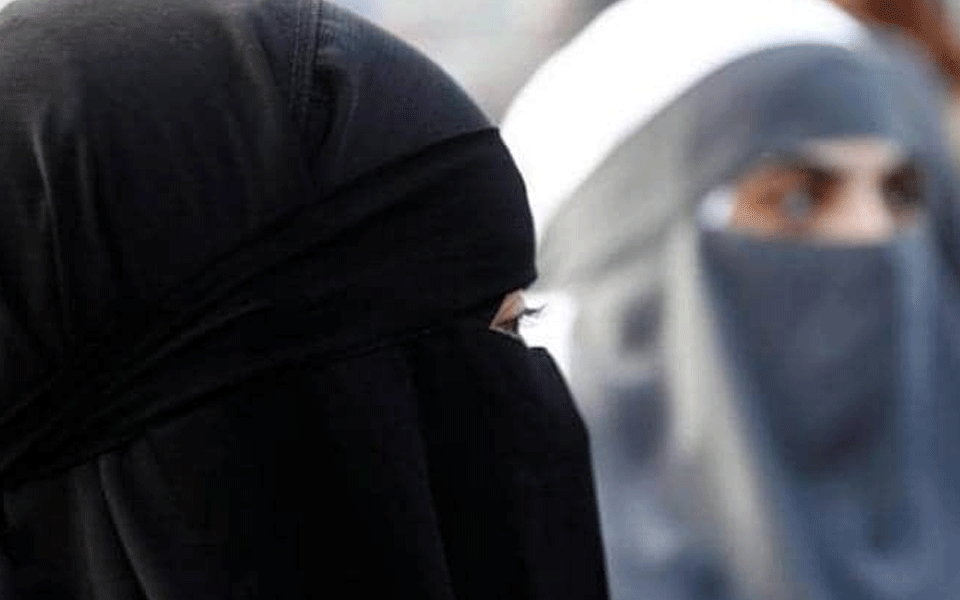
Thiruvananthapuram, May 2: Amid a raging debate on prohibiting burqa in the country on grounds of national security, a Muslim educational group in Kerala has banned its students from covering their faces with any attire on the campuses of its institutions.
The Kozhikode-based Muslim Education Society (MES), a progressive group which runs several educational institutions, including professional colleges, issued a circular urging its students not to attend classes wearing any face-covering attire.
While the dress code mentioned in a circular triggered opposition from orthodox Muslim organisations and scholars, the MES maintained that covering women's faces was a new trend and had not been in practice in the community in the state earlier.
In the April 17 circular, MES Institutions president P K Fazal Gafoor said the directive should be implemented from the 2019-20 academic year without triggering any controversy.
"Without creating any controversy, the institutions must make sure to implement from 2019-20 academic year that students do not come to class wearing any attire covering their face," it said.
Any 'inappropriate' trend in the campuses should be discouraged. "Any attire, which is unacceptable in the public society, cannot be allowed, even if it is in the name of modernity or religious ritual," Gafoor said.
The circular, addressed to the secretaries and the principals of the MES institutions, also asked them to include the dress code directive as a new rule in the college calendar for the new academic year.
Facing demands for withdrawing the move, Gafoor Thursday made it clear that the MES would go ahead with its decision to ban face-covering attire on its campuses.
"Covering the face of women is a new trend..99 per cent women are not covering their face..There had been no such practice in the Kerala society or in the Muslim community here...," he told media persons.
Gafoor said the MES was not ready to implement the dress codes being imposed in the name of "religious fundamentalism".
"We have freedom to ban such attires on our campuses. There is no need to consult with religious outfits for that," the MES president said.
Criticising the MES, Samashtha, an orthodox outfit of Muslim scholars, said the circular was "un-Isalamic" and it should be withdrawn.
"As per the Islamic rules, the body parts of women should not be shown out. The MES has no right to issue a circular banning the attire covering the face of women. Islamic rules should be followed," Umar Faize, a Samastha scholar, said.
The Shiv Sena had on Wednesday welcomed the Sri Lankan government's decision to ban burqa and masks on grounds of national security in the wake of the Easter Sunday terror attacks and asked the Narendra Modi-led regime to follow suit.
In an editorial in party mouthpiece Saamana, the Sena asked Prime Minister Narendra Modi to follow Sri Lankan President Maithripala Sirisena's footsteps and ban burqa and other face-covering garments in India, saying it posed a threat to the nation's security.
AIMIM chief Asaduddin Owaisi has attacked the Shiv Sena, alleging that the article was trying to create divisions and polarisation in the society.
Let the Truth be known. If you read VB and like VB, please be a VB Supporter and Help us deliver the Truth to one and all.
Sujit Nair raises concerns over speculation of DMK-AIADMK understanding to block TVK
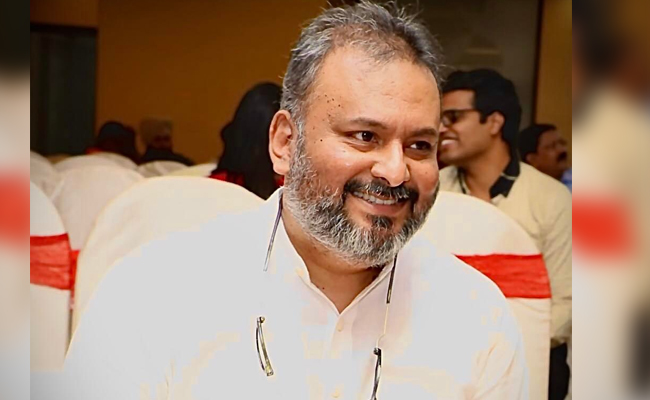
Chennai: Journalist and political commentator Sujit Nair has expressed concern over speculation that the Dravida Munnetra Kazhagam and the All India Anna Dravida Munnetra Kazhagam could explore a post-poll understanding to prevent Vijay-led Tamilaga Vettri Kazhagam from forming the government in Tamil Nadu.
In a social media post, Sujit Nair said the election verdict in Tamil Nadu reflected a clear public demand for political change and argued that the mandate should be respected irrespective of political preferences.
Referring to reports and political discussions surrounding a possible understanding between the DMK and AIADMK, he said he hoped such developments remained only speculative conversations and did not turn into reality.
Nair stated that if such an alliance were to take shape, it would raise serious questions about ideological politics in the country. He said TVK had emerged through a democratic electoral process and that the legitimacy to govern in a parliamentary democracy comes from the people’s verdict.
According to him, attempts to prevent an electoral winner from forming the government through unexpected political arrangements may be constitutionally valid, but many people could view them as politically opportunistic.
He further said that such a move could particularly affect the political image of the DMK, which has historically projected itself around ideology, social justice and opposition politics. Nair said that in ideological terms, the DMK appeared closer to TVK than to the AIADMK, and joining hands with its long-time political rival only to remain in power could weaken its broader political narrative.
He added that the same questions would apply to the AIADMK as well, as the party had spent decades positioning itself against the DMK and such an arrangement could create discomfort among its cadre and supporters.
Drawing a comparison with Maharashtra politics in 2019, Nair said he had expressed similar views when the Shiv Sena formed an alliance with the Indian National Congress and the Nationalist Congress Party after the Assembly elections.
He said post-poll alliances between long-standing political rivals often create a public perception that ideology and electoral mandates become secondary when political power equations come into play.
Nair also said such developments increase public cynicism towards politics and reinforce the belief among voters that ideology is often sidelined after elections.
He maintained that the Tamil Nadu verdict was emphatic and said respecting both the spirit and substance of the mandate was important for the credibility of democratic politics.