Kerala police officer to face disciplinary action over fatal hit-and-run
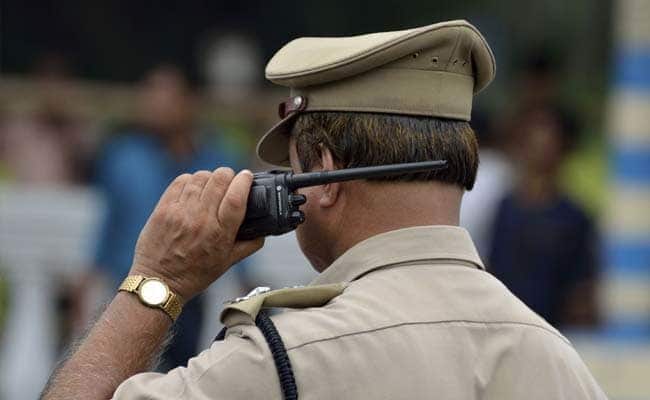
Thiruvananthapuram (PTI): The Kerala police have decided to initiate disciplinary action against the Station House Officer (SHO) of Prassala police station after he was found involved in a hit-and-run incident that claimed the life of a 59-year-old man at Kilimanoor on September 7.
The Thiruvananthapuram Rural Police Chief conducted an internal inquiry and submitted a report against SHO P Anil Kumar to the Thiruvananthapuram Range Deputy Inspector General (DIG), who in turn forwarded it to the South Zone Inspector General (IG) for disciplinary action, officials said.
The South Zone IG’s office said the report has been received and that further action will follow.
He would be suspended as part of the internal inquiry and the police probe into the accident, police sources said.
Kumar, who was in Bengaluru as part of an investigation, returned to Thiruvananthapuram on Monday. Sources said Kilimanoor police would summon and formally arrest him after receiving clearance from higher officials.
According to the FIR, between 4 am and 6 am on September 7, a blue Maruti Alto car hit Rajan at Irattachira near Kilimanoor. The driver fled the spot without attending to the victim, who lay injured on the roadside for over an hour before being taken to a nearby hospital, where he succumbed to his injuries.
CCTV footage examined by Kilimanoor police showed that the vehicle belonged to Kumar, and footage from a toll plaza confirmed he was behind the wheel at the time of the accident.
After the incident, Kumar allegedly shifted his car to a workshop in Neyyattinkara, from where it was later recovered by police.
The case has been registered under sections 281 and 106(1) of the Bharatiya Nyaya Sanhita (BNS) and sections 134(A) and 134(B) of the Kerala Police Act.
“The officer has not yet given an explanation regarding the incident. A report will be filed before the court arraigning him as an accused,” a police official said.
Let the Truth be known. If you read VB and like VB, please be a VB Supporter and Help us deliver the Truth to one and all.
CM Siddaramaiah ready to "sacrifice power" or continue, as per Rahul's directions: Rajanna
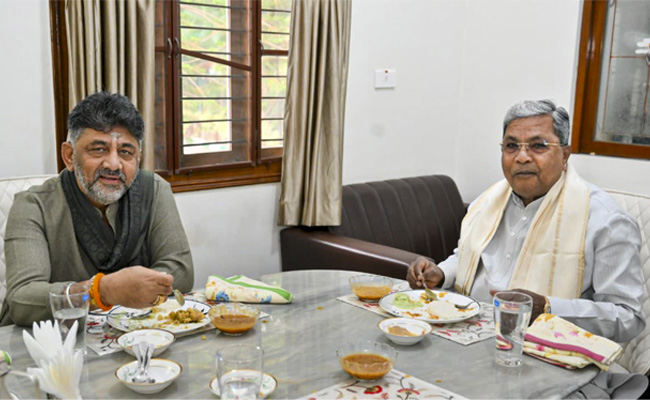
Bengaluru (PTI): As the speculation about leadership change in Karnataka rages yet again, a senior party leader and close aide of Siddaramaiah on Tuesday said the Chief Minister was ready to "sacrifice power" or continue in the top post, based on the directions of Congress leader Rahul Gandhi.
KN Rajanna also seemed to support the idea of a change in the party leadership as well, an apparent reference to deputy CM and Karnataka Congress president D K Shivakumar, whose supporters want him to be made CM.
Urging the Congress high command to clear the confusion on the leadership issue, Rajanna, a former minister who is considered close to Siddaramaiah, warned that continued uncertainty would be detrimental for the party and governance.
He also insisted that if the chief minister is changed, there should be a "Dalit CM" in Karnataka.
The development comes amid speculations within the party and political circles about a possible decision on leadership change and cabinet reshuffle after May 4, once the results for assembly elections in four states and one union territory, along with bypolls to two assembly segments in Karnataka, are announced.
"The Chief Minister has an open mind and has said he will abide by the directions of the high command and Rahul Gandhi, and that everyone should cooperate. The CM has repeatedly reiterated that he will abide by Rahul Gandhi's directives and suggested that everyone follow the decision. All ministers have agreed to it," Rajanna said in response to a question about the CM's recent discussion with his close cabinet colleagues and MLAs.
Speaking to reporters here, he said, "power is not permanent for any politician, those who lose it will try to gain it and those who have gained it will try to maintain it. The CM's mindset is that he is ready to sacrifice power or continue in power as per Rahul Gandhi's directions. He will abide by Rahul Gandhi's decision."
When asked whether supporters of Siddaramaiah demanded that he continue as CM, and if he steps down, that an AHINDA leader should take over, the MLA said the matter is for the high command to decide.
"We have told the high command what we had to. Ultimately it is left to high command and Rahul Gandhi," he said.
AHINDA (Kannada acronym for minorities, backward classes, and Dalits) is considered as the strong support base of Siddaramaiah and also the Congress party.
When asked about his past statement that there should be a Dalit CM after Siddaramaiah, Rajanna said, "What's wrong with it. I am committed to the statement that there should be a Dalit CM."
MLAs and leaders who want Shivakumar to be elevated have recently claimed they expect some "sweet news" by May 15, which is their leader's birthday.
When asked whether the party president should also be changed, the former minister said that everything has to change.
"If the ministers have to change, why shouldn't the party president. Everything will be decided by high command," he said.
Shivakumar is the state Congress President and has completed six years in the post.
For the government to function more actively towards the welfare of the people it is important that the high command clears the existing confusion in the Congress party at the earliest, Rajanna said, adding, the ministers have gone to discuss the same with the leadership.
"I too urge that the high command should not allow the confusion to continue; as long as the confusion continues, it is detrimental for the party and governance. I will also go to Delhi after May 4," he said.
"The high command is at it (resolving the confusion), but because of elections, the leaders are busy. The matter cannot be decided hastily, it must be decided with a clear state of mind, as it involves the future of the people of Karnataka and the party," he said, expressing confidence that the party will take appropriate decisions after examining all aspects.
PWD Minister Satish Jarkiholi on Monday met Congress President Mallikarjun Kharge and General Secretary (in charge of Karnataka) Randeep Surjewala in New Delhi and requested them to address the speculation regarding the change of leadership in the state.
Subsequently Social Welfare Minister H C Mahadevappa too met the party leadership in Delhi.
Both Jarkiholi and Mahadevappa are considered close to Siddaramaiah.
Regarding the demand for cabinet reshuffle, Rajanna said there is an expectation within both the party and the public that the administration should be sensitised more, and there is nothing wrong in new people getting opportunities.
Responding to a question, Rajanna said, there is a feeling among AHINDA communities that their expectations from the current government have not been fulfilled. "I too agree with it," he said.
Rajanna, who recently alleged that the Chief Minister is "helpless" and under some "compulsion," reiterated his statement by saying, "compare Siddaramaiah as CM during 2013-18 and 2023 to now, there is a huge difference, people are saying it."
The leadership issue is being hotly debated as Shivakumar's supporters have been demanding his elevation since late 2025, in lines with a rumoured power-sharing agreement involving Siddaramaiah when the party won the 2023 Assembly elections.