Kerala retains top rank in Niti Aayog's SDG India Index 2020-21, Bihar worst performer
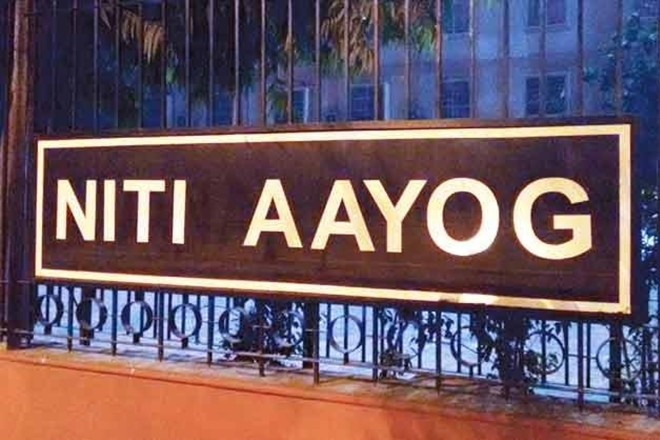
New Delhi, Jun 3: Kerala has retained the top rank in Niti Aayog's SDG India Index 2020-21, while Bihar has been adjudged as the worst performer, according to a report released on Thursday.
The Index for Sustainable Development Goals (SDGs) evaluates progress of states and union territories on social, economic and environmental parameters.
Kerala retained its rank as the top state with a score of 75. Both Himachal Pradesh and Tamil Nadu took the second spot with a score of 74.
Bihar, Jharkhand and Assam were the worst performing states in this year's India index.
The third rendition of India's SDG Index was launched by Niti Aayog Vice Chairman Rajiv Kumar on Thursday.
Further, Chandigarh maintained its top spot among the UTs with a score of 79, followed by Delhi (68).
Mizoram, Haryana and Uttarakhand are the top gainers in 2020-21 in terms of improvement in score from 2019, with an increase of 12, 10 and 8 points, respectively.
While in 2019, 10 states/UTs belonged to the category of front-runners (score in the range 65-99, including both), 12 more states/UTs find themselves in this category in 2020-21.
Uttarakhand, Gujarat, Maharashtra, Mizoram, Punjab, Haryana, Tripura, Delhi, Lakshadweep, Andaman and Nicobar Islands, Jammu and Kashmir and Ladakh graduated to the category of front-runners (scores between 65 and 99, including both).
The country's overall SDG score improved by 6 points - from 60 in 2019 to 66 in 2020-21. This positive stride towards achieving the targets is largely driven by exemplary country-wide performance in goal 6 (clean water and sanitation) and goal 7 (affordable and clean energy), where the composite goal scores are 83 and 92, respectively.
Our effort of monitoring SDGs through the SDG India Index and Dashboard continues to be widely noticed and applauded around the world. It remains a rare data-driven initiative to rank our states and union territories by computing a composite index on the SDGs, Kumar said.
Niti Aayog CEO Amitabh Kant said, The report reflects on the partnerships we have built and strengthened during our SDG efforts. The narrative throws light on how collaborative initiatives can result in better outcomes and greater impacts.
On the theme of partnerships which is central to goal 17, Niti Aayog Member (Health) V K Paul said, It is clear that by working together we can build a more resilient and sustainable future, where no one is left behind.
First launched in December 2018, the index has become the primary tool for monitoring progress on the SDGs in the country and has simultaneously fostered competition among the states and union territories by ranking them on the global goals.
The index, developed in collaboration with the United Nations in India, measures the progress at the national and sub-national level in the country's journey towards meeting the global goals and targets and has been successful as an advocacy tool to propagate the messages of sustainability, resilience, and partnerships, as well.
From covering 13 goals, 39 targets, and 62 indicators in the first edition in 2018-19 to 17 goals, 54 targets and 100 indicators in the second; this third edition of the index covers 17 goals, 70 targets, and 115 indicators.
The SDGs, constituted through an unprecedented consultative process, have 17 goals and 169 related targets to be achieved by 2030.
The goals are an ambitious commitment by world leaders which set out a universal and an unprecedented agenda which embraces economic, environmental and social aspects of the wellbeing of societies.
Let the Truth be known. If you read VB and like VB, please be a VB Supporter and Help us deliver the Truth to one and all.
Sujit Nair raises concerns over speculation of DMK-AIADMK understanding to block TVK
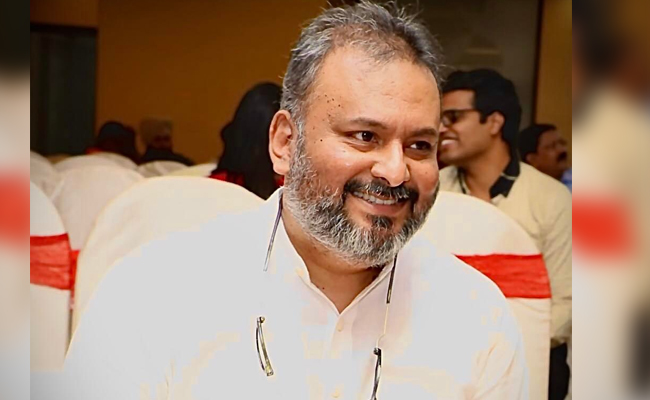
Chennai: Journalist and political commentator Sujit Nair has expressed concern over speculation that the Dravida Munnetra Kazhagam and the All India Anna Dravida Munnetra Kazhagam could explore a post-poll understanding to prevent Vijay-led Tamilaga Vettri Kazhagam from forming the government in Tamil Nadu.
In a social media post, Sujit Nair said the election verdict in Tamil Nadu reflected a clear public demand for political change and argued that the mandate should be respected irrespective of political preferences.
Referring to reports and political discussions surrounding a possible understanding between the DMK and AIADMK, he said he hoped such developments remained only speculative conversations and did not turn into reality.
Nair stated that if such an alliance were to take shape, it would raise serious questions about ideological politics in the country. He said TVK had emerged through a democratic electoral process and that the legitimacy to govern in a parliamentary democracy comes from the people’s verdict.
According to him, attempts to prevent an electoral winner from forming the government through unexpected political arrangements may be constitutionally valid, but many people could view them as politically opportunistic.
He further said that such a move could particularly affect the political image of the DMK, which has historically projected itself around ideology, social justice and opposition politics. Nair said that in ideological terms, the DMK appeared closer to TVK than to the AIADMK, and joining hands with its long-time political rival only to remain in power could weaken its broader political narrative.
He added that the same questions would apply to the AIADMK as well, as the party had spent decades positioning itself against the DMK and such an arrangement could create discomfort among its cadre and supporters.
Drawing a comparison with Maharashtra politics in 2019, Nair said he had expressed similar views when the Shiv Sena formed an alliance with the Indian National Congress and the Nationalist Congress Party after the Assembly elections.
He said post-poll alliances between long-standing political rivals often create a public perception that ideology and electoral mandates become secondary when political power equations come into play.
Nair also said such developments increase public cynicism towards politics and reinforce the belief among voters that ideology is often sidelined after elections.
He maintained that the Tamil Nadu verdict was emphatic and said respecting both the spirit and substance of the mandate was important for the credibility of democratic politics.