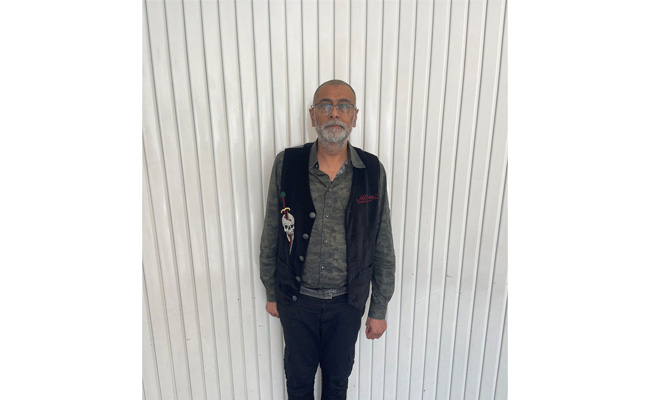
Arunachal minister pitches for focus on cold-water fisheries at NFDB meet in Hyderabad

Itanagar (PTI): Arunachal Pradesh Fisheries Minister Gabriel Denwang Wangsu on Monday called for a special policy for hill and border states to promote cold-water fisheries, strengthen infrastructure and improve the livelihoods of rural fishermen.
Addressing the 12th governing body meeting of the National Fisheries Development Board (NFDB) in Hyderabad, Wangsu supported a proposal to bring Mission Amrit Sarovar under fisheries activities for fish farming, an official communique stated.
He said convergence of fisheries programmes with the mission would help boost inland fish production and generate additional income opportunities for rural communities.
The minister also placed several key proposals before the NFDB governing body, including special relaxations under the Pradhan Mantri Matsya Sampada Yojana (PMMSY) for hill and border states, such as higher unit costs, flexible norms and cluster-based implementation.
He emphasised the need to strengthen seed security through expansion of carp and trout hatcheries, brood banks, local feed production units and development of farming clusters.
Wangsu further stressed conservation and sustainable use of indigenous fish species through hatcheries, river ranching and stock enhancement programmes.
He also highlighted the importance of developing value-chain and post-harvest infrastructure, including mini-feed mills, mobile ice plants, cold storages, insulated transport and value-addition units.
The minister proposed resource mapping and digitisation using geo-spatial technologies and suggested setting up a regional centre of NFDB in Arunachal Pradesh, with full logistical support from the state government.
Earlier, Union Minister for Animal Husbandry and Fisheries Rajiv Ranjan Singh, who chaired the meeting, reviewed the progress of fisheries and aquaculture development across the country.
He directed states and Union Territories to ensure optimal and timely utilisation of sanctioned funds and early completion of ongoing projects, especially under PMMSY.
The meeting was attended by ministers of state for animal husbandry and fisheries, fisheries ministers from several states, senior officials from states and Union Territories, and members of the NFDB governing body.
Let the Truth be known. If you read VB and like VB, please be a VB Supporter and Help us deliver the Truth to one and all.
Five year old boy mauled to death by stray dogs in Jharkhand's Dhanbad
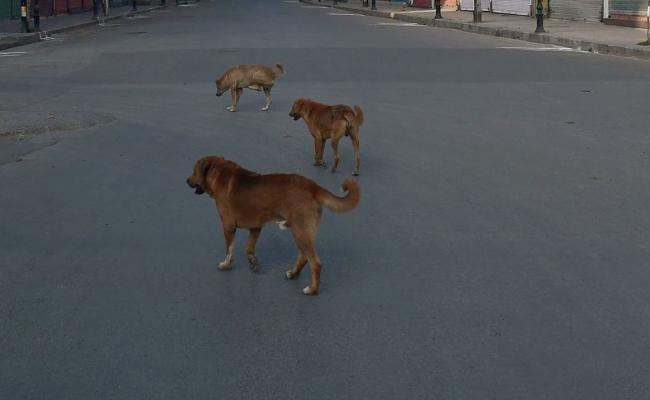
Dhanbad (PTI): A five-year-old boy was mauled to death by stray dogs in Jharkhand's Dhanbad district, police said on Sunday.
The incident happened on Friday at Yadav Basti in Bholanath Baseria, within the Goududih police outpost, when the boy stepped out to play, they said.
"The victim boy was mauled to death after being attacked by a pack of stray dogs. The incident happened when the boy was playing a short distance from his house. Due to severe injuries, he died on the spot," said Lov Choudhary, the officer in charge of Gondudih police station.
The OC said that the bereaved family members approached the police station and demanded compensation. They were then asked to send the victim's body for a post-mortem examination, but they refused.