Kerala to be declared first state to achieve total digital literacy: Report
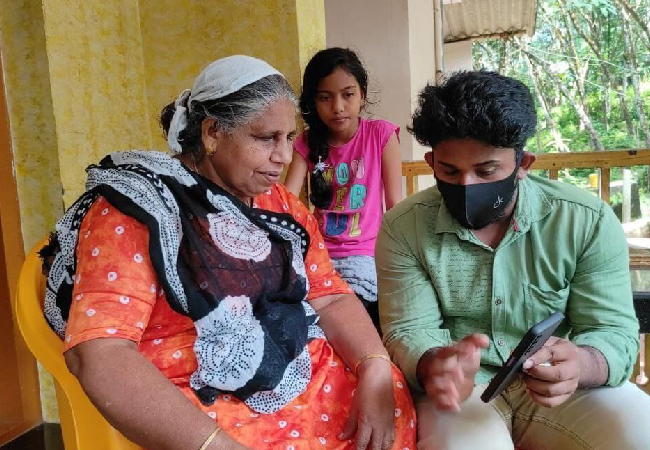
Thiruvananthapuram: Kerala is poised to make history as the first state in India to achieve total digital literacy, thanks to a sweeping grassroots campaign that has empowered over 21 lakh people with essential digital skills. From senior citizens making video calls for the first time to workers accessing online government services, the initiative has transformed lives across the state.
According to a report by The Hindu, the landmark achievement stems from the ‘Digi Kerala’ programme spearheaded by the Local Self-Government (LSG) department. LSG Minister M.B. Rajesh confirmed that the state government is now awaiting confirmation from the President of India to formally declare Kerala as fully digitally literate.
“We have achieved much beyond the guidelines stipulated by the National Digital Literacy Mission for digital literacy, which require training to be imparted only for those up to 60 years of age. This programme has included people of all ages,” The Hindu report quoted Rajesh as saying.
The Digi Kerala movement began as a pilot project in 2022 in the Pullampara grama panchayat in the capital city to impart digital literacy to all residents. What started as a local experiment soon grew into a state-wide campaign, with participants—many of whom had never used a smartphone—learning to make voice and video calls, use messaging apps like WhatsApp, access government services, carry out internet banking, and use popular social media platforms.
State-wide surveys identified 21.88 lakh individuals as digitally illiterate. To reach them, the programme mobilised an extensive network of 2.57 lakh volunteers. This included members of the National Service Scheme (NSS), Kudumbashree, the Kerala State Literacy Mission Preraks, Library Council, and various youth organisations, the report added.
To ensure the quality of learning, trainees underwent evaluations upon completion of the programme. An impressive 98 percent passed the assessment. Notably, in areas where more than 10 percent variation was observed, re-training sessions were held. Offline training was also provided in regions with poor internet connectivity.
Let the Truth be known. If you read VB and like VB, please be a VB Supporter and Help us deliver the Truth to one and all.
CM Siddaramaiah alleges ‘criminal conspiracy’ in Sringeri recount, vows legal action
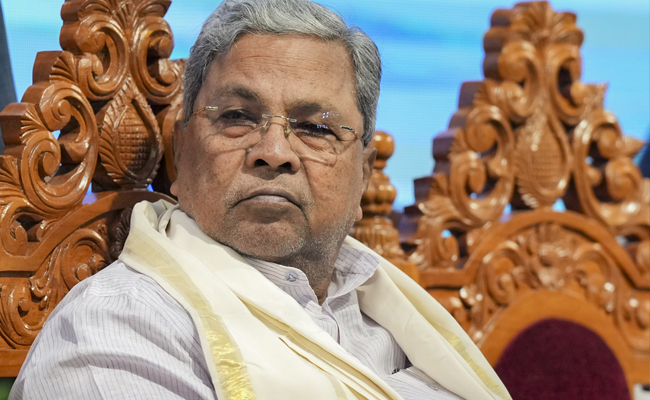
Bengaluru (PTI): Alleging a “criminal conspiracy” by BJP candidate D N Jeevaraj in the Sringeri Assembly poll recounting, Karnataka CM Siddaramaiah on Tuesday said the outcome was manipulated after valid postal ballot votes in favour of Congress leader T D Raje Gowda were tampered with during the recounting process.
Following a Karnataka High Court order on an election petition filed by Jeevaraj, challenging Raje Gowda’s election, the reverification and recounting were conducted on Saturday.
After the reverification and recount of postal ballots for the Sringeri Assembly constituency, votes polled in favour of Raje Gowda were reduced by 255, the returning officer said.
A report on the matter has been submitted to the Election Commission of India for further action, the officer added.
Congress leader Raje Gowda had won the 2023 Assembly polls from Sringeri by 201 votes, defeating his nearest rival Jeevaraj.
Addressing a press conference in Bengaluru, Siddaramaiah said the High Court had directed the recounting of postal ballots and that irregularities were noticed during the exercise conducted on May 2.
“This is a clear case of criminal conspiracy,” Siddaramaiah said, alleging that valid votes cast in favour of Raje Gowda were altered after being accepted by counting agents of all parties, including Congress, BJP, and JD(S).
He claimed that during the recounting of postal ballots, 255 votes were initially accepted as valid by all agents but were later tampered with by subordinate officials.
“There is a second mark on the votes polled in favour of Raje Gowda. They had accepted these as valid votes. Subsequently, another mark was made by officials. This is a clear case of criminal conspiracy,” he said.
When asked who was behind the alleged conspiracy, the CM replied, “It was hatched by Jeevaraj and others. It is planned.”
Siddaramaiah further alleged that the returning officer acted improperly by declaring the result despite the presence of an Election Commission observer during the recounting.
“Immediately after the counting, the returning officer announced the result. He should not have done so; this is against the law,” he said.
He pointed out that Raje Gowda had originally won by 201 votes, but after the recounting, the BJP candidate was declared the winner by 52 votes.
“The BJP has committed a criminal act of conspiracy. This is not vote chori but vote dacoity,” he alleged.
The CM said a police complaint had already been filed by Raje Gowda’s election agent, Sudhir Kumar, and emphasised the need for electoral integrity.
“We want transparency and free and fair elections. That is what our Constitution mandates,” he added.
Stating that the government would pursue legal remedies, Siddaramaiah said, “We are preparing an appeal challenging the returning officer’s announcement in a court of law.”
Responding to a separate query on elections in other states, the CM said there appeared to be an anti-incumbency factor in West Bengal, while results in Tamil Nadu were “surprising,” adding that Vijay’s party was emerging as the largest there.
Following the victory of party candidates in Bagalkote and Davanagere South, Siddaramaiah expressed confidence about future electoral prospects in Karnataka.
“Even in 2028, we will win the Assembly elections. We will come back,” the CM said.
Siddaramaiah added that he would order a forensic examination into the alleged tampering of postal ballots.