Key accused in Govind Pansare murder case dies in Maharashtra's Sangli
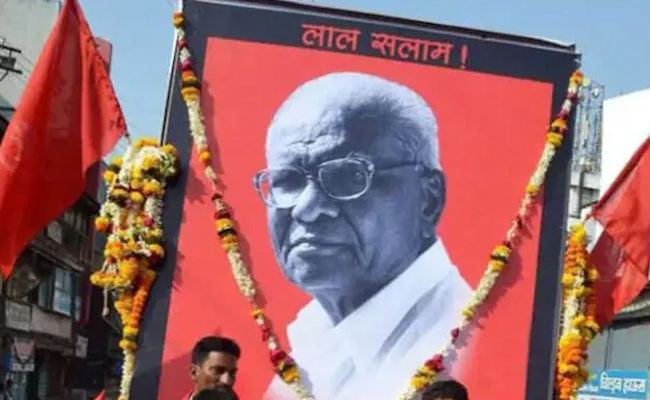
Mumbai (PTI): Right-wing activist Sameer Gaikwad, accused of being a "co-conspirator" in the 2015 murder of rationalist and author Govind Pansare, died in Maharashtra's Sangli district in the early hours of Tuesday, officials said.
Gaikwad, 43, an alleged member of Sanatan Sanstha, was arrested in 2015 in the case. He was granted bail in 2017 and had been staying at his residence in Sangli.
He was rushed to a hospital where doctors declared him dead on arrival early on Tuesday, a police official said without giving more details.
Prima facie, Gaikwad died due to cardiac arrest, but police were waiting for the postmortem report to ascertain the exact cause of death, he said.
There is nothing suspicious, the official added.
Pansare was shot at on February 16, 2015, in Maharashtra’s Kolhapur and succumbed to his injuries a few days later on February 20.
The Special Investigation Team (SIT), which was subsequently formed to investigate Pansare's murder, arrested Gaikwad in the case in September 2015.
In its chargesheet, the SIT had mentioned Gaikwad as a "co-conspirator" and alleged that he, along with other Sanatan Sanstha activists, eliminated Pansare.
The SIT had also conducted raids at Sanatan Sanstha's ashram in Panvel, Navi Mumbai, in connection with the case.
Pansare and his wife were returning home from their morning walk in the Samrat Nagar area of Kolhapur when two motorbike-borne men fired multiple rounds at them before fleeing in 2015.
Initially, the Rajarampuri police station in Kolhapur handled the case.
The investigation was later transferred to the SIT under the supervision of the Additional Director General of Police (CID), Maharashtra.
Dissatisfied with the lack of progress in tracing the shooters, Pansare’s family had sought the case’s transfer to the Anti-Terrorism Squad (ATS).
On August 3, 2022, the HC transferred the probe to the ATS, observing there was “no headway” or “breakthrough” in the case.
Of the 12 accused identified, nine have so far been arrested, and four supplementary chargesheets have been filed.
Let the Truth be known. If you read VB and like VB, please be a VB Supporter and Help us deliver the Truth to one and all.
RR beat RCB by six wickets in IPL
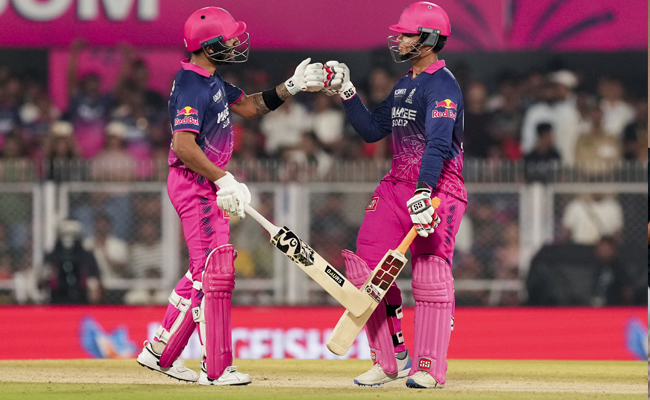
Guwahati (PTI): Blistering fifties by Vaibhav Sooryavanshi and Dhruv Jurel powered Rajasthan Royals to a six-wicket win over Royal Challengers Bengaluru in their IPL match here on Friday.
Sent in to bat, RCB rode on a fighting half-century by skipper Rajat Patidar (63) to post 201 for 8.
Virat Kohli (32), Romario Shepherd (22) and Venkatesh Iyer (29) also chipped in with useful contributions.
In reply, Sooryavanshi (78 off 26 balls) and Dhruv Jurel (81 not out off 43 balls) shared a 37-ball 108-run partnership for the second wicket to set the platform. Krunal Pandya (2/30) tried to bring them back with back-to-back wickets.
But Jurel, in the company of Ravindra Jadeja (24), completed the task with another 68-run stand, with two overs to spare.
For RR, Jofra Archer (2/33), Ravi Bishnoi (2/32) and Brijesh Sharma (2/37) took two wickets.
Brief scores:
Royal Challengers Bengaluru: 201 for 8 in 20 overs (Rajat Patidar 63; Jofra Archer 2/33, Ravi Bishnoi 2/32, Brijesh Sharma 2/37).
Rajasthan Royals: 202 for 4 in 18 overs (Vaibhav Sooryavanshi 78, Dhruv Jurel 80 not out; Krunal Pandya 2/30, Josh Hazlewood 2/44).