KKR acquires majority stake in Kozhikode’s Meitra Hospital, backs expansion across India
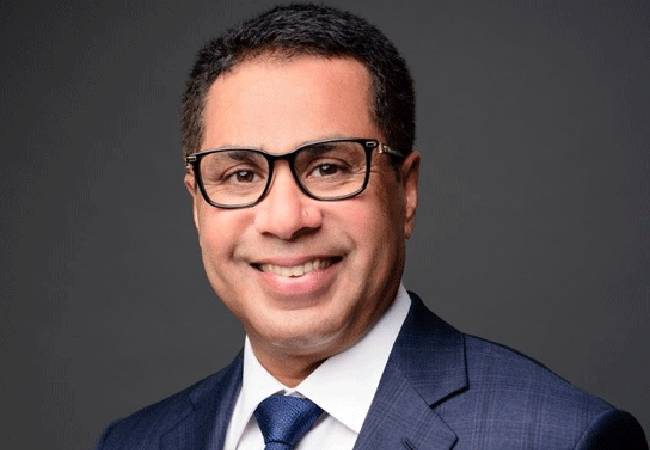
Kozhikode: In a major development in India’s healthcare sector, global private equity giant KKR has acquired a majority stake in Meitra Hospital, the premium Kozhikode-based healthcare institution founded by NRI entrepreneur and philanthropist Faizal Kottikollon. The move sets the stage for Meitra’s expansion beyond Kerala, with plans to establish world-class hospitals in other Indian cities.
The deal, announced on September 22, marks KKR’s third hospital acquisition in the past year, following its investments in cancer hospital chain HCG and Kerala-based Baby Memorial Hospital (BMH).
Kottikollon confirmed that Meitra would continue to operate as a premium standalone brand with its existing management. “Meitra will be the premium brand and will continue separately with its own management. The brand will now be taken outside Kerala to other cities,” he told Moneycontrol in an interview.
Faizal Kottikollon, who spent most of his life in the UAE after a brief stint in the United States, initially built his fortune in the manufacturing sector. In 2012, he built the world’s first green foundry in Sharjah, an achievement that he calls his “first billion-dollar exit.”
After that milestone, he and his wife shifted their focus to philanthropy, with a vision to transform education and healthcare in India. Kottikollon’s search for world-class healthcare models led him to the Cleveland Clinic in the US, where he funded research and brought top doctors onto his advisory board. This collaboration ultimately resulted in the creation of Meitra Hospital, which opened its doors in 2016.
The hospital’s construction itself was unique. It was entirely assembled from offsite prefabricated modules manufactured at Kottikollon’s Krishnagiri factory in Tamil Nadu. “The uniqueness of Meitra Hospital is that it was built entirely offsite, like Lego blocks, and assembled here. I spent Rs 500 crore to build the factory to make this possible. Nothing of that quality existed in India,” Kottikollon said.
The first phase of the hospital involved a Rs 450 crore investment to build a 220-bed facility, making Meitra one of India’s most expensive hospitals on a per-bed basis.
“We built at 2,000 square feet per patient bed, compared to the 1,200 square feet norm in India. The idea was to meet world-class standards because India needs such infrastructure to attract foreign patients,” he explained.
Since its opening, Meitra has operated at near full capacity, necessitating an urgent expansion.
The next phase of Meitra’s expansion is set to begin on October 8, with construction kicking off for an additional 200 beds, including a dedicated oncology block. Like the first phase, this expansion will also rely on prefabrication technology, allowing for rapid scaling without compromising quality.
Kottikollon revealed that discussions are already underway to expand Meitra’s footprint to at least two other cities in South India. “India needs a lot of hospital beds. The population is increasing, and the fastest way to expand capacity is by building high-quality hospitals quickly, using prefab construction like we did. With KKR’s partnership, we can scale much faster, and hopefully set a model for others to follow,” he said.
Even though KKR now holds a majority stake, Kottikollon will continue as chairman and lead the next phase of growth.
“They wanted me to continue as chairman and lead the expansion. In healthcare, one proven model like Meitra can be replicated across cities. KKR, as a private equity investor, looks for returns, and assets like this allow fast, high-quality expansion,” he explained.
Currently, about five percent of Meitra’s revenue comes from overseas patients, primarily from Oman. With the addition of new capacity, the hospital expects this figure to triple to 15 percent in the coming 12–18 months.
“With the new beds, we’ll target GCC markets like the UAE and Saudi Arabia. They haven’t come to India so far because of lack of quality infrastructure. We expect foreign patient revenue to grow significantly,” Kottikollon said.
He added that political instability in the Middle East has not impacted patient inflows. “GCC countries are isolated from those conflicts. Trust and government-level ties are strong. We expect more UAE nationals coming to Meitra,” he said.
The Gulf region, including Saudi Arabia, Qatar, and the UAE, will remain the primary focus for international patient outreach due to its proximity to South India and the presence of a large South Indian diaspora.
While India faces a chronic shortage of doctors and nurses, Kottikollon noted that Kerala’s abundant medical talent provides a unique advantage for Meitra.
“Kerala is the largest exporter of nurses globally. Doctors are also plenty, and many Malayali doctors abroad want to return if quality infrastructure exists. Meitra provides that, so we’ve not faced a shortage,” he said.
He added that recent policy changes in the United States, such as the new $100,000 H1-B visa fee, could accelerate the return of medical talent to India. “Many young professionals today see India as attractive — our infrastructure and opportunities are strong,” he said.
Beyond Meitra, Kottikollon has invested nearly Rs 1,000 crore in an integrated healthcare venture called Tulah, launched earlier this year in Calicut. Tulah combines traditional and modern medicine under one roof, targeting the ultra-premium segment.
A sub-brand, Veiia by Tulah, is also planned to cater to a wider audience across India and select international cities.
For now, the primary focus remains on scaling Meitra with KKR’s backing. “Education and healthcare are the bedrock of a society. With KKR’s partnership, we can scale much faster, and hopefully set a model for others to follow,” Kottikollon said.
Let the Truth be known. If you read VB and like VB, please be a VB Supporter and Help us deliver the Truth to one and all.
Telangana survey flags 89,000 child labourers, highlights caste disparities in employment
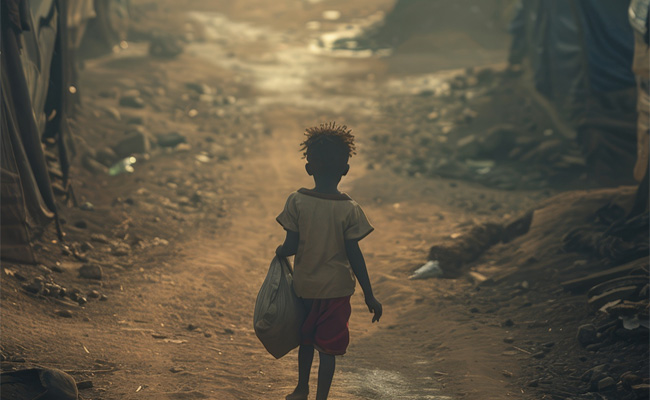
Hyderabad: A caste-based survey conducted by the Telangana government for 2024–25 has identified around 89,000 children engaged in labour across the state, with a large share belonging to Scheduled Caste (SC) and Scheduled Tribe (ST) communities.
The findings are part of the Socio, Economic, Educational, Employment, Political and Caste (SEEEPC) Survey, which covered about 3.5 crore people across 242 caste groups. According to the report, nearly one per cent of individuals below 18 years are involved in daily wage work. While the percentage appears small, officials noted that the absolute number reflects a serious concern.
The survey found that 11 per cent of identified child labourers belong to the ST Lambadi community, while 14 per cent are from the SC Madiga community. The highest incidence was reported among the ST Kolam group, where 7.2 per cent of minors are engaged in daily wage labour.
The data also revealed wider socio-economic disparities. Nearly half of the Scheduled Caste population is dependent on daily wage work, while only around 5 per cent are employed in the private sector, compared to about 30 per cent among General Castes.
State Welfare Minister Ponnam Prabhakar said the findings show that SC and ST communities remain three times more backward than General Castes, while Backward Classes are about 2.7 times more disadvantaged.
The report further noted that, on average, 31.3 per cent of people in the 25–65 age group depend on daily wage work. Among communities, the BC-A Odde group recorded the highest share at 55 per cent. In contrast, only 2.6 per cent of OC Brahmins rely on such work.
Several SC and ST communities, including Kolam, Beda, Madiga, Koya, Gond, Yerukulas and Mala Sale, were found to have among the highest proportions of daily wage earners. On the other hand, most General Caste communities and some Backward Class groups such as Goldsmiths and BC-C Christians showed lower dependence on daily wage employment.
The survey also pointed to inequalities in access to formal employment. Communities such as OC Rajus, OC Brahmins and Kapus were found to have a higher presence in private sector jobs, with up to 27 per cent of their population employed in such roles.