Kolhapuri chappals blend heritage and tech as govt pushes for authenticity with QR certification
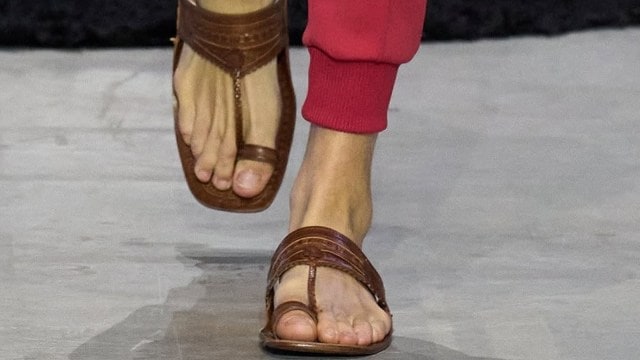
Kolhapur (PTI): The humble Kolhapuri chappal, one of India's most iconic traditional crafts, is enjoying renewed prominence not only in domestic fashion circles but also in international markets, amid Italian brand Prada being accused of appropriating the footwear.
The GI-tagged handmade flat leather sandals, known for their intricate craftsmanship and cultural heritage, now carry an added layer of protection and authenticity in the form of QR codes, thanks to recent technological and legal innovations.
The move aims to check counterfeiting and highlight the identity of the artisan behind each product, boost consumer trust and strengthen the market position of the traditional craftsmen, officials from the government-run Leather Industries Development Corporation of Maharashtra (LIDCOM) said.
Recently, artisans cried foul after footwear similar to the Kolhapuri chappals featured in Italian luxury fashion brand Prada's new collection, alleging violation of the GI (Geographical Indication) rights.
Following the row, Prada had acknowledged the sandals showcased in their men's 2026 fashion show were “inspired” by traditional Indian handcrafted footwear. The brand, however, clarified in a reply to the Maharashtra Chamber of Commerce that the showcased sandals are still at the design stage and not yet confirmed for commercial production.
A team of experts from Prada visited Kolhapur earlier this month to interact with artisans and assess the local footwear manufacturing process.
Dating back to the 12th century, the footwear has been primarily crafted in Maharashtra's Kolhapur, Sangli and Solapur districts. Its distinctive design, made using naturally tanned leather and handwoven straps, has been preserved through generations of artisans.
A major boost came in the early 20th century when visionary ruler Chhatrapati Shahu Maharaj promoted it as a symbol of self-reliance and Swadeshi pride.
He encouraged the use of these chappals, helping elevate the rural craft into a respected cottage industry.
What was once a humble, coarse village slipper, soon became a symbol of swadeshi identity under the royal patronage.
To safeguard this cultural legacy and ensure fair recognition for artisans, the Maharashtra and Karnataka governments jointly secured the GI tag in 2019.
Under international trade rules such as the TRIPS agreement, this GI status legally reserves the rights to manufacture and market Kolhapuri chappals to artisans from specific districts in both the states.
The certification defines the product as handmade, using traditional techniques and natural leather, with open-toe construction, prohibiting the use of synthetic materials or mechanised processes.
Going a step further, the LIDCOM has introduced QR-coded certification for each pair of chappals, the corporation said in a statement.
This digital initiative aims to tackle counterfeiting and highlight the identity of the artisan or self-help group behind each product, it said.
Buyers scanning the code can access details like name and location of the artisan or production unit, district of manufacture in Maharashtra, craft techniques and raw materials used, validity and status of the GI certification.
"This initiative not only boosts consumer trust but also strengthens the market position of traditional craftsmen," the LIDCOM said.
The corporation is now calling upon consumers, designers and the common public to stand in solidarity with India's indigenous craft traditions.
"Kolhapuri chappals are not just fashion accessories. They are a powerful expression of traditional skill, identity and the dignity of small artisan communities," the statement quoted LIDCOM Managing Director Prerna Deshbhratar as saying.
Founded in 1974, LIDCOM has been a pivotal institution in empowering rural leather artisans. Through training programmes, market development, design innovation and economic support, the organisation has transformed traditional footwear-making into a symbol of Maharashtra's cultural pride and grassroots economy.
Kolhapuri chappals have now regained global spotlight, blending heritage with modern relevance.
More than just the traditional footwear, they are a symbol of skilled artisanry and indigenous pride.
Since 1974, LIDCOM, also known as the Sant Rohidas Charmodyog and Charmakar Vikas Mahamandal, has played a crucial role in preserving and promoting this heritage craft, as per the statement.
The corporation has empowered thousands of rural artisans by offering skill development training, encouraging innovation, expanding markets and ensuring sustainable livelihoods, it said.
On the organisation's vision, Deshbhratar, said, "Kolhapuri chappals are not merely utilitarian items. They embody stories of self-reliance, national pride and a living cultural tradition. Through our efforts, we aim to strengthen the hands that preserve this legacy and inspire generations to come."
Apart from economic uplift, the corporation is also committed to cultural conservation.
It continues to implement a wide range of initiatives -- from developing training centres and empowering self-help groups to building linkages between buyers and suppliers across domestic and international markets -- to ensure the traditional craft survives and thrives in a changing economic landscape, the statement said.
Let the Truth be known. If you read VB and like VB, please be a VB Supporter and Help us deliver the Truth to one and all.
AIITA welcomes Karnataka’s ban on obscene songs in school events
Bhatkal: The Karnataka unit of the All India Ideal Teachers Association (AIITA) has welcomed the Karnataka government’s decision to strictly ban school children from dancing to obscene songs during educational and cultural programmes in government, aided, and private schools across the state.
AIITA Karnataka State President M. R. Manvi congratulated the government for taking what he termed an important step to preserve the sanctity of education.
“Such decisions to safeguard the dignity of school children and uphold the values of education are the need of the hour. This rule should not be limited to government schools alone but must be strictly implemented in all private educational institutions as well,” he said.
He further urged the government to address other concerns within school programmes.
“The government should not only prohibit obscene dances in the name of school anniversaries, but also ensure that plays and dialogues that incite religious hatred are avoided. Schools should be centres of harmony, not platforms for spreading hatred,” he added.
According to a recent circular issued by the Department of School Education and Literacy, obscene dances are adversely affecting the mental health and moral values of students.
In this regard, schools have been advised to use songs that promote nationalism, positive thinking, the greatness of Kannada culture, and value-based traditions instead of inappropriate content during programmes.
The circular also emphasises that students should be dressed in decent attire.
AIITA also backed the department’s warning that disciplinary action would be taken against head teachers if such guidelines are violated. The association has further demanded that district Deputy Directors of Public Instruction strictly monitor the implementation of these rules.