Kuki leader advocates creating new Union territories in Manipur
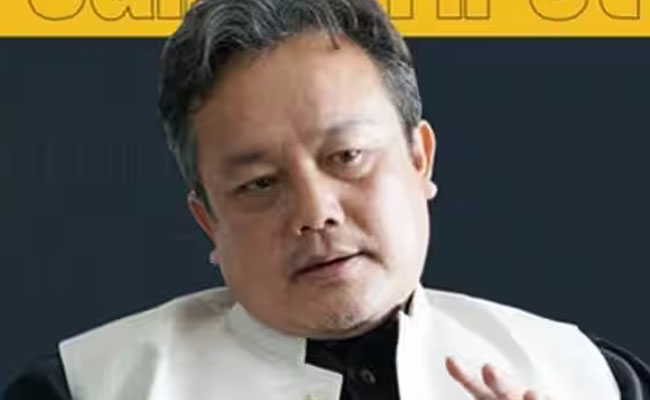
Kolkata (PTI): Kuki leader and BJP MLA Paolienlal Haokip, who shot into the limelight after ethnic violence erupted in Manipur, said the way forward to finding a solution to the state's racial conflict is by creating three separate Union territories.
Haokip in an interview to PTI advocated giving "political and administrative recognition to the ethnic separation" in the state, upping the ante from earlier vaguely explained demands for a "separate administration" for Kuki areas made by fellow Kuki community leaders.
However, Manipur Chief Minister N Biren Singh and Meitei groups led by COCOMI (Coordinating Committee on Manipur Integrity, an umbrella body of several Imphal-based organizations) have strongly voiced their opposition to any moves to "break up" the state, and analysts say the Central government, which is holding talks with Kuki groups - Kuki National Organisation and United Peoples Front, is also against such a formulation.
"The way forward, as I see it, is for the Union government to give political and administrative recognition to the ethnic separation, where the state of Manipur is reorganised as three Union territories," Haokip told PTI.
Critics point out that the formulation would implicitly create separate Naga, Kuki and Meitei territories which would be difficult given the fact that there are mixed populations in many villages and districts.
He argued that such a move will "best ensure lasting peace, and also pave the way for each community to pursue excellence". Ethnic violence between Meiteis and Kukis, which broke out in early May this year, has so far claimed more than 160 lives and continues to plague the northeastern state till date.
Meiteis account for about 53 per cent of Manipur's population and live mostly in the Imphal Valley, while tribals, which include Nagas and Kukis, constitute 40 per cent and reside mainly in the hill districts.
Haokip, who won the election from Saikot constituency in Churachandpur district of Manipur earlier this year on a BJP ticket, said, "The resumption of talks by the central government with Kuki Zo insurgent groups on a bilateral platform is a positive development, given that the state government has been playing spoiler with its majoritarian and arrogant attitude."
Haokip and other Kuki leaders believe that their community has received a raw deal as the majority has been controlling the state's allocations of resources and at the same time stifling check mechanisms such as the Hill Areas Committee of the Manipur assembly.
They are also unhappy about the fact that tribal lands were declared as reserved forests and protected forests without letting tribal people claim their pre-existing rights in these areas. Earlier this year, the Manipur government bulldozed Kuki villages in protected forests claiming they violated the Forests Act.
The community is also upset over stalling of the delimitation commission report which it claims recommends giving more seats to tribals in proportion to their increased percentage of population in the state.
On the other hand, organisations such as the COCOMI, which staged a protest on Saturday in Imphal where tens of thousands of people gathered to protest talks with Kuki groups, have branded these groups as "narco-terrorists", accusing the Kuki-Zomi community of cultivating poppy and of encouraging "illegal migration from Myanmar" to swell their numbers.
Haokip, an alumni of JNU, however rubbished these claims and said, "The COCOMI is an organization parroting the majoritarian politics of arrogance, which had been challenging constitutional provisions governing the state that was Manipur.
"The accusations about illegal immigration and poppy cultivation are trumped up narratives meant to suit and instigate the current ethnic cleansing violence backed by the state."
He also pointed out the long history of Kuki's being part of the country's national movement.
"Kukis had fought the longest war with the British with perhaps the greatest casualty on the British side. The Anglo-Kuki war 1917-1919, recorded as the Kuki rebellion by British historians, lasted for almost three years," he said.
He also underlined the Kuki participation "in great numbers in the Azad Hind Fauz under Netaji." The INA liberated Manipur's Moirang town from the British forces and flew its flag there in April 1944.
Let the Truth be known. If you read VB and like VB, please be a VB Supporter and Help us deliver the Truth to one and all.
Maharashtra sets up state vaccination task force to strengthen immunisation programme

Mumbai (PTI): The Maharashtra government has set up a State Vaccination Task Force to strengthen the regular immunisation programme and review the progress of related campaigns, a health department official said on Monday.
The State Vaccination Task Force will comprise at least 29 members and will be headed by the administrative head of the health department, he informed.
The government has also constituted separate district-level and municipal vaccination task forces to improve implementation and address challenges at the grassroots level, he said.
Municipal task forces, chaired by respective civic commissioners, have been constituted in view of the vast urban population in Maharashtra and the role of civic bodies in implementing different health programmes.
The district-level task forces will function under the chairmanship of collectors.
"Complete immunisation of children at the appropriate age is an extremely simple, cost-effective and highly effective measure to reduce child mortality and the prevalence of diseases among kids. Immunisation is a powerful tool for reducing illness in children," maintained the official.
To ensure full vaccination of all children, the state government implements various campaigns from time to time as per the central government guidelines, he pointed out.
"Active participation and cooperation of other relevant government departments are essential (in making these campaigns successful)," according to the official.
The state-level body will review the regular immunisation programme, associated campaigns and vaccine-preventable diseases in detail. It will also conduct focused assessments of high-risk districts and municipal corporations, including vacancies at district, municipal and sub-district levels, availability of cold chain equipment, resource gaps and training requirements, he noted.
The state task force will review allocation and utilisation of funds for immunisation and ensure timely action by officers concerned based on reports from district and municipal task forces and state-level monitoring mechanisms, the official said.
It will also ensure active coordination and participation of other government departments in immunisation drives, while district and municipal task forces will carry out similar functions at their respective levels, the official added.