Kurmi protests continue to rock parts of Bengal
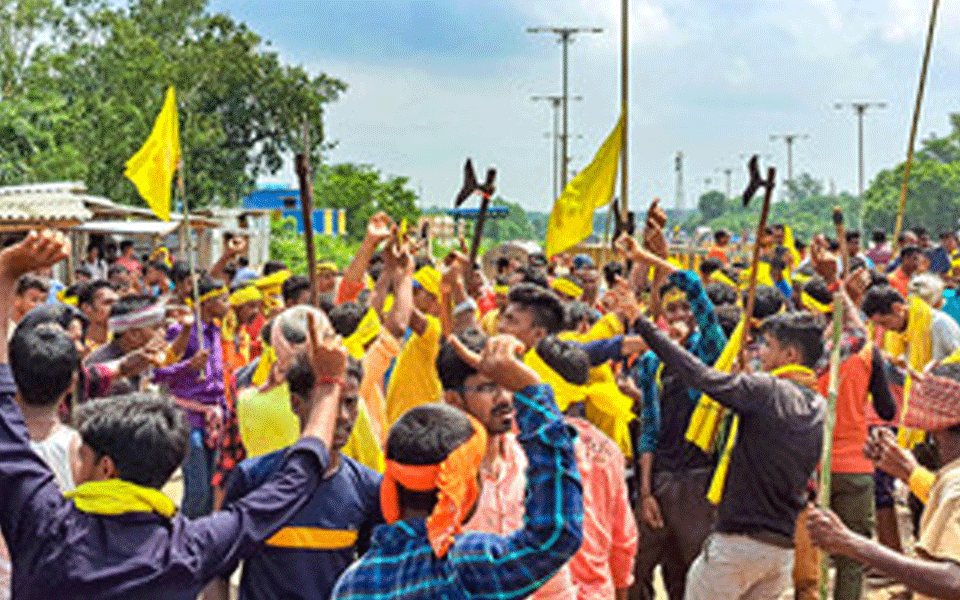
Kolkata (PTI): Protests by Kurmi community members in various districts of West Bengal were unabated on Saturday, the fifth consecutive day of their stir for ST status, as they blocked railway tracks and a stretch of National Highway-6, officials said.
Train services in a few divisions of South Eastern Railway (SER) were affected as the agitators squatted on the tracks, leading to cancellation, short-termination and diversion of several trains, they said.
Around 250 mail/express and passenger trains have been cancelled since Tuesday, the officials said.
The protesters also blocked a portion of NH-6 in Khemasuli in Paschim Medinipur district, leaving hundreds of goods carriers and buses stranded, and leading to long traffic snarls.
During the day, district administrations of Paschim Medinipur, Jhargram and Purulia held meetings with Kurmi community leaders to persuade them to withdraw the ongoing agitation, but the talks did not bear fruit, the officials said.
Meanwhile, Purulia administration sources claimed that the protests were withdrawn in the district following the talks, but the Kurmis continued with their stir in Paschim Medinipur and Jhargram.
The rail blockade at Khemasuli station in Paschim Medinipur is still underway, and so is the agitation on National Highway-6, Kurmi Samaj state working committee member Tapas Mahto told PTI.
Hopefully, we will withdraw the ongoing protests. But, no final decision has been taken as of now, he said.
Mahto, however, said the road blockade on State Highway-5 in Jhargram's Lodhasuli was lifted later in the day.
The Kurmis, demanding Scheduled Tribe (ST) status for the community and inclusion of the Kurmali language in the Eighth Schedule of the Constitution, launched the agitation at various railway stations in West Bengal, Odisha and Jharkhand at 4 am on Tuesday.
Let the Truth be known. If you read VB and like VB, please be a VB Supporter and Help us deliver the Truth to one and all.
Trump says Islamic State group leader was killed in joint US-Nigerian mission
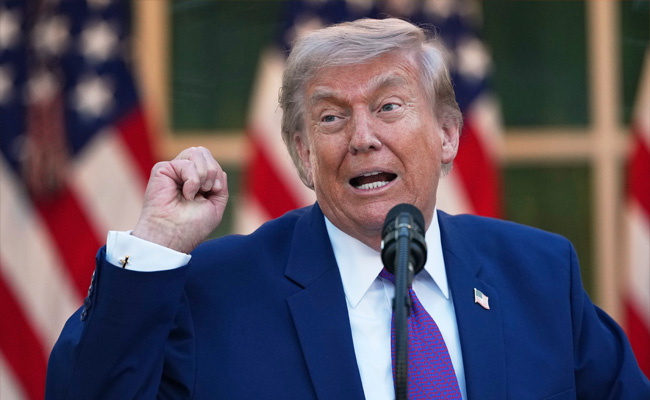
Washington (AP): President Donald Trump said US and Nigerian forces killed a leader of the Islamic State group in Nigeria in a mission carried out Friday.
Trump announced the joint operation in a late-night social media post that offered few details. He said Abu Bakr al-Mainuki was second in command of the Islamic State group globally and “thought he could hide in Africa, but little did he know we had sources who kept us informed on what he was doing.”
The US viewed Al-Mainuki as the key figure in IS organising and finance, and believed he was plotting attacks against the United States and its interests, according to an official who spoke on condition of anonymity because they were not authorised to share sensitive information.
Born in Nigeria's Borno province in 1982, al-Mainuki took the helm of the IS branch in West Africa after the group's previous leader in the region, Mamman Nur, was killed in 2018, according to the Counter Extremism Project, which tracks militant groups.
Al-Mainuki was based in the Sahel area, the monitoring group said, adding that it is believed that he fought in Libya when IS was active in the North African nation more than a decade ago. He was sanctioned by the US in 2023.
Trump in December directed US forces to launch strikes against the Islamic State group in Nigeria, though he released little detail then about the impact.
Nigeria has been battling multiple armed groups, including at least two affiliated with IS.
The Friday night operation was the latest instance in a string of covert missions abroad that Trump has announced this year, starting with the stunning overnight raid in January to capture and remove Venezuela's then-leader Nicolás Maduro and whisk him to the US, followed nearly two months later by the launch of strikes that kicked off the war with Iran.