Lack of funding delayed adoption of modern space technologies: Former ISRO scientist Nambi Narayanan
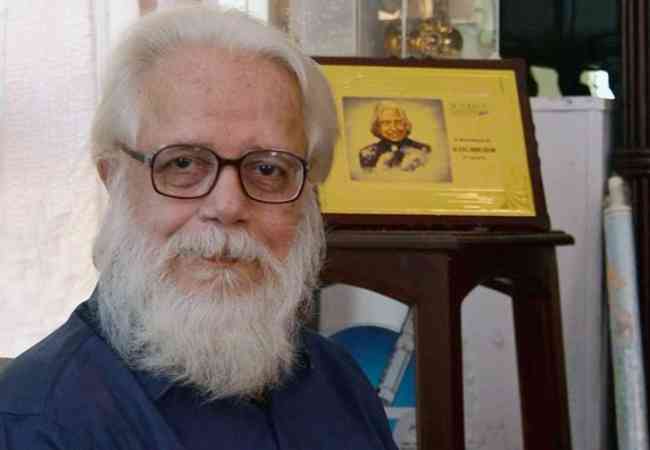
Chennai (PTI): Lack of adequate funding delayed the adoption of modern technologies in the space sector, former ISRO scientist Nambi Narayanan said on Friday.
Speaking at the National Innovation Day celebrations at Rajalakshmi Engineering College near Chennai, Narayanan said that whenever substantial funds were required to adopt new technologies, they were not made available immediately as there were other pressing priorities demanding attention and resources.
Responding to questions from the audience about advancements in liquid and solid propulsion systems, he said, “Everything starts with the point of need and requirements. We could have completed and mastered liquid propulsion in three years, but we ended up taking nearly two decades because of a lack of funding.”
“Whenever there is a need for substantial funds to adopt the latest technologies, they are not immediately available, as there are more pressing problems that require attention and funding,” he was quoted as saying in a press release.
Reflecting on his journey in rocket technology, Narayanan said many young engineers today are eager to work in this field. “If future engineers are to make the country powerful, they must make meaningful contributions — be it in liquid propulsion or cryogenics — and compete with the best minds in the international community,” he said.
He added that if India’s youth are to make the country “proud” and “successful,” they must aim to compete at the global level.
Narayanan emphasised the need for a “high-energy propulsion system” to drive India’s future space programmes, especially interplanetary missions.
“Whether it is liquid, solid, cryogenic or semi-cryogenic propulsion depends on the requirements. Now, we are talking about interplanetary travel, and there are several developments taking place,” he said.
Later, Narayanan presented certificates to the winners of Dreamovation 2025 – Business Pitching Event, organised by the college to encourage budding engineers to address the United Nations’ Sustainable Development Goals and contribute to building a sustainable future.
Students from various disciplines, including mechanical engineering, electrical and electronics, biotechnology, and computer science, participated in the event and showcased their entrepreneurial ideas. College Vice-Chairman Abhay Meghanathan and Principal S N Murugesan were also present.
Let the Truth be known. If you read VB and like VB, please be a VB Supporter and Help us deliver the Truth to one and all.
Engine issue forces SWISS Delhi flight to abort takeoff; six passengers injured
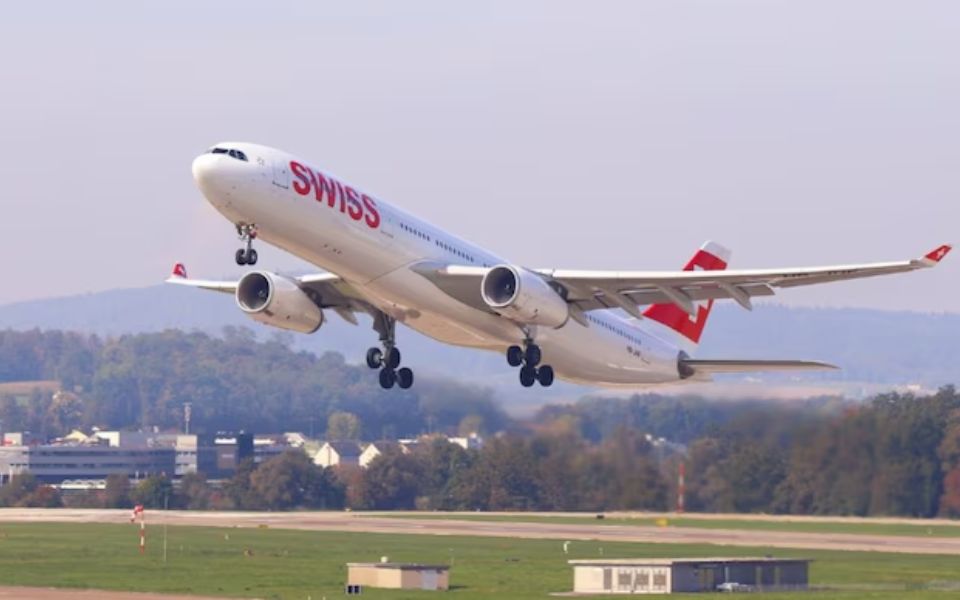
New Delhi (PTI): A Zurich-bound Swiss International Air Lines' flight carrying 232 passengers aborted take off at the Delhi airport early Sunday due to an engine issue, sources said.
Six passengers are undergoing medical evaluation, an airline spokesperson said without elaborating.
Smoke was observed from the port side of one of the landing gears of the A330 aircraft that was operating the flight LX147 to Zurich. The flight crew aborted the take off and full emergency response was initiated, the sources said.
In a detailed statement, an airline spokesperson said there were 228 passengers and four infants on board.
"Shortly after takeoff, just after 1:00 am. local time in India, an issue occurred with one of the engines. The crew rejected the takeoff and, following an assessment of the situation, decided as a precaution to evacuate the aircraft," the spokesperson said.
Six passengers were receiving medical attention, the spokesperson added.
"All passengers and crew evacuated the aircraft via the emergency slides.Six passengers are currently undergoing medical evaluation. For a small number of individuals who were unable to use the slides, stairs were provided," the spokesperson said.
According to the spokesperson, Swiss technical specialists will travel to Delhi to inspect the aircraft and initiate the next steps.
The airline is known as Swiss.
At the same time, the spokesperson said the airline was working intensively to find a swift and suitable onward travel solutions for all passengers.