Lands of farmers, Dalits grabbed for company linked to Jagan: Pawan Kalyan

Palnadu (Andhra Pradesh), Nov 5: Amid a legal tussle between Y S Jagan Mohan Reddy and Y S Sharmila over the transfer of shares of Saraswati power company, Andhra Pradesh Deputy Chief Minister Pawan Kalyan on Tuesday visited the site where the firm was expected to come up and alleged that lands were snatched away from farmers and Dalits for this enterprise.
However, the YSRCP claimed Kalyan's allegations as diversion politics in the face of rising atrocities against women and allegedly failing law and order situation in the southern state.
The Deputy CM alleged that farmers were threatened with petrol bombs and their lands were grabbed for this company.
"Former chief minister's family members (Jagan & Sharmila) were feuding between themselves over these (lands) as if they were their family property," said Kalyan, addressing a public meeting at Vemavaram village in Palnadu district.
Farmers parted with their lands with the hope that their family members would get jobs, Kalyan said, and added that it did not happen.
Kalyan claimed that the process to procure land for Saraswati power began during the tenure of the late chief minister Y S Rajasekhar Reddy, resulting in the pooling of 1,184 acres which included 24 acres of assigned land belonging to Dalits, which cannot be sold, as well as over 400 acres of forest land.
He stated that the YSR family owns 86 per cent of Saraswati power, and described it as a family asset.
Kalyan alleged that the land was acquired for a pittance under the pretext of providing employment but they failed to fulfil that promise.
He criticised Jagan Mohan Reddy for discussing class warfare while allegedly grabbing lands belonging to Dalits.
Kalyan also announced that he had instructed officials to prepare a comprehensive report on the land parcels vis-a-vis Saraswati power.
He said leases were obtained from the government in 2009 for 30 years and subsequently these were extended to 50 years in 2019 after Jagan Mohan Reddy assumed office as chief minister.
Also, Kalyan claimed that permissions were secured to source 196 crore litres of water from the Krishna River for the company (which is yet to commence its operations).
Kalyan said that he would raise the issue in the Cabinet meeting and ensure a thorough investigation for further action.
Meanwhile, YSRCP leader K Mahesh Reddy strongly objected to Kalyan's visit and termed his outreach as diversion politics as the NDA government allegedly failed to maintain law and order in the state and when 'atrocities on women are growing'.
"Pawan Kalyan coming to Palnadu should have been for some development activity but he singled out Saraswathi Cements (Power) and has been giving unfounded statements with malafide intention and to divert the attention of people from the failures of the government," said Reddy in a release.
Asserting that Jagan Mohan Reddy had purchased those lands before entering politics, the YSRCP leader claimed that there were delays in setting up the plant as some state governments were allegedly non cooperative and 'foisted false cases against him (Jagan)'.
Questioning the motive behind Kalyan singling out Saraswati Power and leaving out others, he alleged that it exposes the vindictiveness of the NDA government.
According to Reddy, Jagan Mohan Reddy had 'bought' lands in Machavaram area, which was affected by naxalism, after peace talks. Then industries started coming to that region and raised employment hopes for locals. However, he claimed that the government of that day had denied and delayed permissions which were later 'rectified and the lease was renewed'.
"There is no point in Pawan Kalyan singling out the Saraswathi project other than to divert the attention of people from the flak it has been facing due to his comments and the failure of law and order situation," he added.
Let the Truth be known. If you read VB and like VB, please be a VB Supporter and Help us deliver the Truth to one and all.
Rupee falls 28 paise to 94.77 against US dollar in early trade
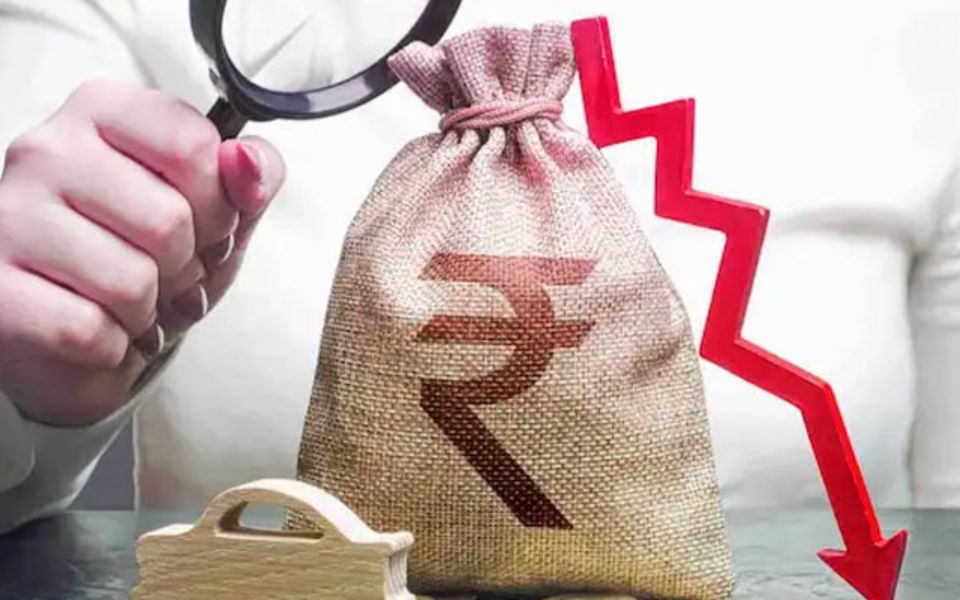
Mumbai (PTI): The rupee depreciated 28 paise to 94.77 against the US dollar in early trade on Thursday as market sentiment took a dramatic turn after reports emerged that the US and Iran are discussing a 14-point Memorandum of Understanding (MOU) aimed at reducing tensions and reopening negotiations.
Forex traders said Brent oil prices, which had fallen to USD 98 on the US-Iran peace deal, edged slightly higher to USD 101 per barrel after investors weighed the prospects for a Middle East peace deal.
Moreover, factors such as unabated foreign capital outflows amid rising geopolitical uncertainties further dented investor sentiment.
At the interbank foreign exchange market, the rupee opened at 94.77 against the US dollar, registering a fall of 28 paise over its previous close.
On Wednesday, the rupee appreciated 69 paise to close at 94.49 against the US dollar.
"Markets are currently focused on the critical 48-hour window during which the US expects Tehran’s formal response through Pakistani mediators," said CR Forex Advisors MD Amit Pabari.
US President Donald Trump on Wednesday threatened Iran with more bombing if it doesn't reopen the Strait of Hormuz, amid a report that the warring sides were nearing an agreement to end the war.
US media outlet Axios reported, quoting US officials and two other sources, that the US and Iran were getting close to a one-page memorandum of understanding to end the war and set a framework for more detailed nuclear negotiations.
The US expects Iranian responses on several key points over the next 48 hours, Axios reported, adding that nothing has been agreed yet. This was the closest the parties had been to an agreement since the war began.
Meanwhile, the dollar index, which gauges the greenback's strength against a basket of six currencies, was trading at 98.01, down 0.01 per cent.
Brent crude, the global oil benchmark, was trading higher by 0.65 per cent at USD 101.83 per barrel in futures trade.
On the domestic equity market front, the 30-share benchmark index Sensex declined 160.24 points to 77,798.28 in early trade, while the Nifty was down 30.25 points to 24,300.70.
Foreign Institutional Investors offloaded equities worth Rs 5,834.90 crore on Wednesday, according to exchange data.
On the domestic macroeconomic front, the country's goods and services exports rose 4.6 per cent to an all-time high of USD 863.11 billion during 2025-26, up from USD 825.26 billion in 2024-25, despite global economic uncertainties, according to revised commerce ministry data.
Merchandise exports grew 0.93 per cent to USD 441.78 billion in the last fiscal year from USD 437.70 billion in 2024-25, the data showed.