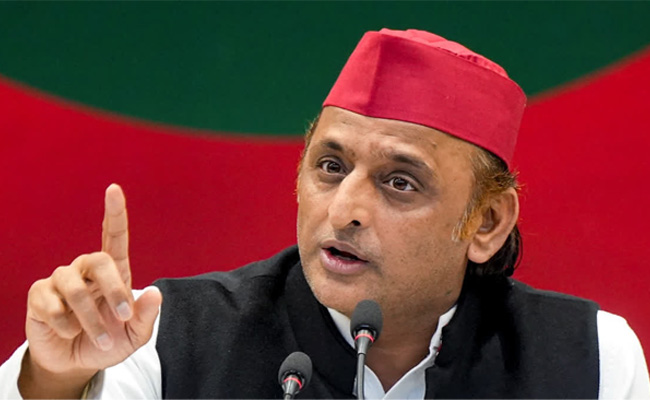
Lawyers, judges must ensure legal system is accessible to every citizen: CJI Gavai
_vb_20.jpeg)
New Delhi (PTI): Chief Justice of India B R Gavai on Saturday said lawyers and judges have a responsibility of strengthening the justice system and they must ensure that the legal discourse does not remain confined to metropolises, but is accessible to even those living in the country's remotest corners.
Speaking at the LAWASIA Conference at Hanoi in Vietnam on the topic of "Role of Lawyers and Courts in Promoting Diversity and Inclusion", the CJI said it is crucial that the principles judges articulate in their judgments are reflected in the administrative policies of the court.
"I can share that when I assumed office as the chief justice of India in May, one of my top priorities was to ensure that affirmative action in the recruitment of administrative positions within the court was implemented not just in letter, but in spirit. I directed that marginalised communities receive their due share in all administrative appointments and that these policies be applied consistently and transparently," Justice Gavai said.
He said the dream of equality, nurtured by Gautam Buddha, Mahatma Gandhi and B R Ambedkar, was enshrined in the Constitution of India in 1950 and it turned the tide of destiny for millions who were historically marginalised and denied their basic rights.
"For me, born into a low-caste family, it meant that I was not born untouchable. The Constitution recognised my dignity as equal to that of every other citizen, offering not just protection, but the promise of opportunity, freedom and social recognition," he said.
The CJI said lawyers should not be reluctant in hiring women because of assumptions about maternity leave, time constraints or perceived "commitment issues".
"Such biases are unfair and counterproductive. Lawyers have a duty to ensure that the principles they advocate in court and in public life are reflected in their own workplaces and professional conduct," he said.
Referring to various Supreme Court verdicts, including the permanent commission judgment, where women officers were allowed permanent commission in defence forces, Justice Gavai said the judiciary has played a crucial role in ensuring that the law protects and promotes equality, rather than perpetuating historical disadvantages.
"I also believe that lawyers and judges share additional common goals in strengthening the justice system. We must ensure that the legal system and legal discourse do not remain confined to metropolitan cities, but are accessible to every citizen, even those living in the remotest corners of the country.
"Inclusion is achieved only when the common person can understand, relate to and feel connected with the legal processes, the exchanges between a lawyer and a judge, the judgments delivered and the mechanisms of justice itself," he said.
The CJI said in his role as the executive chairperson of the National Legal Services Authority (NALSA), which is mandated to ensure that no one is left without legal aid, he made it a priority to direct his team to reach the farthest and most underserved regions of the country.
"The goal was clear -- no individual should be deprived of their legal rights and every person must have access to necessary legal representation, guidance and support," he said at the conference of LAWASIA, which is headed by senior advocate Shyam Divan.
Justice Gavai said lawyers often have a more direct access to the public than judges, as the latter are expected to maintain a degree of aloofness, and this proximity gives lawyers a unique opportunity and responsibility to engage with the society.
"Their role is not confined to only the courtroom. It extends to the broader community, where they can raise awareness about rights, legal processes and the principles of justice. By doing so, lawyers serve as vital bridges between the law and the people, ensuring that justice is not only delivered but also understood, accessible and meaningful to all members of the society," he said.
The CJI noted that it is essential to mentor the next generation, particularly professionals from marginalised communities, and said efforts must be made to identify and support talented individuals who, in the future, may lead the profession.
"Mentorship should not be limited to recruitment alone. It must extend to providing guidance, empathy and sustained support. Many of these professionals enter the workplace carrying the weight of historical exclusion and it is our responsibility, as those with experience and privilege, to ensure that they are given the environment, encouragement and patience necessary to thrive," he said.
Underlining that promoting diversity and inclusion is not just about opening doors, the CJI said it is about walking alongside those who enter through those, nurturing their growth and creating a truly equitable professional space where everyone can succeed.
"Recruiting a person without offering support, guidance or a nurturing environment undermines the very purpose of inclusion," he said, adding that true inclusion requires active effort, commitment and accountability from everyone who benefits from existing privileges.
Let the Truth be known. If you read VB and like VB, please be a VB Supporter and Help us deliver the Truth to one and all.
Accused gunman at correspondents' dinner was believed to be targeting top officials, Blanche says
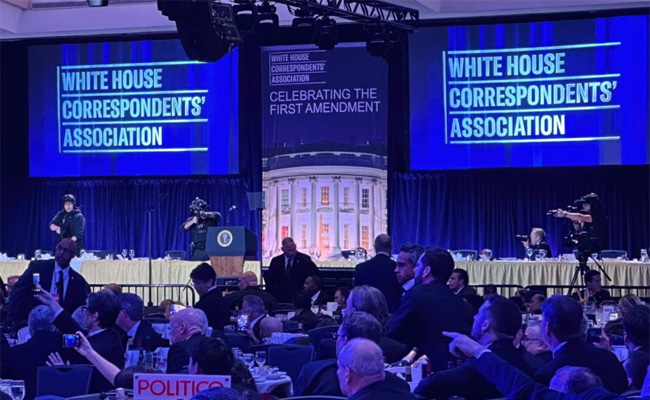
Washington (AP): The accused gunman who tried to storm the ballroom at the White House Correspondents' Association dinner with guns and knives travelled across the country before the event and is believed to have been targeting members of the Trump administration, acting Attorney General Todd Blanche said Sunday.
Blanche also said officials believe the suspect traveled by train from California to Chicago and then on to Washington, where in recent days he checked in as a guest to the hotel where one of Washington's glitziest events was being held Saturday night.
Investigators have not publicly named the suspect, but two law enforcement officials familiar with the matter have identified him to The Associated Press as 31-year-old Cole Tomas Allen of Torrance, California.
Law enforcement officials who have examined the gunman's electronic devices and his writings preliminarily believe he intended to target administration members in attendance at the dinner. He attempted to charge into the cavernous ballroom at the Washington Hilton but was tackled to the ground in a chaotic scene that resulted in shots being fired, President Donald Trump being hurried off the stage and guests ducking for cover beneath their tables.
“It does appear that he did in fact set out to target folks who work in the administration, likely including the president,” Blanche told NBC's “Meet the Press.”
The suspect is believed to have purchased the firearms he carried within the last couple of years, Blanche said. He is not being cooperative and is expected to face multiple charges on Monday.
Video posted by Trump showed the suspect running past security barricades as Secret Service agents ran toward him. One officer was shot in a bullet-resistant vest but was recovering, officials said. The gunman was taken into custody and was not injured, but was being evaluated at a hospital, police said.
“He failed,” Blanche said on CBS's “Face the Nation.” “Law enforcement did their jobs.”
Social media posts that appear to match the suspect show he is a highly educated tutor and amateur video game developer.
A May 2025 profile photo of Allen appears to match the appearance of the man in a photo of the alleged attacker being taken into custody that was posted Saturday night by Trump. The photo, posted to the social networking site LinkedIn, shows him in a cap and gown after graduating with a master's degree in computer science from California State University, Dominguez Hills.
Allen earned a bachelor's degree in 2017 in mechanical engineering from the California Institute of Technology in Pasadena. He listed his involvement there in a Christian student fellowship and a campus group that battled with Nerf guns.
The shooting at the security barricades happened minutes after the event got underway.
The Secret Service and other authorities swarmed the room as guests ducked under tables by the hundreds. Gasps echoed through the ballroom as guests realized something was happening. Hundreds of journalists immediately got on phones to call in information.
“Out of the way, sir!” someone yelled. Others yelled to duck. From one corner, a “God Bless America” chant began as the president was escorted offstage. Outside the hotel, members of the National Guard and other authorities flooded the area as helicopters circled overhead.
After an initial attempt to resume the event, it was scrapped for the night and will be rescheduled.

_vb_69.jpeg)