LIC CEO addresses concerns raised by agents, affirms commitment to policyholders, agents
Mumbai: A delegation of LIC agents met with the Leader of the Opposition to voice their concerns regarding recent changes in policy regulations. In response, LIC Chairman and Managing Director Siddhartha Mohanty issued a statement clarifying the company’s stance and reaffirming its commitment to both policyholders and agents.
Mohanty stated that LIC has introduced new products in accordance with the Insurance Regulatory and Development Authority of India's (IRDAI) New Product Regulations, which came into effect on October 1, 2024. He emphasized that these changes were implemented with the interests of policyholders as the top priority.
"LIC has always been committed to broadening life insurance coverage, particularly in rural areas and among economically and socially disadvantaged sections. Our goal is to extend financial protection to every insurable individual at an affordable cost," Mohanty said.
Addressing concerns about commissions, Mohanty clarified that while product regulations have undergone modifications, agent commissions have not been reduced. Instead, they are now provided in a staggered manner.
He further highlighted LIC’s diverse portfolio, which caters to various customer segments while fully complying with regulatory requirements. Citing the Micro Bachat plan as an example, he noted that it offers a minimum sum assured of ₹1 lakh and is exempt from GST, making it more accessible to a wider audience.
Reaffirming LIC’s commitment to its agency network, Mohanty stated, "LIC remains dedicated to providing financial security to policyholders while also supporting the well-being of its agency force."
Let the Truth be known. If you read VB and like VB, please be a VB Supporter and Help us deliver the Truth to one and all.
KSCA expresses disappointment over missing IPL playoffs, says it was ready to host matches in B’luru
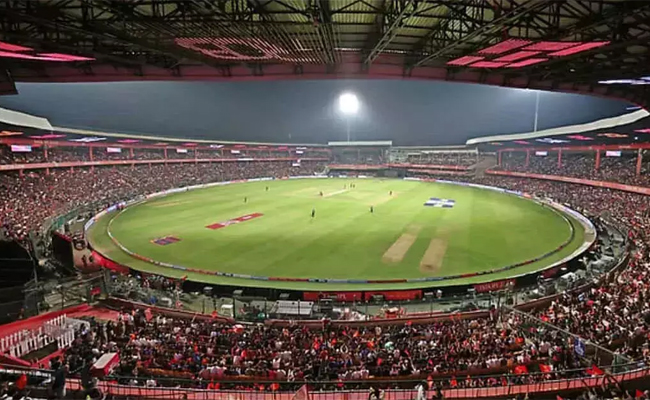
Bengaluru: The Karnataka State Cricket Association (KSCA) has issued a clarification stating that it was fully prepared to host the IPL playoffs and final matches in Bengaluru but the fixtures were allotted to other venues.
In a media note, KSCA said it was disappointed with the decision. The association stated that its president, former India cricketer Venkatesh Prasad, had been in touch with the Board of Control for Cricket in India (BCCI) and had formally conveyed the association’s readiness and interest in hosting the matches at the M. Chinnaswamy Stadium.
KSCA said the IPL matches held in Bengaluru this season were appreciated for smooth conduct, crowd management and overall experience for spectators. It said this reflected its ability to handle high-profile matches.
The association also stated that it had sent a detailed communication to the BCCI explaining its preparedness and the operational arrangements followed during the current IPL season. According to KSCA, these systems have been in place since the start of the Indian Premier League in 2008 and were followed consistently, including during previous playoff matches hosted in Bengaluru.
The clarification added that the communication sent to the BCCI was only meant to provide factual and operational details and to bring clarity on logistical and stakeholder-related requirements involved in hosting such matches.
KSCA said that although it had shown willingness and preparedness, the BCCI has decided to allocate the playoff matches to other venues. It added that the reasons for this decision have not been formally shared with the association, but it respects the authority of the board in taking such decisions.
The association further said it remains ready to host matches of national and international importance and will continue to cooperate with the BCCI, franchises, government authorities and other stakeholders for conducting cricket events.
The statement was issued by KSCA official spokesperson Vinay Mruthyunjaya, who also thanked the media and cricket fans for their continued support.