Like polio eradication, India can script success in tackling air pollution too: UN Environment chief
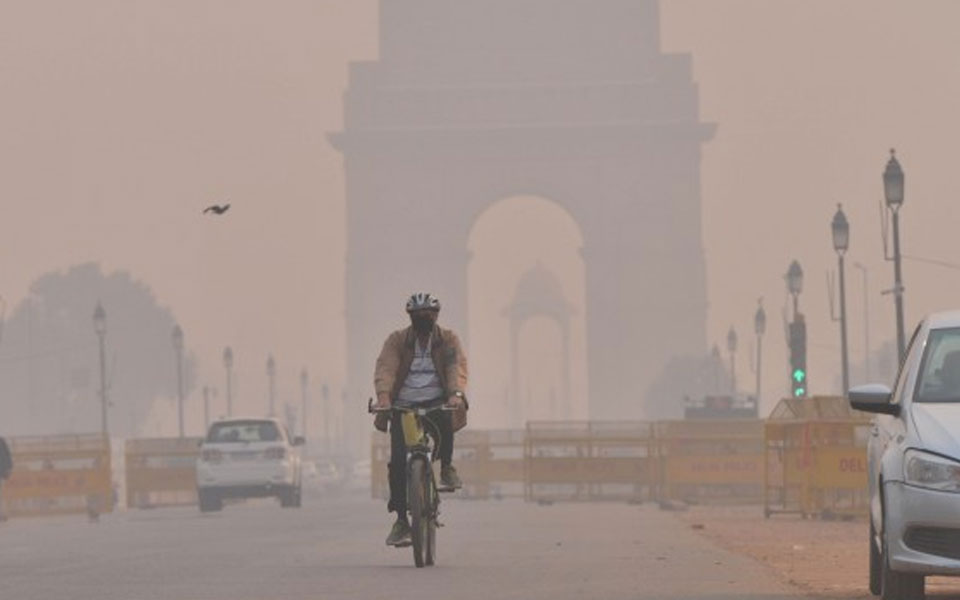
New Delhi, Nov 11 : India has scripted success in eradicating polio and tackling other health emergencies and there is no reason why the country cannot do so for air pollution, UN Environment chief Erik Solheim has said at a time several north Indian cities, including Delhi, are battling alarming levels of pollution.
Solheim has expressed confidence that the country can tackle air pollution, which he said is one of the world's biggest killers and a global public health emergency.
The UN Environment chief termed air pollution as a "crisis" that requires government, policy-makers, scientists and civil society to come together to mitigate, and asserted "we need to count on the support of the public in this".
Air pollution in cities in India, especially in Delhi and its neighbouring states, have reached alarming levels and had gone off the charts after Diwali when the air quality dipped to severe levels, prompting authorities to enforce emergency measures such as ban on construction activities and entry of heavy vehicles into the national capital.
"The sad truth is that Indian cities are not alone in their suffering. Poor air quality is one of the world's biggest killers and a global public health emergency. This was clear at the recent WHO conference on air pollution, where air pollution was declared on a par with tobacco in the nature of the risk it poses to human life.
"Living in a city should not mean accepting that you have to shave years off your life, lose cognitive capabilities or watch helplessly as children and the elderly gasp for breath. India has scripted such success with polio eradication and other health emergencies, there is absolutely no reason why the country cannot do it for air pollution," Solheim told PTI.
The UN Environment chief said there is no "magic single solution" to the problem, but rather a range of actions that can be taken by individuals, city authorities and governments.
He said that for the UN Environment, air pollution is a high priority area.
"Science is crucial as filling the data gap -- which we are trying to do by rolling out a low-cost, inter-connected air quality monitoring system -- will help policy-makers make informed decisions that will translate into quick improvements.
"Accurate air quality monitoring is critical, and it's accessible. Our low-cost systems, for example, would cost $0.02 per inhabitant per year of a small city. We need to pay more attention to mapping pollution so that we can help prioritise actions -- for households, transport and waste management," he said.
Solheim said in some cities, the UN body has identified certain types of cooking stoves used by individual households as a major driver of poor air quality.
"In these cities, we have worked with our partners to identify clean-burning alternatives and then work with industry and governments to ensure their adoption.
"We have seen at least 97 countries increase the percentage of households that have access to cleaner burning fuels to more than 85 per cent. This will help address a major cause of the annual death toll," he said.
He noted that in other cities, where road transport or the burning of waste is a major cause, the UN body has worked on building the case for the introduction of tougher emissions standards and helped governments put in place incentives to drive the adoption of renewable energy sources and recycling facilities.
"But industry must play its part, particularly when you consider recent reports that European traders are mixing clean fuels with dirty fuels and exporting them to developing nations, particularly in Africa, that have lower standards.
"This is contributing to air pollution and health problems, particularly in cities. It may be legal for traders to export fuels that do not meet European standards to the developing world, but it is not ethical," he said.
He asserted that there is huge potential to cut down on household food waste and this has a knock-on effect on air quality, because it takes petrol, diesel and plastic packaging to get that food into somebody's fridge.
"We can look at easy ways to cut our electricity bills and reduce the strain on power stations. There are initiatives like car sharing, choosing public transport or using a bicycle.
"Many of these actions make sound economic sense, and when they become broader social trends, (they) will also improve our quality of life and the quality of the air we breathe," he said.
Observing that technology and communications are now better than ever, and this revolution can also be used as a driver of change, the UN Environment chief said people need to think of themselves not as victims, but as drivers of change.
"Remember that city authorities and public servants are just like us: they live in the same cities as us, and they also don't want to suffocate. So we need to find ways of building on that common ground and collectively driving change, not retreating into our homes and sealing off the doors and windows," he added.
Let the Truth be known. If you read VB and like VB, please be a VB Supporter and Help us deliver the Truth to one and all.
Put petty politics aside; it's not about one party, but India: Rahul on TMC's loss in polls
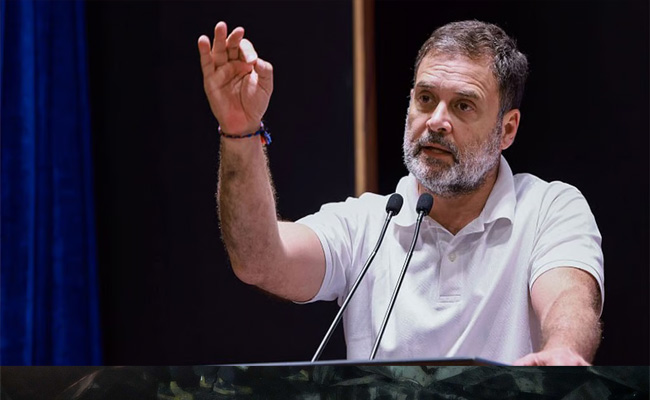
New Delhi (PTI): Congress leader Rahul Gandhi on Tuesday termed the BJP's victory in Bengal and Assam assembly polls a "theft" of the mandate, and a big step forward in the saffron party's mission to "destroy" Indian democracy.
Gandhi also came out in support of the TMC, which has been trounced by the BJP in the polls, and urged those gloating over the loss of Mamata Banerjee's party to put petty politics aside.
"Some in the Congress, and others, are gloating about TMC's loss.They need to understand this clearly - the theft of Assam and Bengal's mandate is a big step forward by the BJP in its mission to destroy Indian democracy," Gandhi said in a post on X.
"Put petty politics aside. This is not about one party or another. This is about India," he said in his post.
The BJP ousted Trinamool Congress from power in Bengal and captured power for the third time in a row in Assam in results of assembly polls declared on Monday.