Liquor, fuel to cost more in Kerala; Vehicle tax, land fair price value to go up
Thiruvananthapuram (PTI): Petrol, diesel and liquor are to cost more and motor vehicle tax and fair price value of land to go up in Kerala as the state government acted tough to mobilise additional revenue to carry forward their social security schemes and development programmes in the budget presented here on Friday.
Despite wide expectations, the social security pension received no hike but Finance Minister K N Balagopal, while presenting the budget for the fiscal 2023-24, assured that the financial constraints would not impact the welfare schemes of the Left government.
He did not mince allocations in the health and education sectors amid cash crunch which received an outlay of Rs 2,828.33 crore and Rs 1,773.09 crore respectively.
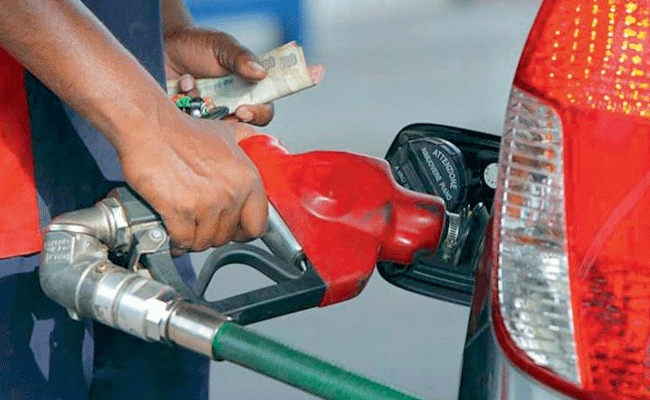
The FM said it is proposed to levy a Social Security Cess on Indian Made Foreign Liquor (IMFL) and on the sale of petrol and diesel as the commitment to continue protecting the decent lives to vulnerable sections of society require supplementing the financial resources.
"It is proposed to levy a Social Security Cess at the rate of Rs 20 for each bottle of IMFL having MRP between Rs 500 and Rs 999 and at the rate of Rs 40 per bottle of IMFL having MRP above Rs 1,000," Balagopal explained.
An additional revenue of Rs 400 crore is expected through this, he said.
Another impetus measure towards the Social Security Seed Fund is proposed to be brought by bringing the Social Security Cess on sale of petrol and diesel at the rate of Rs two per litre, he added.
"This is expected to bring in additional revenue of Rs 750 crore to the Social Security Seed Fund," he said.
The existing fair value of land would be increased by 20 per cent to bridge the gap between market value and fair value, the FM said.
The one-time tax on newly purchased motorcycles having purchase value up to Rs 2 lakh is enhanced by 2 per cent, he said adding that an additional income of Rs 92 crore is expected through this.
However, a one-time tax on electric motor cabs and electric tourist motor cabs reduced to 5 percent of the purchase value to minimise air pollution and to promote public transport, the minister added.
Balagopal, in his budget, allocated Rs 100 crore for welfare programmes and set aside Rs 2,000 crore for tackling price rise, besides announcing a slew of initiatives for the infrastructure and higher education sector.
"An amount of Rs 2,000 crore is earmarked for 2023-2024 to continue vigorous market interventions, considering that the threat of inflation has not completely abated", the FM said.
Beginning the budget speech on a positive note, Balagopal said the southern state has bravely overcome COVID challenges and finally returned to the path of growth and prosperity.
Though the state's economy is facing challenges due to the financial policies of the Centre and its decision to impose cuts on its borrowing limit, Kerala is not in a debt trap, he said.
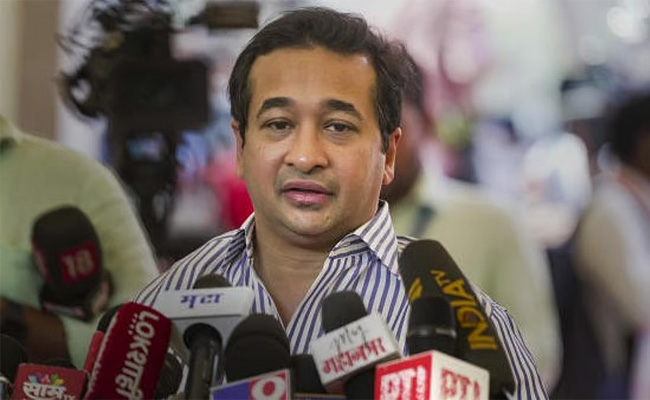
The opposition Congress-led UDF slammed the Kerala budget protesting against the proposal for a cess on petrol, diesel and liquor. It accused the Left government of looting people.
"The budget is hiding the critical financial situation faced by the state government and the proposals amount to looting the people. The decision to impose cess on liquor will lead to more people shifting towards drugs. The budget was presented without doing adequate studies," Leader of Opposition V D Satheesan said.
He said when the state was facing inflation, the rise in petrol and diesel prices would adversely affect the market.
"The imposition of cess on petrol and diesel comes at a time when we are fighting against soaring fuel prices. This will lead to price rise of essential commodities affecting the common man," Satheesan said.
In his budget speech, Balagopal accused the Centre of bringing change in fiscal federalism, saying it goes against the spirit of the constitution.
"Centralisation of power and disregard for states, especially Kerala have increased unprecedentedly", the minister said.
He alleged that Kerala is being sidelined in the allocation of centrally sponsored schemes also.
"Can anyone with commitment to the people of Kerala justify this situation? On whose side do those who celebrate this disregard stand?" the minister asked.
Slamming the Centre, he said as a result of the cessation of GST compensation, there has been a shortfall of around Rs 7000 crore during the current fiscal.
"As a result of the policy of the Union Government treating Public Account as debt liability, there is a revenue loss of around Rs 10,000 crore per annum", the minister said.
Balagoapl said during the tenure of the Tenth Finance Commission, the share of Kerala was 3.875 per cent of the divisible pool to be distributed among the states.
"By the time of the Fifteenth Finance Commission, it came down to 1.925 per cent. Through this, the Union Government cut down the revenue of Kerala by tens of thousands of crores", he said.
He also said there is a shortfall of around Rs 6,700 crore due to the reduction of the Revenue Deficit Grant by the Union Government.
Referring to the financial crisis in developed countries like Britain and neighbouring Sri Lanka and Pakistan, Balagopal said this peculiar situation can be survived only by taking every single step forward carefully.
"As a matter of pride that Kerala is able to move forward with alternative welfare policies despite this global scenario," Balagopal said, and urged the legislators to set aside all our differences beyond party politics and stand united for the state.
Let the Truth be known. If you read VB and like VB, please be a VB Supporter and Help us deliver the Truth to one and all.
Putin meets Iran's FM Araghchi, says Russia ready to do its best to help bring peace to West Asia
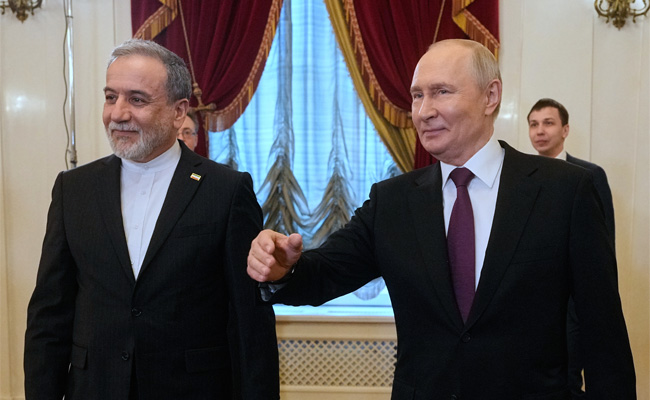
Moscow (PTI): Iran's Foreign Minister Abbas Araghchi on Monday met Russian President Vladimir Putin, who hailed the Iranian people for fighting bravely and heroically for their sovereignty and said Moscow is ready to do its best to help bring peace to West Asia as soon as possible.
Araghchi, who held talks with Omani and Pakistani leadership before arriving in Russia, met Putin in St. Petersburg and thanked him for supporting Iran, state-owned TASS news agency reported.
"Russia is ready to do everything in its power to ensure that peace in the Middle East is achieved as soon as possible," Putin said during his meeting with Araghchi, which was also attended by Russian Foreign Minister Sergey Lavrov.
Revealing that he received a message from Iranian Supreme Leader Mojtaba Khamenei last week, Putin asked Araghchi to convey his "gratitude for this message and best wishes for his health and well-being."
He praised the Iranian people for fighting "bravely and heroically" for their sovereignty, Iran's state-run PRESS TV reported.
"We really hope that, based on the courage and desire for independence, the Iranian people, under the guidance of the new leader, will weather this difficult period of trials and peace will come,” Putin said.
He also stressed that Russia “intends to maintain” its strategic relations with Iran.
Araghchi said that the world witnessed Iran’s strength in countering the US during the recent war, and that the Islamic Republic is a "stable and powerful establishment."
"With their courage, the Iranian people succeeded in resisting the US aggression and will be able to endure it,” he said.
He said that it became clear that Iran has “great friends and allies” like Russia, and conveyed “warmest greetings” from Supreme Leader Mojtaba Khamenei and President Masoud Pezeshkian to the Russian leader.
Araghchi said relations between Moscow and Tehran represent a “strategic partnership at the highest level” and will continue to develop "regardless of circumstances."
"We are grateful to you for the solid and strong positions in support of the Islamic Republic of Iran," he said.
Foreign Minister Lavrov said that the talks between President Putin and the Iranian Foreign Minister were "useful and constructive."
Kremlin Spokesman Dmitry Peskov later said that Russia is "ready to provide any good offices, any mediation services that are acceptable to the parties."
"We will be ready to do everything so that ultimately peace ensues, guaranteed peace, and that there is no return to hostilities," Peskov was quoted as saying by TASS.
He was asked how Moscow can assist in future negotiations on the Iranian settlement.
Araghchi arrived in Russia after his whirlwind trip to Islamabad, which, according to him, was “very productive” and involved “good consultations" with Pakistan's Army Chief Field Marshal Asim Munir, amid uncertainty over the second round of peace talks to resolve the war in West Asia.
"We held good consultations with our friends in Pakistan. The trip was successful. We assessed the outcome of our recent (meetings) and discussed in what direction and under what conditions talks can move on,” Araghchi said in a video posted on his Telegram channel upon his arrival in St Petersburg.
Referring to the second round of talks between the US and Iran to resolve the conflict in West Asia, Araghchi said: "Developments have taken place in the negotiations."
"Despite some progress in earlier rounds, the talks failed to reach their objectives due to the Americans' approach, the excessive demands they made, and the wrong approaches they adopted. Therefore, it was necessary to consult with our friends in Pakistan to review the latest situation,” Iran's official news agency IRNA quoted him as saying.
He said that the trip to Pakistan was a good opportunity to review developments related to the US-Israeli war against Iran, expressing confidence that “these consultations and coordination between the two countries will be highly significant.”
Araghchi arrived at St. Petersburg's Pulkovo Airport early Monday, where he was welcomed by Russian officials and Iran’s ambassador to Russia, Kazem Jalali, the report said.
The first round of peace talks between Iran and the US, held on April 11 and 12, failed to bring the desired result for the parties to the conflict.
The Iranian minister arrived in Islamabad for the second time on Sunday after a short visit to Oman, where he held talks with Sultan Haitham bin Tariq al-Said on security in the Strait of Hormuz and diplomatic efforts to end the Iran-US conflict.
After Araghchi left Pakistan for Oman on Saturday, President Donald Trump announced that US negotiators Steve Witkoff and Jared Kushner would no longer be going to Islamabad for talks with Iran, contending that Washington held all the cards on the matter.
Trump on Sunday reiterated that the US and Iranian officials can talk by phone for a peace solution to the conflict.
On Tuesday, Trump extended the two-week ceasefire with Iran indefinitely to give Tehran more time to prepare a unified proposal to end the war, just hours before the truce was set to expire.
The war began when the US and Israel jointly attacked Iran on February 28, killing Iranian Supreme Leader Ayatollah Ali Khamenei and several top commanders. The retaliation by the Islamic Republic extended the war to the entire Gulf region.