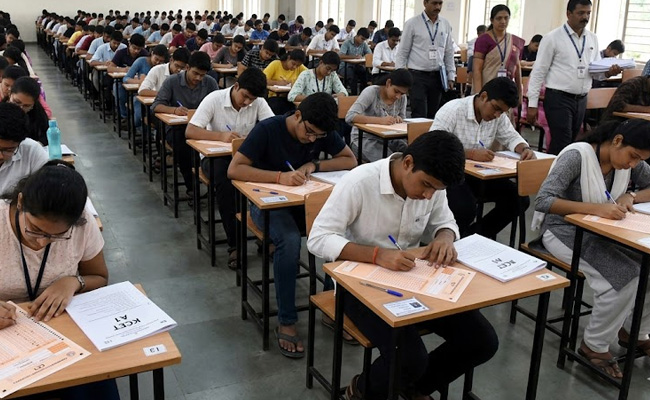
Lok Sabha passes bill to tackle exam malpractices
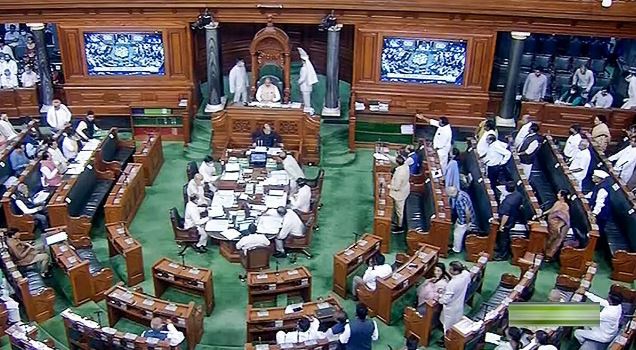
New Delhi, Feb 6: A bill, which seeks to deal sternly with malpractices and irregularities in competitive examinations with provisions for a maximum jail term of 10 years and a fine up to Rs 1 crore, was passed in the Lok Sabha on Tuesday.
Piloting The Public Examinations (Prevention of Unfair Means) Bill, 2024, Union minister Jitendra Singh said its provisions are meant to safeguard the interest of meritorious students and candidates.
The bill was passed by the Lok Sabha after rejecting amendments proposed by the opposition members.
Singh said the government "will not allow meritorious (candidates) to be sacrificed at the alter of organised crimes".
He added that the students and candidates do not fall in the purview of this bill and there will ne no harm to job aspirants.
The move comes against the backdrop of cancellation of a series of competitive tests such as the teacher recruitment exam in Rajasthan, Common Eligibility Test (CET) for Group-D posts in Haryana, recruitment exam for junior clerks in Gujarat and constable recruitment examination in Bihar following question paper leaks.
The bill also proposes a high-level national technical committee on public examinations that will make recommendations to make the computerised examination process more secure.
The committee shall look into developing protocols for insulating digital platforms, devising ways and means for developing foolproof IT security systems, ensuring electronic surveillance of examination centres and formulating national standards and services for both IT and physical infrastructure to be deployed for conduct of such examinations.
In many instances, it has been observed that organised groups and mafia elements involved in malpractices deploy solver gangs, use impersonation methods and indulge in paper leaks.
The bill primarily aims to deter such nefarious elements.
The objective of the bill is to bring in greater transparency, fairness and credibility to the public examination systems and to reassure the youth that their sincere and genuine efforts will be fairly rewarded and their future is safe.
Addressing a joint sitting of both houses of Parliament at the beginning of the Budget session on January 31, President Droupadi Murmu had said the government is aware of the concerns of the youth regarding irregularities in examinations.
"Therefore, it has been decided to enact a new law to deal sternly with such malpractices," she had said.
Responding to the criticism by some opposition members that the government is centralising everything, Singh said the Modi-government believes in cooperative federalism and the bill does not attempt to centralise all the systems.
He said that whenever any exam is cancelled, the effort would be made to hold the re-examination as early as possible.
However, he added that there can not be any firm timeline for re-examination of cancelled exam as often such cases are examined by investigative agencies and they take their own time.
The minister also said that the UPSC is conducting exams in 14 languages and "we hope to gradually include all 22 languages".
Participating in the debate on the bill, Congress leader Adhir Ranjan Chowdhury said that the bill talks about penal provisions and is absent on prevent measures.
He also accused that the entire emphasis of the government is to centralise all the authorities.
Citing reports, Chowdhury said that the country has witnessed large number of cases with regard to data leaks and how the government intends to plug these loopholes.
N K Premachandran (RSP) demanded that the provisions of the bill are against the principles of criminal jurisprudence and hence it should be referred to the standing committee for scrutiny.
TMC leader Kalyan Banerjee said that there is no dirth of laws but the real problem is with their implementation.
Most of the opposition members by enlarge supported the bill.
Let the Truth be known. If you read VB and like VB, please be a VB Supporter and Help us deliver the Truth to one and all.
Iran foreign minister Araghchi meets Pakistan Army chief Munir
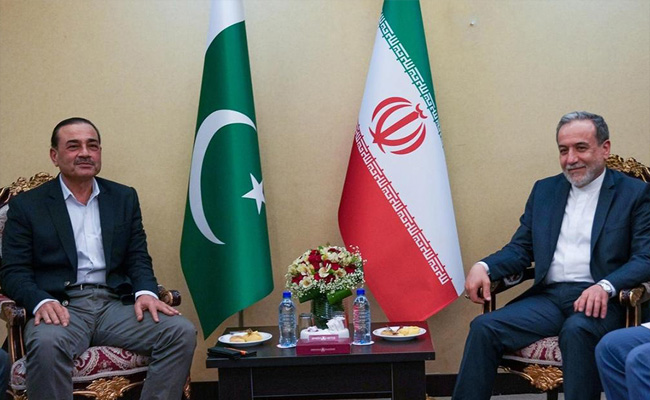
Islamabad (PTI): Iranian Foreign Minister Abbas Araghchi on Saturday met Pakistan Army chief Field Marshal Asim Munir here, as Islamabad continued its efforts to facilitate engagement between the US and Iran.
The meeting, according to a short video posted by the Iranian embassy on social media, was also attended by Iranian foreign ministry spokesperson Esmaeil Baghaei, and Iran's ambassador Reza Amiri Moghadam.
Araghchi calls on Munir, the embassy said in the video caption.
It did not provide further details about the discussions.
Araghchi arrived here late Friday for engagements with the Pakistani leadership. He was received by senior officials, including Munir, foreign minister Ishaq Dar and interior minister Mohsin Naqvi.
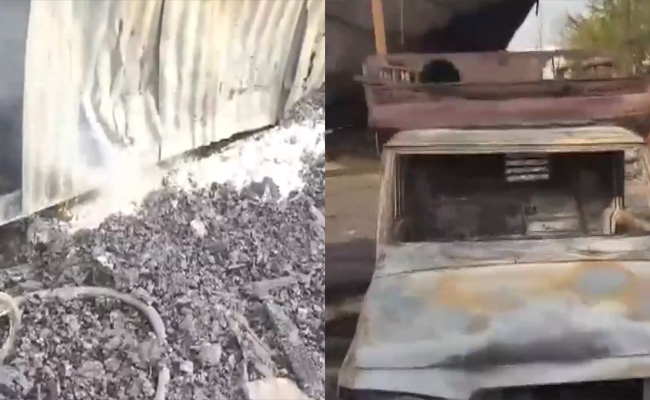
ALSO READ: Fire engulfs over 100 jhuggies in Delhi's Shakur Basti; no casualties
However, there is no clarity on whether direct talks between Washington and Tehran will take place during the visit.
"No meeting is planned to take place between Iran and the US. Iran's observations would be conveyed to Pakistan," Baqaei said in a social media post on Saturday.
Araghchi, before leaving for Islamabad, said that he was embarking on a timely tour of Islamabad, Muscat, and Moscow, and the purpose of his visits is to "closely coordinate with our partners on bilateral matters and consult on regional developments".
"Our neighbours are our priority," he said.
As the Iranian team landed in Islamabad, White House Press Secretary Karoline Leavitt said that US Special Envoy on the Middle East Steve Witkoff and President Donald Trump's adviser Jared Kushner would be leaving for Pakistan on Saturday "to engage in direct talks" with representatives of the Iranian delegation.
However, the US team has not yet arrived.
Meanwhile, Pakistan's Deputy Prime Minister and Foreign Minister Dar, in a social media post, expressed hope for "meaningful engagements" between the two warring parties to promote regional peace and stability.
The first round of US-Iran talks held on April 11 and 12 failed to produce a breakthrough, prompting a flurry of diplomatic efforts by host Pakistan to cool tensions and revive hopes for another round of dialogue.
On Tuesday, Trump extended the two-week ceasefire with Iran indefinitely to give Tehran more time to prepare a unified proposal to end the war, just hours before the truce was set to expire.
The Iran war began on February 28 with US-Israeli strikes.
_vb_19.jpeg)