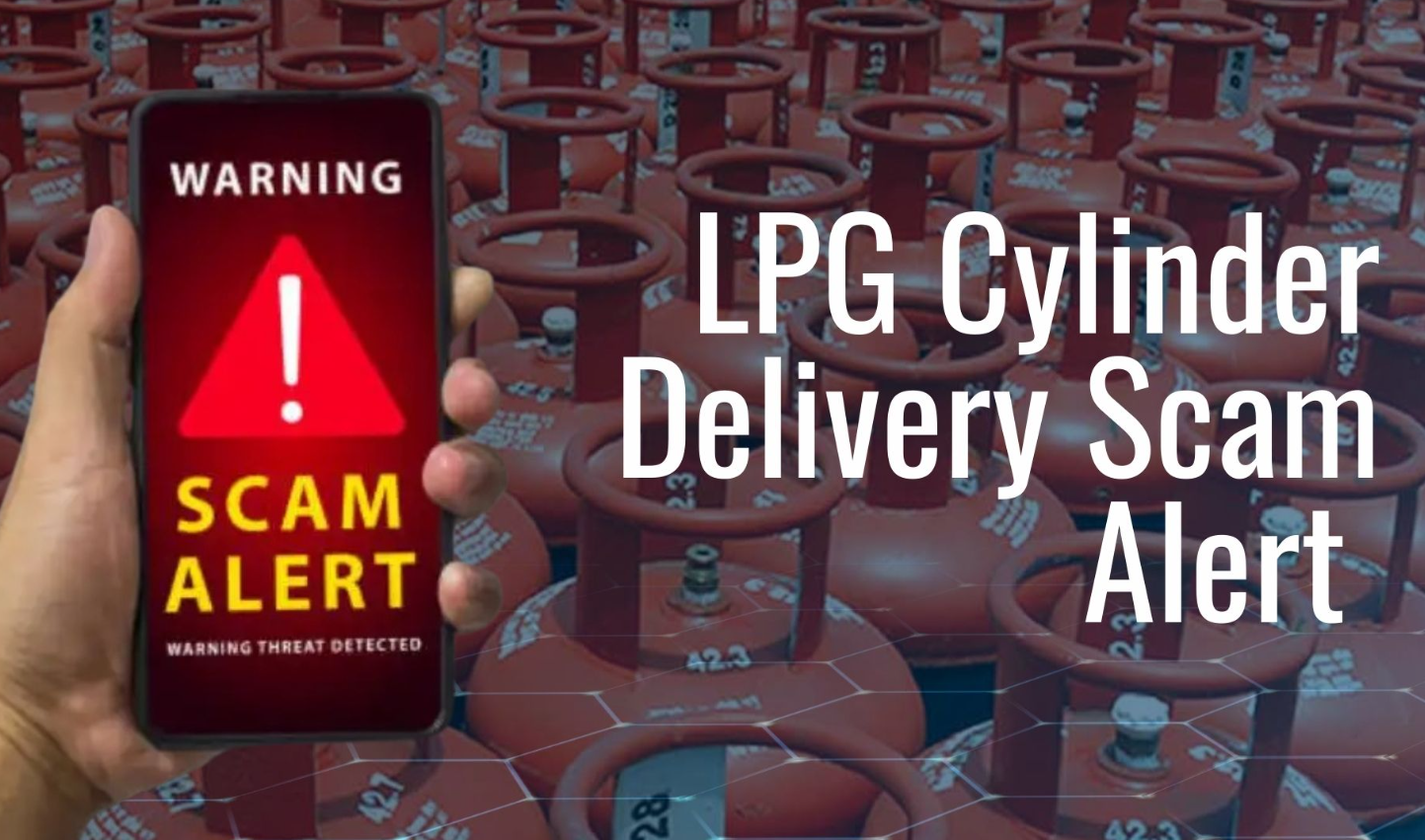
A growing wave of LPG-related cyber frauds across India has prompted serious concern among authorities and cybersecurity experts, as scammers exploit public panic created by false rumours of a gas shortage. Government officials have clearly stated that there is no shortage of LPG cylinders, and supply remains stable. However, misinformation circulating on social media and messaging platforms has created urgency among consumers—an opportunity that cybercriminals are aggressively using to their advantage.
Recent cases reported from states such as Maharashtra, Punjab, Odisha, Karnataka, and Uttarakhand reveal a consistent pattern. Victims are being targeted through SMS, WhatsApp messages, and fake customer care calls that appear to be from legitimate gas agencies. These messages often warn users about LPG disconnection, pending payments, or limited stock availability, pushing them to act quickly without verification. In multiple incidents, individuals have lost amounts ranging from thousands to several lakhs after interacting with these fraudulent communications.
Cybersecurity researchers at TraceX Labs have highlighted that this scam has evolved beyond simple phishing. According to their analysis, many of the links and files being circulated are actually trojanized mobile applications designed to install Remote Access Trojans (RATs) on victims’ devices. Once installed, these malicious apps silently gain control over the phone, allowing attackers to monitor activity, read messages, capture OTPs, and even access banking and UPI applications without the user’s knowledge.
More alarmingly, experts point out that attackers are now leveraging advanced UPI bypass techniques using token-based manipulation, enabling them to execute transactions without triggering standard user verification in some scenarios. This makes the fraud faster, stealthier, and significantly more damaging. Such methods are increasingly becoming common in modern mobile malware campaigns.
Another dangerous aspect of this scam is its self-propagating nature. Once a device is compromised, the malware can access the victim’s contacts and automatically forward malicious links or APK files to friends and family via messaging apps. Because these messages come from trusted contacts, recipients are far more likely to click on them, creating a chain reaction that allows the scam to spread rapidly across networks. This viral distribution model makes detection and containment extremely difficult, accelerating the reach of the attack.
Authorities have also warned about additional tactics being used, including fake websites that closely resemble official LPG booking portals, QR code scams disguised as cashback offers, and the use of screen-sharing applications to gain full control over victims’ devices. In many cases, victims are tricked into believing they are resolving a service issue, while in reality they are handing over complete access to their financial data.
Experts emphasize that this is not a traditional hack but a carefully planned social engineering attack combined with advanced malware deployment. The strategy relies on creating fear, urgency, and trust three factors that significantly increase the chances of user error.
To stay safe, consumers are strongly advised to use only official LPG booking platforms, avoid clicking on unknown links, and never download APK files from unverified sources. It is equally important to remember that no legitimate agency will ask for OTPs, UPI PINs, or banking credentials over calls or messages. Even messages received from known contacts should be verified before taking any action, given the possibility of compromised devices.
Law enforcement agencies across the country are actively spreading awareness and urging citizens to remain cautious. In case of any suspected fraud, individuals should immediately report it to the national cybercrime helpline 1930, as quick action can help prevent further financial loss.
This surge in LPG-related scams highlights a larger reality of today’s digital landscape—cyber threats are becoming more sophisticated, targeted, and psychologically driven. Staying informed, alert, and calm in the face of urgency is the most effective defense against such evolving attacks.