LS members demand inquiry into death of 3 students at Delhi coaching centre
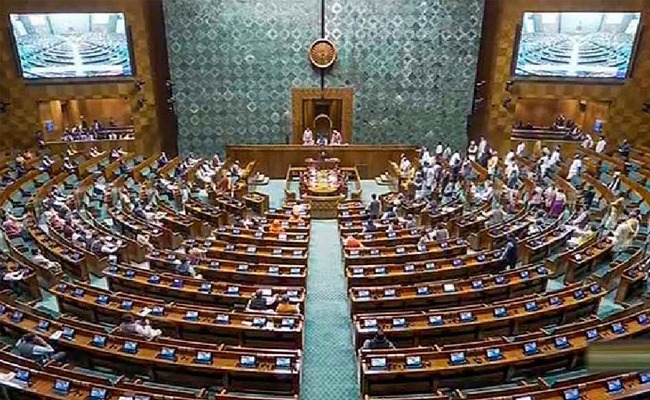
New Delhi(PTI): Lok Sabha members cutting across party lines on Monday demanded an inquiry into the death of three civil services aspirants at a coaching centre in central Delhi's Old Rajinder Nagar area, with the BJP blaming the city's AAP government for the tragic incident.
BJP leader and New Delhi Lok Sabha MP Bansuri Swaraj blamed the AAP's "utter apathy" for the death of the students and demanded that an inquiry committee under the Home Ministry be set up to probe the incident.
"Criminal negligence of the Aam Aadmi Party has led to the death of these students. An inquiry should be set up on the Delhi Government which is neck deep in corruption. Why are the drains not being cleaned in Delhi?" she asked during the Zero Hour.
Officials have said an absence of drainage system and safety measures, and use of basement for commercial activities in violation of norms led to the death of three civil services aspirants at the coaching centre.
Congress MP from Thiruvananthapuram Shashi Tharoor said there has been a violation in the safety codes, and demanded compensation for the families. He said that drains have to be cleaned and steps taken to prevent recurrence of such incidents. Tharoor demanded a comprehensive inquiry on the matter.
Akhilesh Yadav (SP) said that the incident is tragic and there should be thorough investigation to ascertain who is responsible for what has happened to the students.
"In Uttar Pradesh, bulldozer is run over illegal buildings. I want to know if bulldozers will be run here also," Yadav said.
The Delhi Police on Sunday arrested the owner and the coordinator of the coaching centre -- Rau's IAS Study Circle -- and booked them for culpable homicide and other charges.
Let the Truth be known. If you read VB and like VB, please be a VB Supporter and Help us deliver the Truth to one and all.
Centre launches national childhood diabetes screening, treatment framework

New Delhi (PTI): The Union Health Ministry on Sunday released a guidance document providing a framework for screening, diagnosis, treatment and long-term management of childhood diabetes.
According to the ministry, the document, for the first time, establishes a structured and standardised national framework, positioning India among a select group of countries that have integrated childhood diabetes care into the public health system.
The "Guidance Document on Diabetes Mellitus in Children" was released at the National Summit on Best Practices in Public Healthcare Service Delivery, concluded on May 1-2.
According to a statement by the ministry, the framework aims to ensure universal screening of all children from birth to 18 years through community and school-based platforms for early identification of diabetes.
Suspected cases will undergo immediate blood glucose testing and be referred to district-level health facilities for confirmatory diagnosis and treatment, it said.
A key feature of the initiative is the provision of a comprehensive free-of-cost care package at public health facilities, including screening, diagnostic services, lifelong insulin therapy, glucometers, test strips and regular follow-up care.
The initiative seeks to reduce the financial burden on families and ensure uninterrupted treatment for children diagnosed with diabetes.
The document also lays down an integrated continuum of care linking community-level screening with district hospital-based management and advanced care at medical colleges to ensure seamless follow-up and treatment.
To strengthen early detection, the guidance promotes the "4Ts" awareness framework -- Toilet, Thirsty, Tired and Thinner -- to help parents, teachers and caregivers recognise early warning signs of type 1 Diabetes.
Besides clinical protocols, the document focuses on family and caregiver empowerment through structured training on insulin administration, blood glucose monitoring, emergency response and daily disease management.
The statement stated the initiative is expected to reduce mortality through early detection, prevent complications and improve the quality of life of affected children while strengthening the public health system's capacity to manage non-communicable diseases among children.