LS polls: EC increases polling time in Telangana in view of heat wave
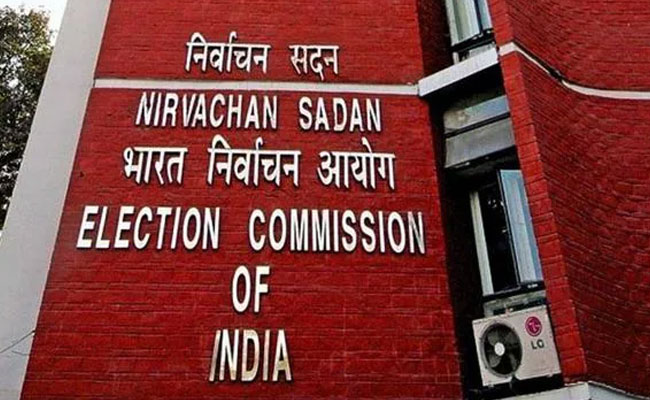
Hyderabad (PTI): The Election Commission (EC) on Wednesday increased the polling time for the Lok Sabha elections in Telangana by an hour in view of heat wave conditions prevailing in the state.
The new timing would be 7 am to 6 pm against the earlier 7 am to 5 pm.
Polling for all 17 Lok Sabha seats in the state will be held on May 13 in the fourth round of the seven-phase elections.
While the extended time for voting will be applicable in all assembly segments of 12 Lok Sabha constituencies, in the remaining five parliamentary seats, the timing will apply in certain assembly segments, according to a notification issued by the commission.
The hours of polling will be 7 am to 6 pm in the Karimnagar, Nizamabad, Zahirabad, Medak, Malkajgiri, Secunderabad, Hyderabad, Chevella, Mahabubnagar, Nagarkurnool (SC), Nalgonda and the Bhongir Lok Sabha seat, it said.
The new timing will also be applicable in five assembly segments of the Adilabad Lok Sabha seat, three of Peddapalle seat, six of Warangal (SC) seat, three of Mahabubabad (ST) seat and five of the Khammam Lok Sabha seat, the Election Commission said in its notification.
The decision -- to change the timing -- was taken following a request from the Telangana chief electoral officer in view of representations received from various political parties and contesting candidates on the prevailing situation of heat wave in the state and its effect on voter turnout, according to the notification.
Let the Truth be known. If you read VB and like VB, please be a VB Supporter and Help us deliver the Truth to one and all.
Mizoram class 12 results out, pass percentage at 87.67
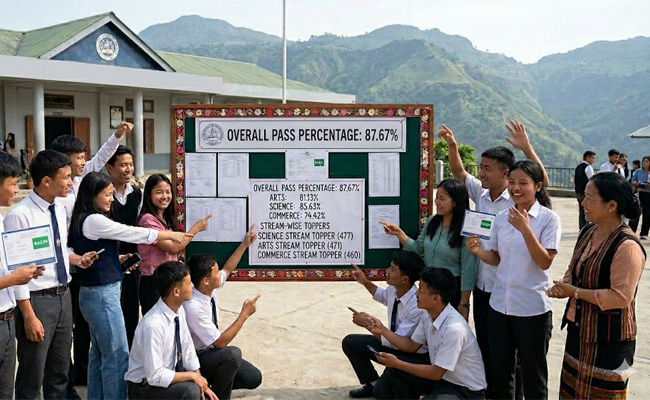
Aizawl (PTI): Mizoram recorded a pass percentage of 87.67 in the class 12 board examinations on Wednesday, with boys scoring marginally higher than girls,
Across the Arts, Science, and Commerce streams, boys secured an 87.7 per cent success rate, while girls followed closely at 87.66 per cent, according to the results published by the Mizoram Board of School Education (MBSE).
Of the 12,243 students who sat for the examinations held between February and March, 10,734 passed, 1,394 could not, and 115 qualified for compartmental examinations.
Academic performance was strongest in the Commerce stream, which saw a 90.51 per cent success rate among 759 candidates.
The Science stream followed with 89.24 per cent pass rate out of 2,770 students who appeared for the exam, while the Arts stream, with 87,14 students, recorded a pass percentage of 86.93.
In terms of institutional performance, the results revealed that deficit schools, which receive regular government grants, maintained their status as top performers with an average 93.80 per cent pass rate across all streams, followed by private schools at 91.55 per cent, while state-run schools recorded a success rate 83.13 per cent.