Madhabi Puri Buch becomes Sebi's first woman chief
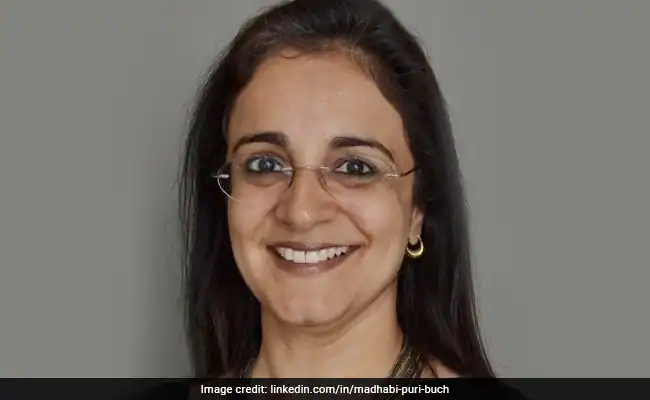
New Delhi, Feb 28: Sebi's first woman chief Madhabi Puri Buch has held a number of top positions in the private sector, including at ICICI Bank, and was also among the corporate leaders who were holed up in a Mumbai hotel on the fateful night of November 26 in 2008 when terror struck the country's financial capital.
Buch, who is around 56 years old, will be at the helm of the capital markets watchdog initially for a period of three years.
After her five-year term as a Whole Time Member of Sebi ended in October 2021, she was named as the head of the regulator's secondary market committee in December the same year. The panel advises Sebi on matters related to secondary market, including suggesting steps to improve market safety, efficiency and transparency.
During her tenure at Sebi, she had also handled a host of portfolios and was part of many committees. She headed the advisory committee on market data that recommends policy measures pertaining to areas like securities market data access and privacy.
Buch has worked with the private sector for two decades, including with ICICI Group for over 17 years, and was part of ICICI Bank, ICICI Securities, ICICI Web Trade Ltd and ICICI HFC Ltd.
And she was among the corporate leaders who were holed up in a Mumbai hotel during the terror attack in November 2008. Buch, who was then Executive Director at ICICI Bank, was at the hotel along with her husband Dhaval Buch, then a director at Hindustan Unilever Ltd, as the FMCG giant's top management team was huddled in a board meeting there.
An alumna of IIM Ahmedabad, Buch will be the first woman to head the Securities and Exchange Board of India (Sebi).
She served at ICICI Bank for 12 years in different positions and was the Executive Director during 2006-2009 period. She was the Head of Marketing and Sales for five years from 1997 to 2002, and was the Head of Product Development from 2002 to 2003.
Later, she was the Head of Operations from 2004 to 2006. Also, Buch served as the Head of Brand Marketing from 1997 to 2009.
In 2009, Buch became the Chief Executive Officer of ICICI Securities and headed the firm for two years till 2011.
Later, she was the Head of Business Development at Greater Pacific Capital, Singapore from 2011 to 2013, and a Non-Executive Director at Idea Cellular from 2011 to 2017.
Besides, she has held non-executive director roles in several organisations, including Max Healthcare, Zansar Technologies, Innoven Capital, and Gabelhorn Investments.
She replaces Ajay Tyagi whose five-year tenure ends on Monday.
Let the Truth be known. If you read VB and like VB, please be a VB Supporter and Help us deliver the Truth to one and all.
Congress using hijab issue to pacify minority anger, alleges Karnataka LoP R Ashoka
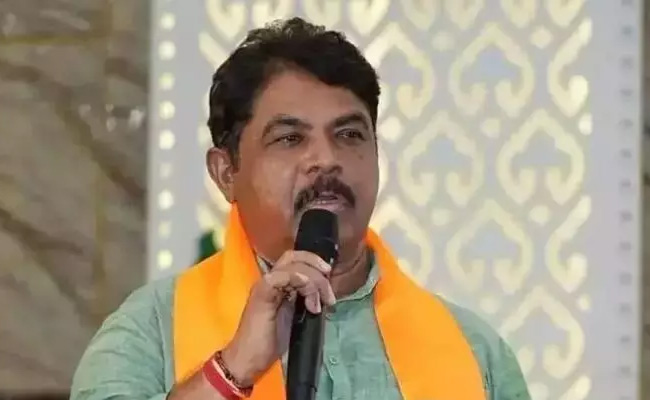
Bengaluru: Leader of Opposition in the Assembly R. Ashoka has accused the Congress government of using the hijab issue to placate what he described as discontent among minority voters after the Davanagere by-election.
In a post on X on Wednesday, Ashoka alleged that the state government, instead of addressing issues such as price rise, corruption, farmers’ distress and law and order, was attempting to retain its minority vote base by reviving the hijab issue.
Referring to the 2022 dress code introduced by the BJP government, which prohibited hijab in schools and colleges, Ashoka said the Karnataka High Court had upheld the policy and emphasised the importance of discipline in educational institutions.
He questioned the Congress government’s move to revisit the issue and asked whether setting aside the court-backed policy to benefit one community could be described as secularism.
Ashoka further alleged that while the government was willing to permit hijab, it continued to prohibit saffron shawls.
He accused the government of dividing students on religious lines rather than treating schools and colleges as spaces of equality.
Drawing a comparison with Mamata Banerjee’s government in West Bengal, Ashoka claimed that excessive appeasement politics had harmed the state and warned that the Congress in Karnataka could face a similar political response.
He said voters in Karnataka would teach the Congress a lesson for what he termed “vote-bank politics” and for compromising constitutional and judicial principles.